
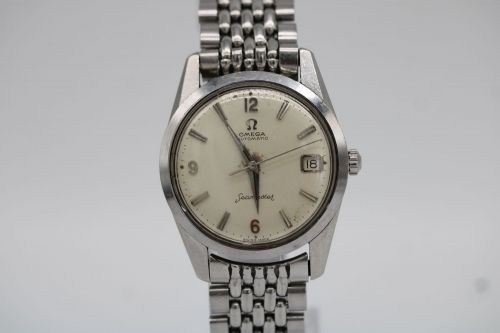
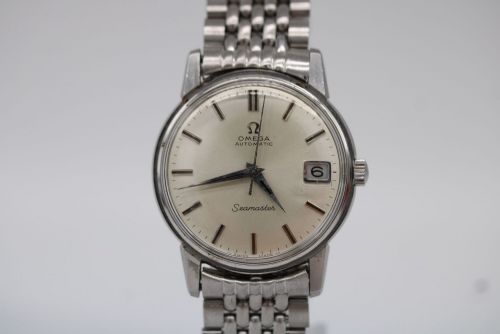
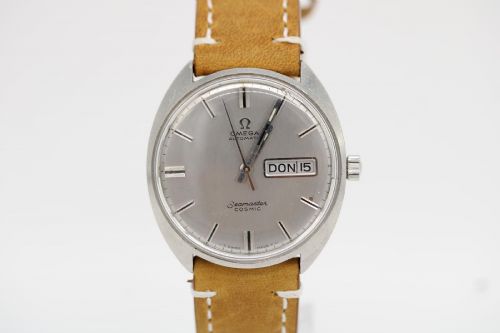
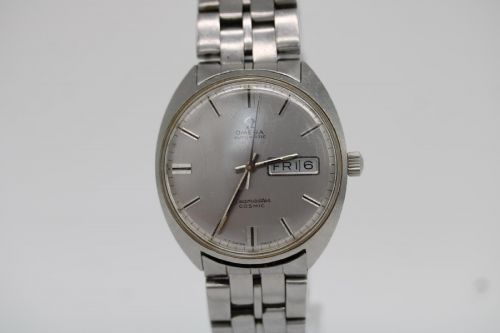
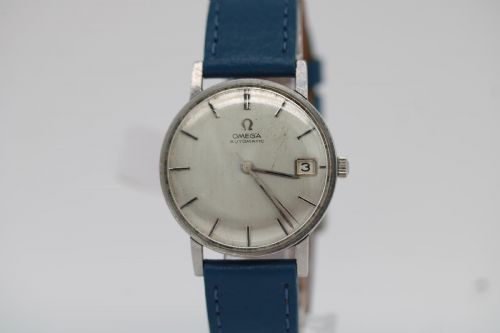
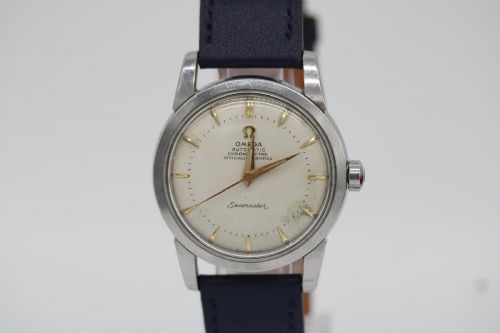
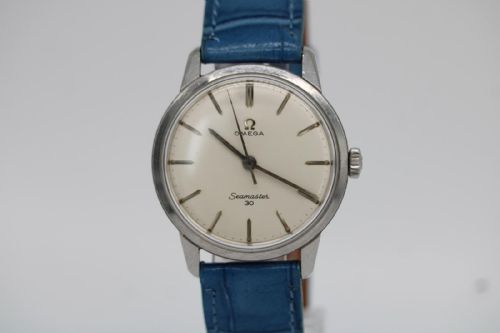

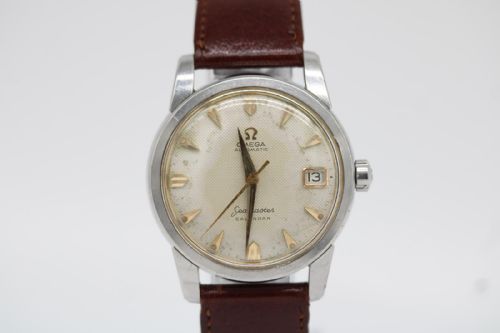


Steel Omega Seamaster
A steel omega seamaster combines robust mid-century engineering with enduring versatility, making it a foundational piece for any vintage watch collection.
Steel Omega Seamaster
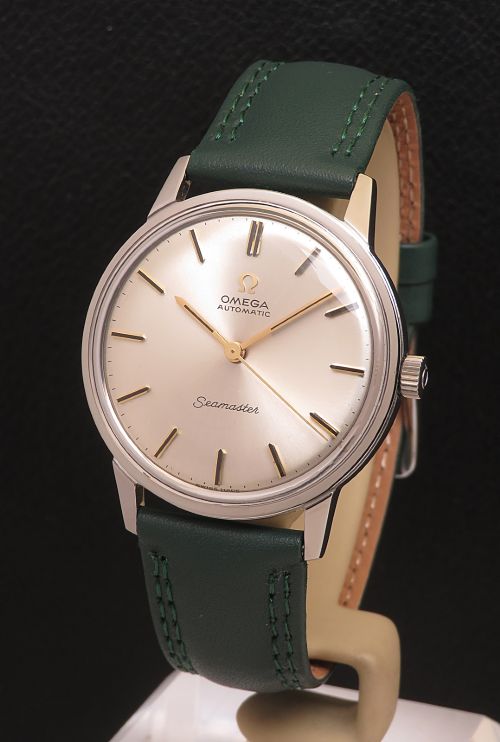
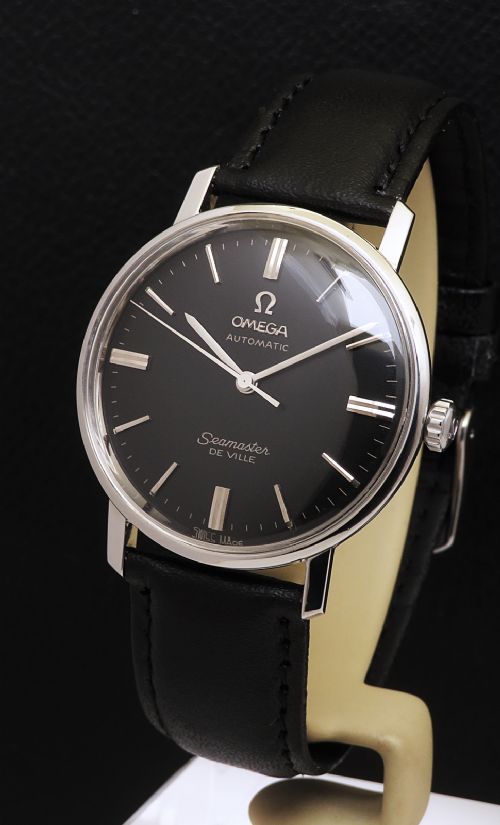
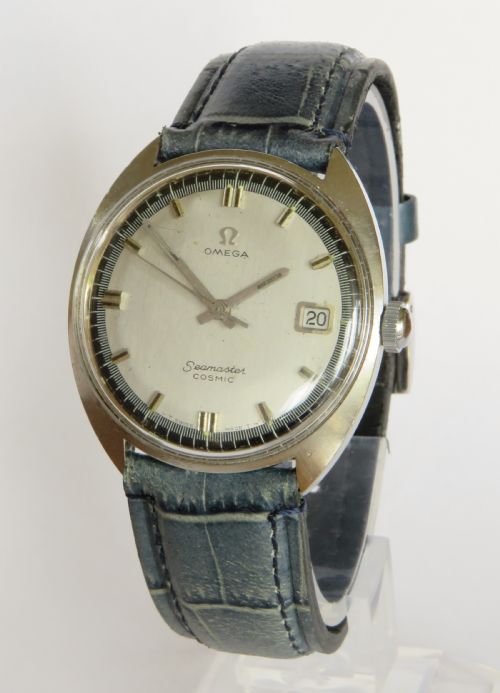
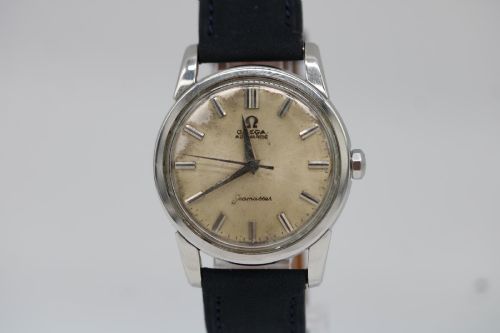
When you examine a steel omega seamaster, you encounter a dependable wristwatch designed for everyday utility alongside aquatic resilience. The pieces seen here span the 1950s, the 1960s, and later than 1960, reflecting the height of mid-century modern horology.
You are most likely to meet automatic and manual wind wristwatches featuring stainless steel cases and acrylic glass crystals. These range from standard calendar models to specialised variants such as the Cosmic, DeVille, and Chronostop.
The aesthetic bridges formal dress wear with practical sport styling, characterised by clean dials, baton markers, and durable metal construction. Each piece demonstrates the Swiss manufacturer's dedication to reliable timekeeping during an era of significant mechanical innovation.
How they were made
The construction relies on durable stainless steel for the cases, paired with acrylic glass or acrylic crystal protecting the dial. Leather straps frequently complete the assembly alongside metal bracelets.
Movements inside these watches utilise precision mechanical engineering, encompassing automatic self-winding systems, bumper mechanisms, and manual wind calibres. Dial surfaces often display fine detailing such as cross-hair patterns, honeycomb textures, or patinated finishes developed over decades.
Steel Omega Seamaster Retail Price Guide 2026
Typical asking prices for steel omega seamaster among the pieces listed under this phrase on Sellingantiques today, from the lower quarter to the upper quarter. They describe what is for sale here now, not the wider market.
Bumper automatics give a gentle tap against your wrist as the internal weight swings, reminding you the watch is alive.
What varies in quality
Differences across the range stem from the complexity of the movement and the original market tier of the specific reference. Calibres with chronometer certification or day-date complications represent a higher degree of watchmaking ambition.
The preservation of original dial components, hands, and signed winding crowns heavily influences the character of an individual piece. Cases maintaining their factory geometry and sharp lines contrast with those softened by decades of polishing.
The Steel Omega Seamaster Glossary
- Calibre
- The specific internal mechanical movement manufactured by the watchmaker, designated by a standard number.
- Bumper automatic
- An early self-winding movement where a weighted rotor swings back and forth against spring bumpers to tension the mainspring, rather than rotating in a full circle.
- Acrylic glass
- A lightweight, shatter-resistant plastic material utilised for watch crystals during the mid-century period, which can be polished to remove surface scratches.
- Honeycomb dial
- A textured dial face featuring a raised grid pattern resembling a bee's honeycomb, popular during the 1950s.
- Chronostop
- A specialised stopwatch variant that measures short intervals using a single pusher without a traditional chronograph subdial arrangement.
Steel Omega Seamaster: Frequently Asked Questions
What makes a Seamaster different from other vintage watches?
The Seamaster line was originally developed using water-resistant technology derived from wartime submarine seals, giving it a sturdier build than standard dress watches of the period.
This robust construction allowed it to bridge the gap between a delicate timepiece and a durable everyday accessory.
How do I wind a manual Seamaster?
You wind a manual-wind watch by turning the crown clockwise between your thumb and forefinger until you feel gentle resistance.
Care should be taken not to force the crown past this point, as over-winding can damage the mainspring inside.
Can I wear my vintage Seamaster swimming?
While these watches were originally engineered for water resistance, rubber gaskets degrade over decades and vintage pieces lose their factory seals.
It is best to keep historical watches away from water entirely to protect the movement and dial from moisture damage.
How do I identify the production year?
The production year is typically determined by matching the serial number engraved on the internal movement or case back against manufacturer production ledgers.
Reference numbers stamped inside the case back also help narrow down the exact era of manufacture.