



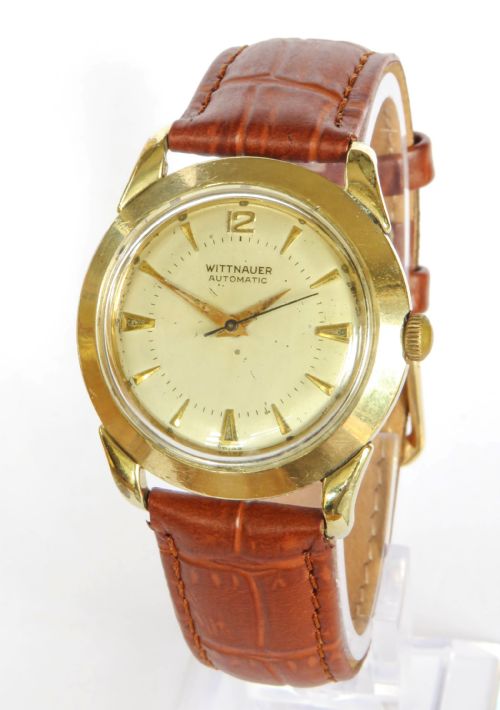


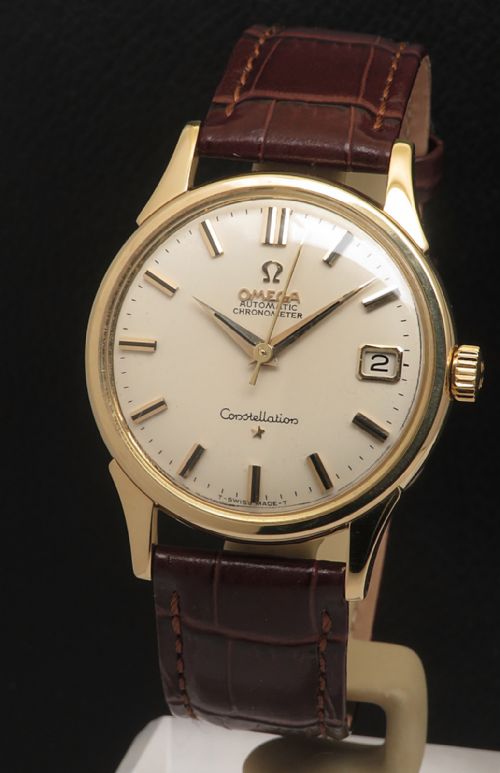

Automatic Movement Watch
An automatic movement watch winds itself with the natural motion of your wrist, offering reliable mid-century engineering.
Automatic Movement Watch
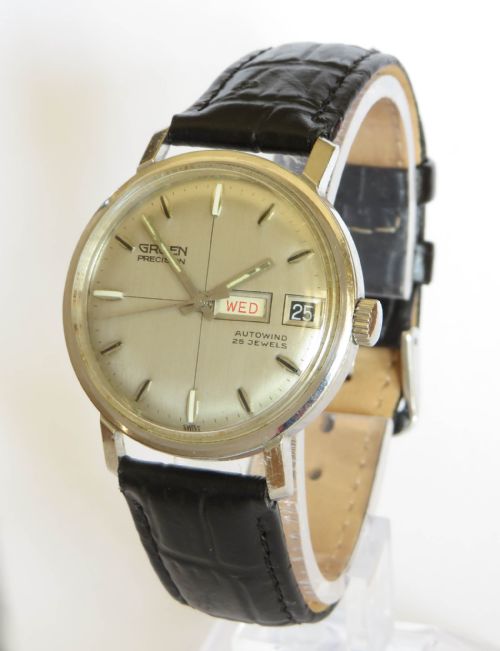
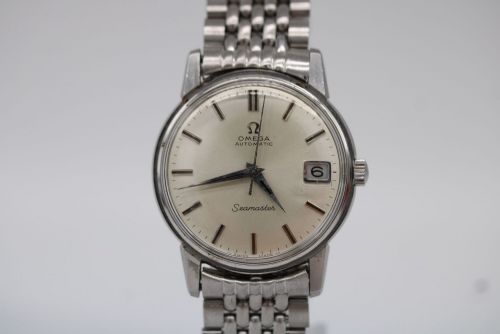
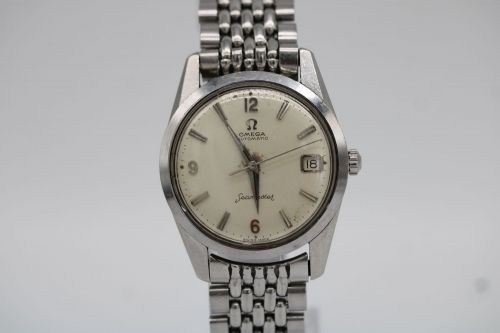
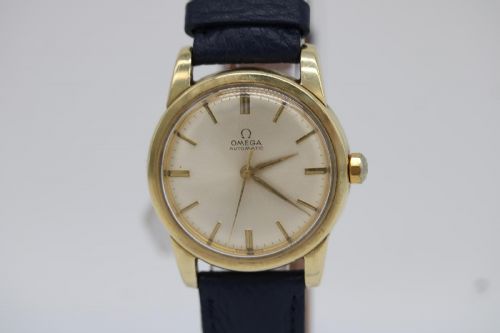
An automatic movement watch represents the mechanical innovation of the mid-century period, harnessing kinetic energy from the wearer to maintain its power reserve without manual winding. You will most frequently encounter steel and gold-plated wristwatches from the 1950s and 1960s, reflecting the robust manufacturing standards of that era.
The pieces listed here span classic dress styles and sports chronographs, capturing the aesthetic transition towards Mid-Century Modern design. Makers represented include Omega, Heuer, Eterna, Gruen, and Wittnauer, each bringing distinct case geometries and dial layouts to the market.
Materials and construction
Cases are forged from stainless steel, gold-filled metal, gold plate, or solid 18ct gold, housing intricate mechanical movements beneath acrylic or glass crystals. Straps typically utilise leather or fabric to complement the metallic tones of the case.
Early self-winding mechanisms include innovative bumper automatic calibres alongside later full-rotor automatic systems. These movements rely on precision gears and oscillating weights to tension the mainspring smoothly during daily wear.
Automatic Movement Watch Retail Price Guide 2026
Typical asking prices for automatic movement watch among the pieces listed under this phrase on Sellingantiques today, from the lower quarter to the upper quarter. They describe what is for sale here now, not the wider market.
Current selections feature stainless steel, gold-plated, and solid 18ct gold cases housing mechanical movements from the 1950s and 1960s.
Judging quality and preservation
The distinction between average examples and superior pieces rests on the originality of the dial, the crispness of the case edges, and the mechanical health of the calibre. Unpolished steel or solid gold cases retain their factory lines and hallmarks, whereas over-polished surfaces lose their definition.
Dial preservation significantly influences desirability, with patinated or clean original faces commanding greater respect than poorly repainted examples. Mechanical integrity, evidenced by clean internal components and documented servicing, completes the measure of quality.
Gruen Precision·Omega·Wittnauer·Eterna-Matic·Consul Dermaphile·Heuer
The Automatic Movement Watch Glossary
- Automatic movement
- A mechanical watch movement that winds itself using a weighted rotor which pivots as the wearer moves their arm.
- Bumper automatic
- An early type of self-winding movement where the rotor swings back and forth against spring-loaded buffers rather than rotating fully 360 degrees.
- Calibre
- The specific manufacturer's designation for a particular watch movement design and model.
- Gold-filled
- A material consisting of a thick layer of gold mechanically bonded to a base metal core, offering durability superior to standard gold plating.
- Chronograph
- A watch equipped with a stopwatch function alongside traditional timekeeping displays.
Automatic Movement Watch: Frequently Asked Questions
How do automatic watches work?
An internal weighted rotor spins as your arm moves, automatically tightening the mainspring to store power.
This removes the need for daily manual winding while maintaining mechanical precision throughout the day.
What is a bumper automatic?
A bumper automatic is an early self-winding design where the internal weight swings through a limited arc, hitting springs on either side.
You can feel a gentle tap on your wrist when the rotor hits its limit, distinguishing it from later full-rotor movements.
Are vintage watches water resistant?
Vintage timepieces generally lack modern gaskets and screw-down crowns, making them vulnerable to moisture.
It is best to keep older watches away from water entirely to protect the dial and internal movement from corrosion.
How often should an automatic watch be serviced?
Mechanical watches require periodic cleaning and lubrication of their gears to ensure accurate timekeeping over decades.
Regular servicing prevents older oils from gumming up the delicate pivots within the movement.