


1930s Wardrobe
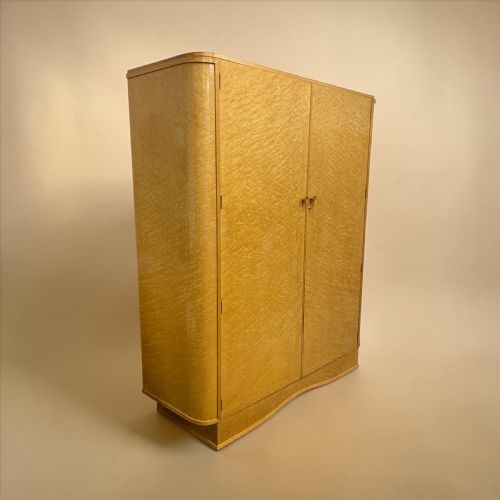
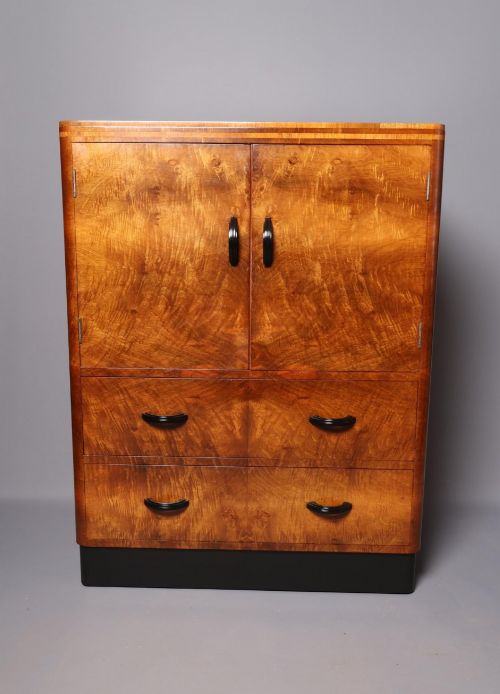
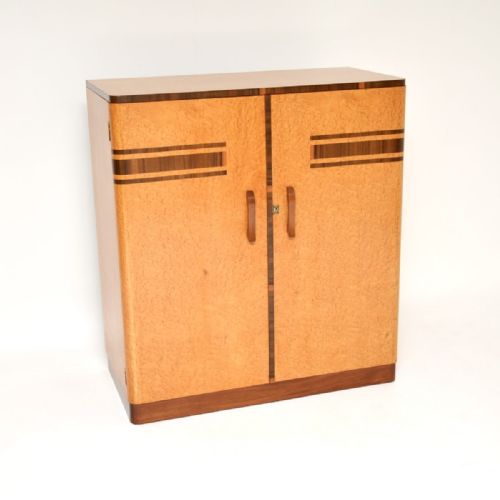
A 1930s wardrobe brings striking geometric presence and generous storage to a bedroom through rich figured veneers and clean architectural lines.
1930s Wardrobe
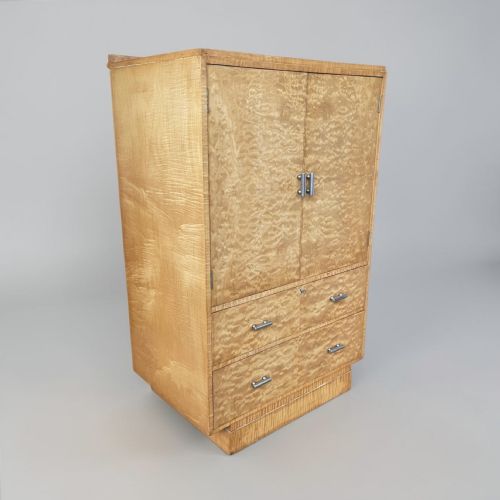
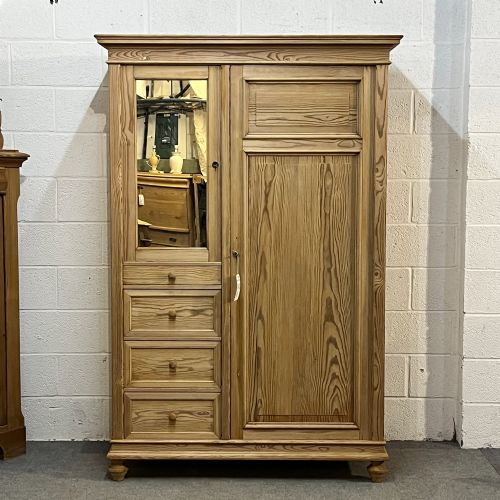
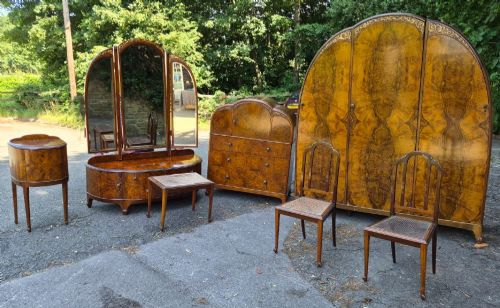
When searching for a 1930s wardrobe, a buyer encounters substantial storage furniture dominated by the Art Deco style alongside occasional examples of 1930s Country, British Institutional, and Swedish Grace designs. These pieces range from single-door hall cupboards to expansive triple wardrobes, tallboys, compactums, and complete bedroom furniture suites.
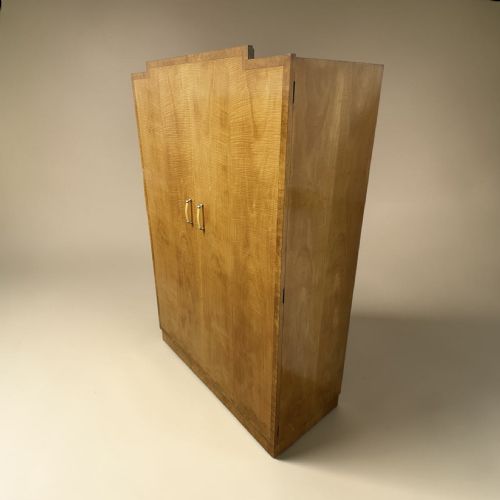
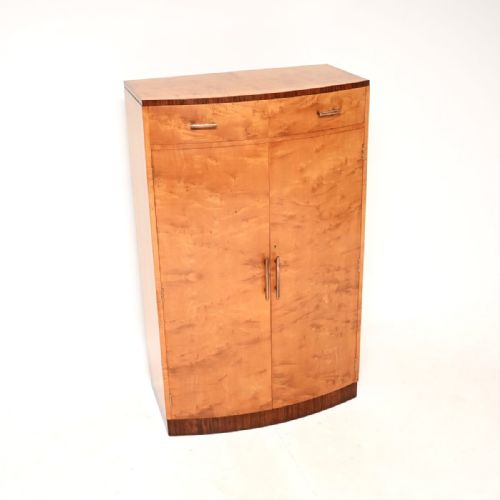
Walnut and burr walnut serve as the most common materials, often paired with contrasting lighter woods such as birds eye maple, satin birch, and pale mahogany. Brass, metal, glass, and bakelite appear frequently on handles, hinges, and fitted interior fittings.
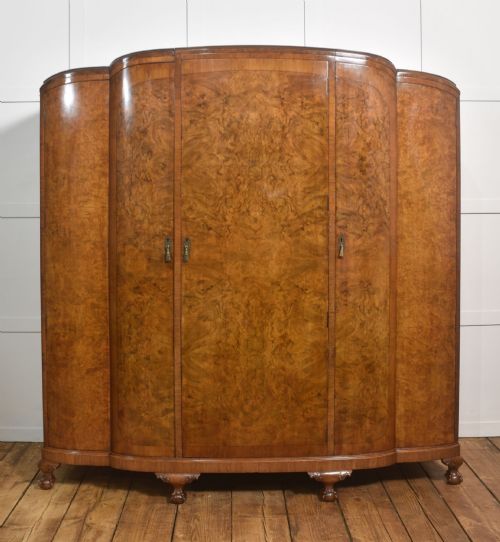
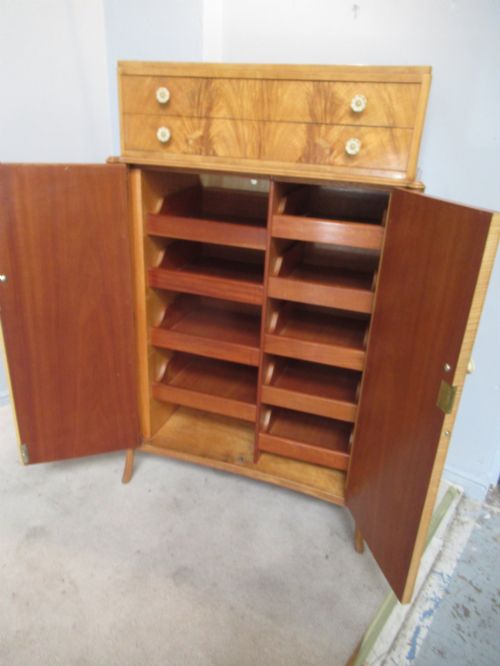
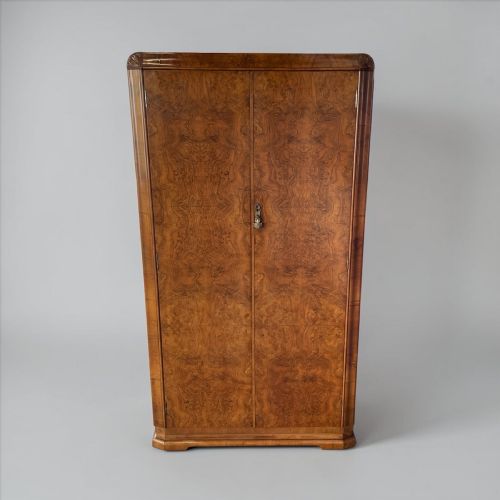
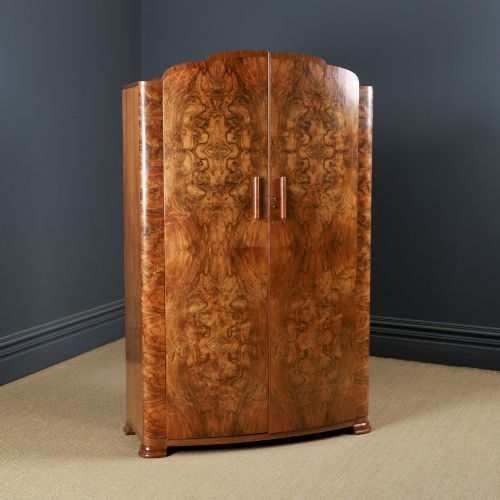
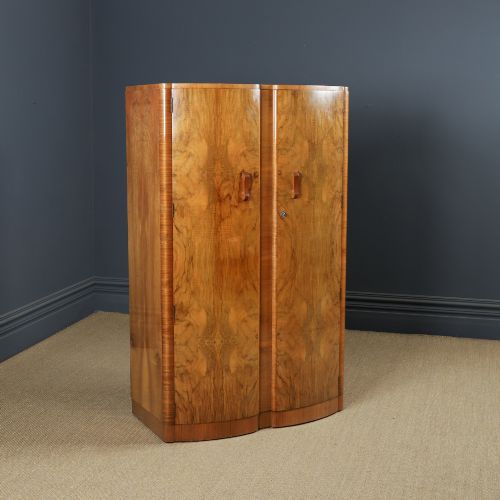
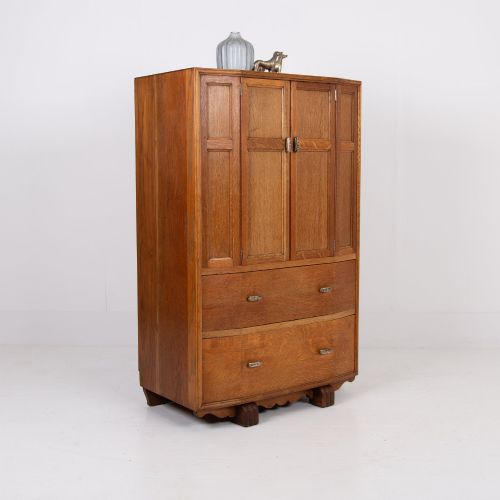
The standard form met on this page is the two-door or triple wardrobe, frequently accompanied by fitted interior compartments, hanging space, and lower drawers in the manner of a compactum. Many pieces display curved bow-front designs or architectural breakfront profiles that define the period look.
Materials and Construction
Cabinet makers of this period relied heavily on walnut veneer, burr walnut, and cloud walnut applied over sturdy secondary woods to create dramatic grain patterns across large surfaces. Lighter timbers like birds eye maple and satin birch were utilised for interiors or contrasting banding.
Construction methods combined traditional joinery with modern hardware, incorporating brass and bakelite fittings on doors and internal drawers. Finished pieces often received clear lacquering or polishing to highlight the natural figure of the wood.
Listings feature oak, mahogany, birch, and maple alongside extensive use of walnut veneer.
Assessing Quality and Execution
Quality in these wardrobes rests largely on the selection and matching of wood veneers, where symmetrical grain alignment across large doors signals superior cabinet work. Pieces featuring figured burr walnut or birds eye maple demonstrate higher craftsmanship than standard plain wood equivalents.
The complexity of the interior layout and the integration of fitted compartments, drawers, and brass hardware set the finer examples apart. Comprehensive bedroom suites and marked pieces by established makers reflect elevated standards of design and material selection.
Frank Taylor & Co.·Heal's·B Cohen & Sons·Harry and Lou Epstein·Otto Schulz for Boet·Waring & Gillow
The 1930s Wardrobe Glossary
- Compactum
- A fitted wardrobe combining hanging space, shelves, and internal drawers within a single cabinet. This multi-purpose design maximised storage efficiency in period bedrooms.
- Tallboy
- A tall chest of drawers or a combination of a wardrobe cabinet placed above drawers. It offers vertical storage for rooms with limited floor space.
- Burr Walnut
- Wood cut from the warted growths on walnut trees, yielding intricate swirling grain patterns. Cabinet makers prized this material for decorative door panels.
- Art Deco
- A design style characterised by streamlined forms, geometric patterns, and lavish materials. It dominated furniture design throughout the interwar period.
- Breakfront
- A cabinet design where the central section projects forward from the flanking outer sections. This architectural arrangement creates depth and shadow on large wardrobe facades.
1930s Wardrobe: Frequently Asked Questions
How do I fit a 1930s wardrobe into a modern bedroom?
Measure your ceiling height and floor space carefully before selecting a piece, as many period wardrobes are tall and deep. Consider compactum versions or smaller tallboys if floor area is limited.
Ensure that access routes through stairwells and doorways accommodate large single-piece cabinets, as many of these wardrobes do not dismantle easily.
What is the difference between a wardrobe and a compactum?
A standard wardrobe focuses primarily on vertical hanging space behind one or more doors, sometimes with a single drawer below. A compactum integrates specialised internal compartments, shoe racks, tie rails, and multiple drawers alongside the hanging section.
Compactums offer comprehensive bedroom storage within a unified cabinet footprint.
How do I care for walnut veneer surfaces?
Maintain walnut and burr walnut surfaces by dusting with a soft, dry cloth and avoiding direct sunlight that can fade the grain. Apply appropriate furniture wax sparingly to nourish the wood and preserve the finish.
Keep pieces away from sudden temperature shifts and excessive moisture to protect the underlying veneer.