


1930s Walnut Sideboard
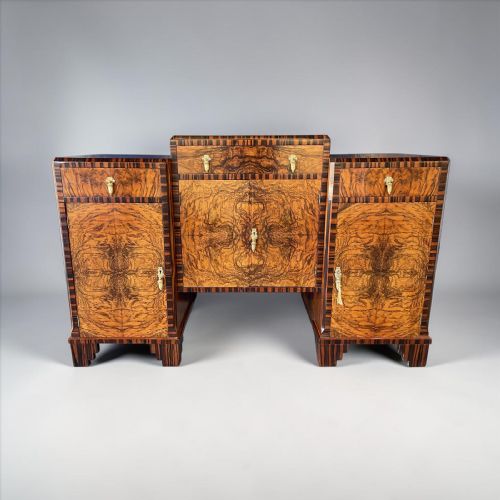
A 1930s walnut sideboard brings geometric distinction and rich grain to a room, offering practical storage disguised as striking sculpture.
1930s Walnut Sideboard
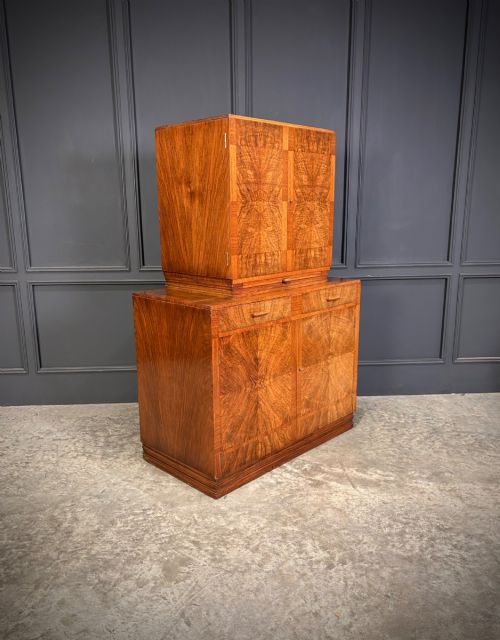
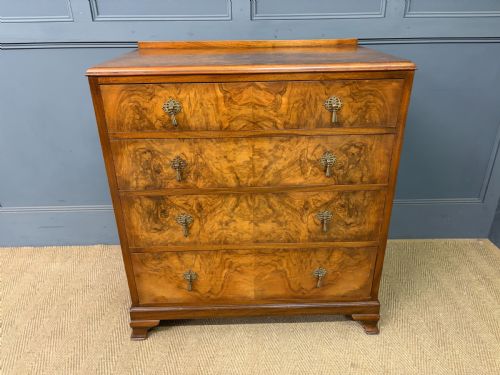
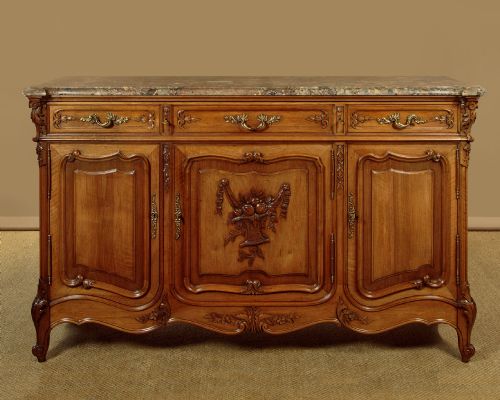
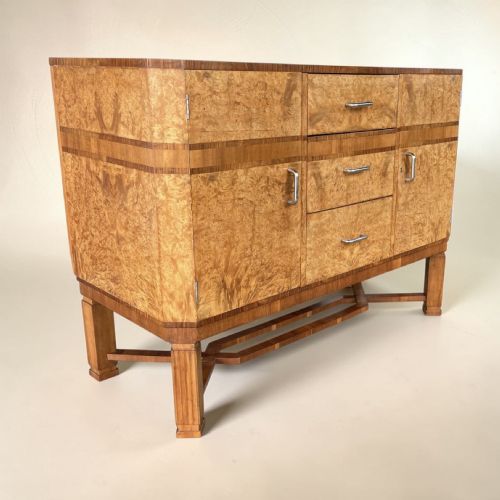
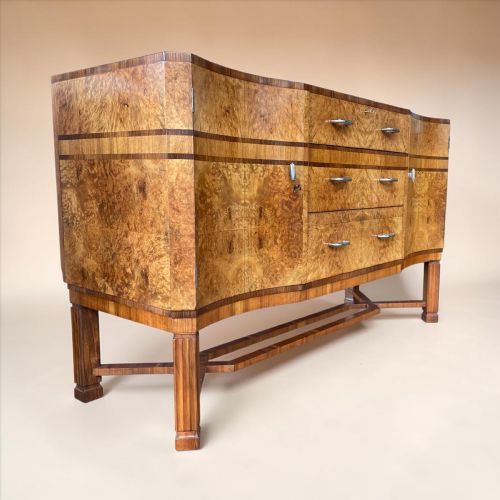
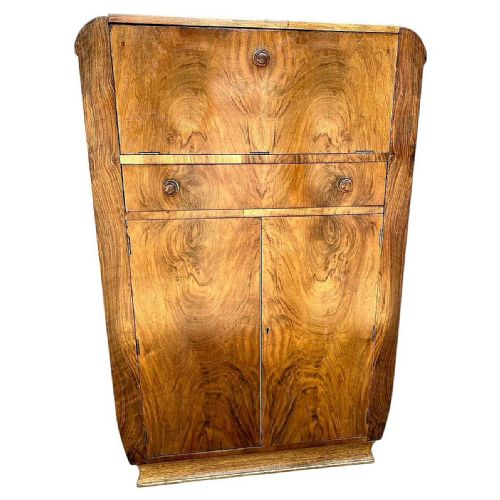
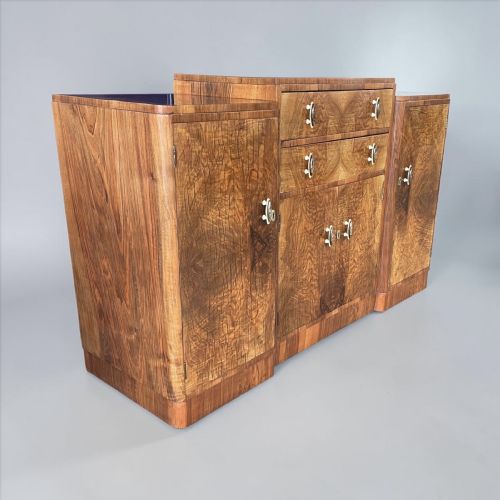
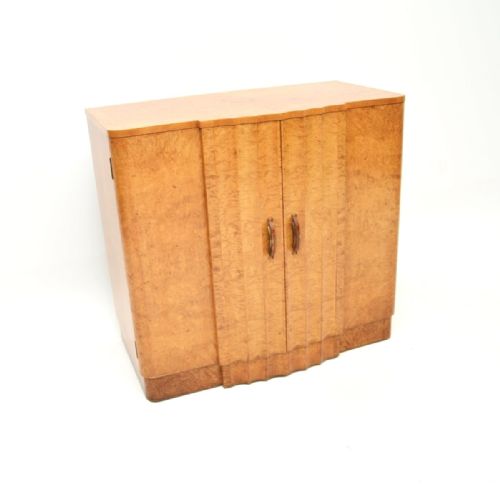
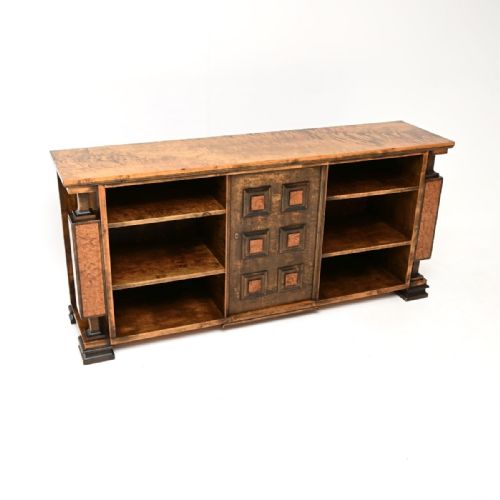
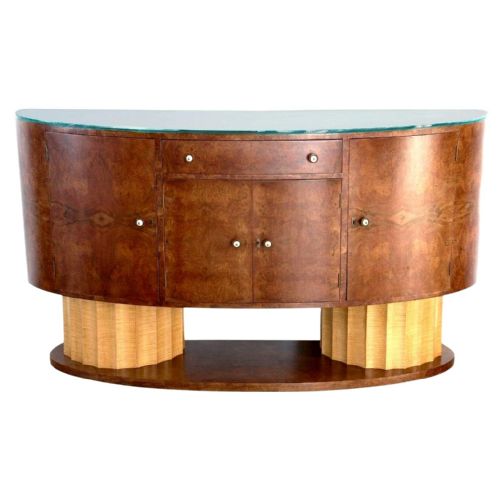
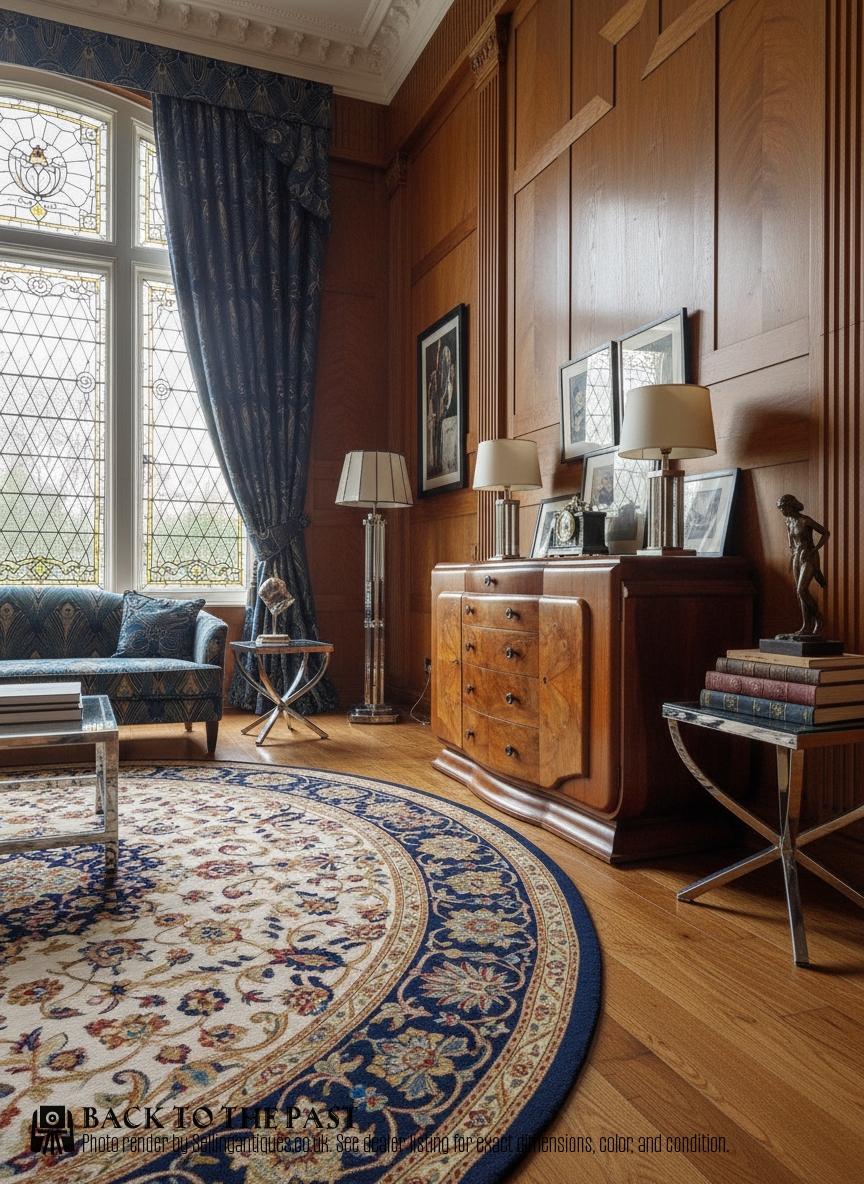
A 1930s walnut sideboard is a substantial dining or living room storage piece rooted primarily in the Art Deco style, though French Provincial and Queen Anne Revival influences also appear. These items function variously as traditional sideboards, serving tables, cocktail cabinets, and credenzas.
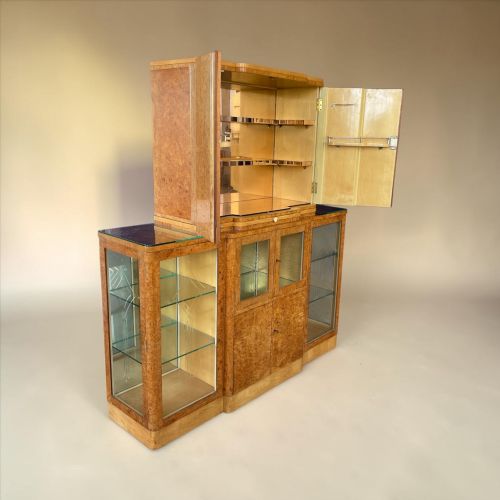
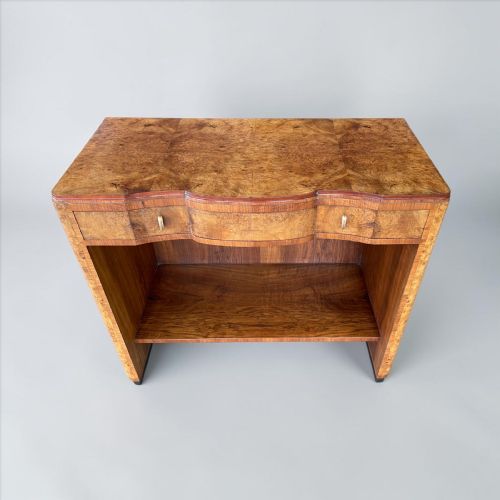
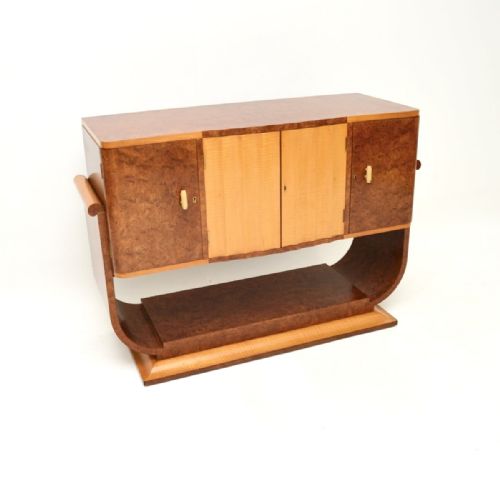
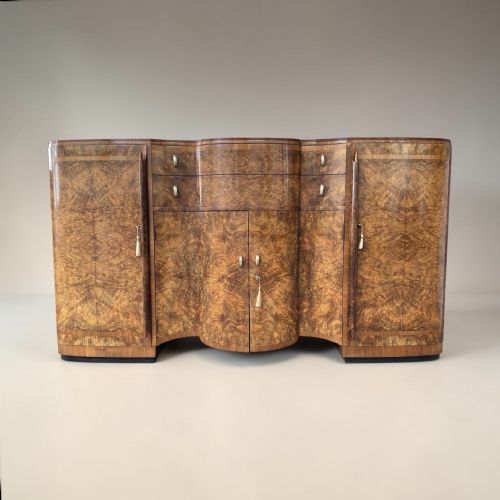
The version you are most likely to meet on this page is an Art Deco sideboard or cocktail cabinet from around 1930, typically constructed from figured walnut or burr walnut with contrasting wood details.
How they were made
Cabinet makers utilised walnut veneer and burr walnut over solid wood carcases, often selecting sheets for dramatic grain patterns and geometric symmetry. Contrasting light woods such as sycamore or satin birch were frequently paired with the darker walnut body.
Hardware played an essential structural and decorative role, incorporating brass, metal, glass, and bakelite fittings alongside fitted marble tops on specific French and Italian iterations.
1930s Walnut Sideboard Retail Price Guide 2026
Typical asking prices for 1930s walnut sideboard among the pieces listed under this phrase on Sellingantiques today, from the lower quarter to the upper quarter. They describe what is for sale here now, not the wider market.
Some cocktail cabinets still retain their original electrical wiring to illuminate the mirrored interior when the doors open.
What varies in quality
Quality rests heavily on the selection and matching of the veneer, where book-matched burr walnut creates a symmetrical, balanced pattern across doors and drawers. Maker attribution also dictates standing, with documented pieces from prominent workshops commanding greater recognition.
The complexity of the interior fitted compartments, such as mirrored cocktail sections with pull-out slides and specialised glass holders, separates standard production items from the most ambitious cabinetwork.
Maurice Adams·Harry and Lou Epstein·Hille·Hamptons of Pall Mall London·The Bowman Brothers
The 1930s Walnut Sideboard Glossary
- Veneer
- A thin layer of valuable wood adhered to a secondary wood base. This technique allowed makers to display dramatic grain patterns without using solid scarce timber.
- Burr walnut
- A growth deformity on a walnut tree that yields intricate, swirling grain patterns. It was highly prized by period cabinet makers for decorative door panels.
- Art Deco
- A design movement prevalent in the 1930s characterised by sleek geometric shapes, streamlined forms, and modern industrial materials. It dominates the aesthetic of these sideboards.
- Cocktail cabinet
- A specialised storage unit designed for entertaining, typically featuring mirrored interiors, bottle racks, and glass shelves. They often include built-in lighting or serving slides.
1930s Walnut Sideboard: Frequently Asked Questions
What is a 1930s walnut sideboard used for?
These pieces provide heavy storage for dining room tableware, linens, or glassware while functioning as a surface for serving food and drink.
Many examples double as specialised cocktail cabinets designed to store bottles, glassware, and mixing trays for entertaining.
How do I identify an Art Deco sideboard?
Look for symmetrical geometric veneer patterns, stepped cornices, and streamlined silhouettes free of traditional carving.
Details like contrasting light sycamore inlay and original bakelite or brass handles further signal the period style.
Where were these sideboards made?
The pieces originate from British workshops and prominent London department stores, alongside continental European makers in France and Italy.
Each regional origin imparts subtle stylistic differences, from British architectural austerity to French serpentine curves and marble surfaces.
How do I care for walnut veneer?
Keep the wood away from direct sunlight and strong heat sources to prevent the veneer from drying out or lifting.
Dust with a soft, dry cloth and occasionally feed the timber with a suitable wax to maintain the deep lustre of the grain.