
1930s Walnut Cupboard
A 1930s walnut cupboard brings geometric lines and rich timber grain to an interior.
1930s Walnut Cupboard
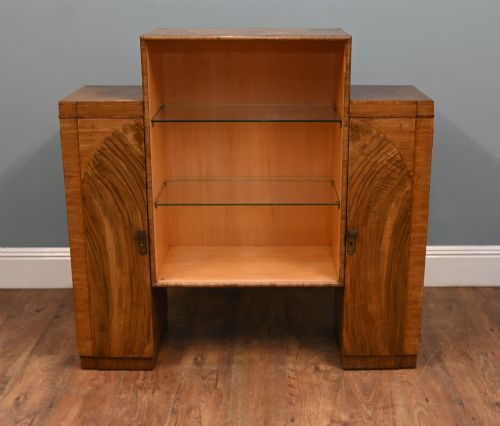
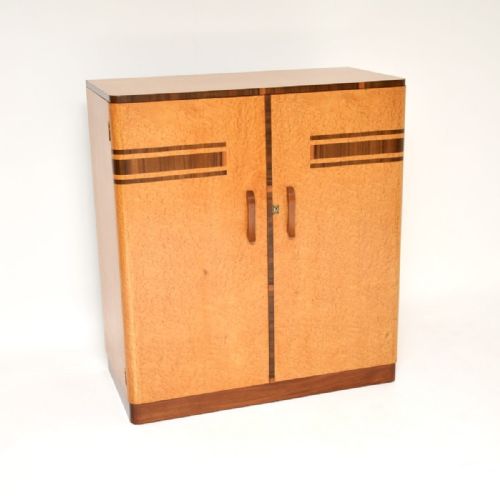
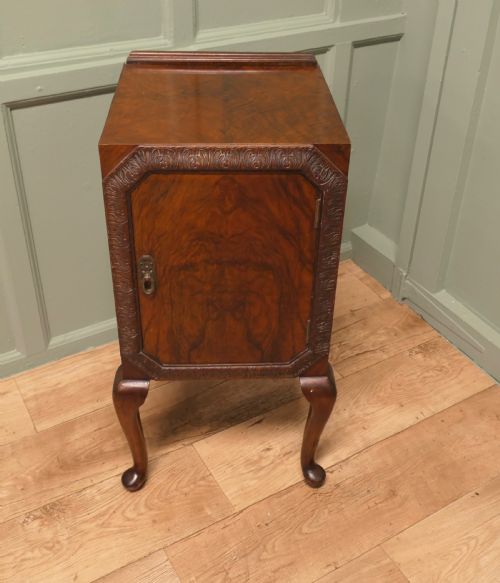
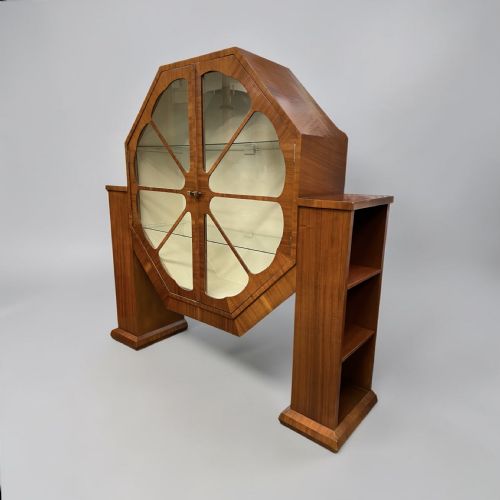
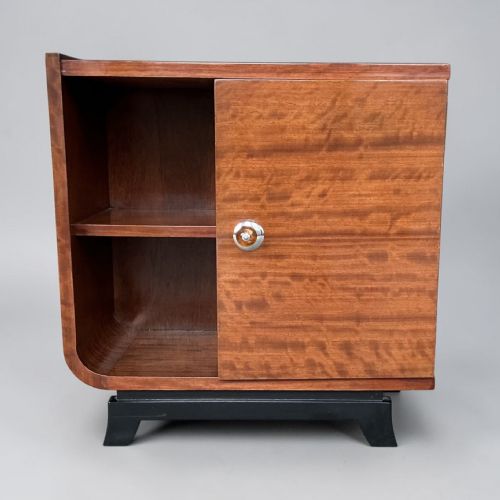
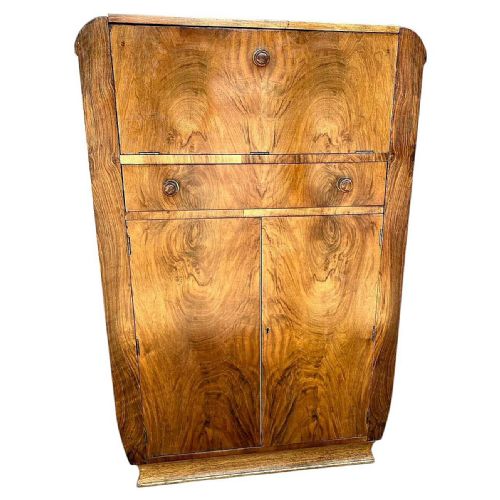
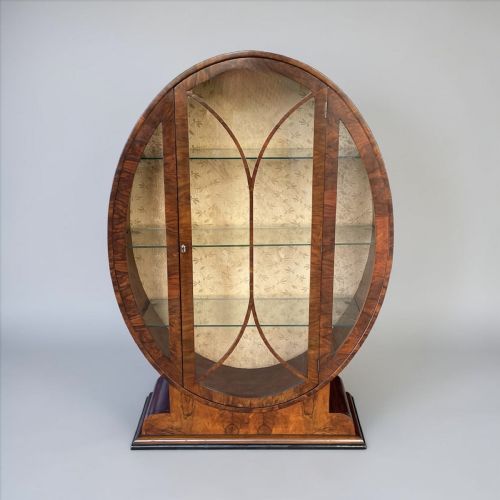
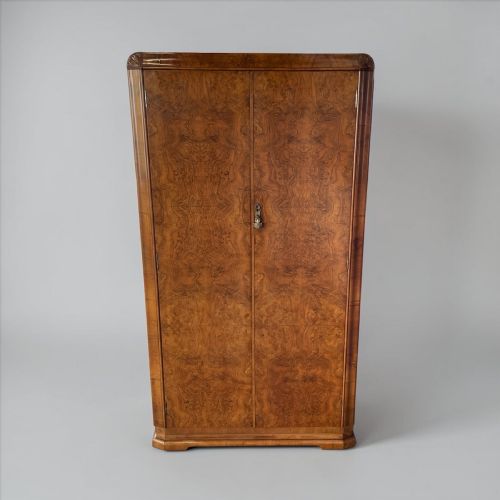
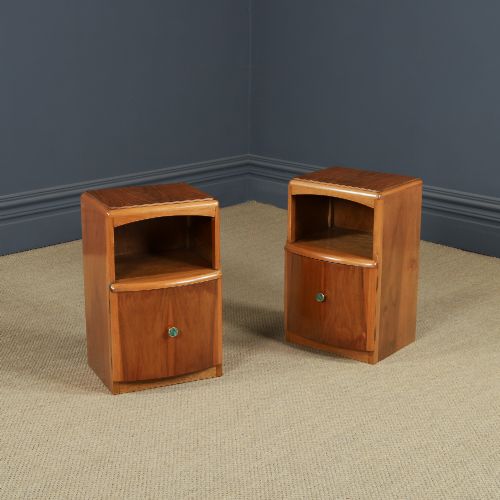
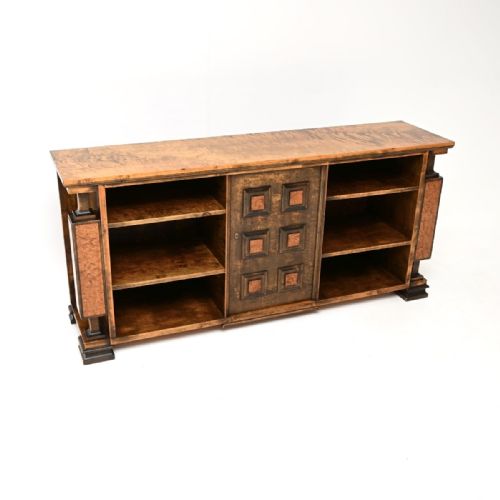
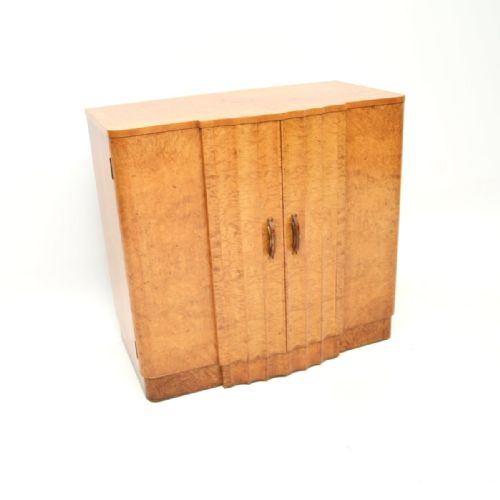
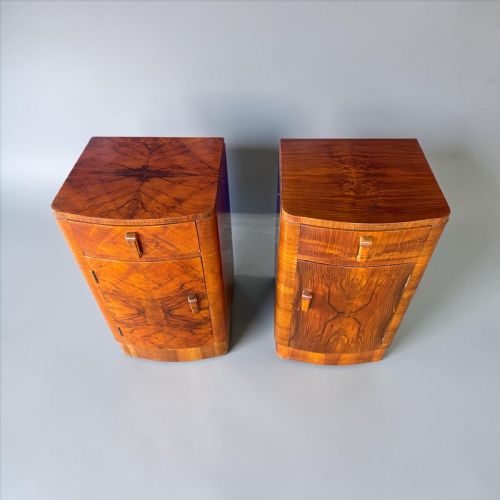
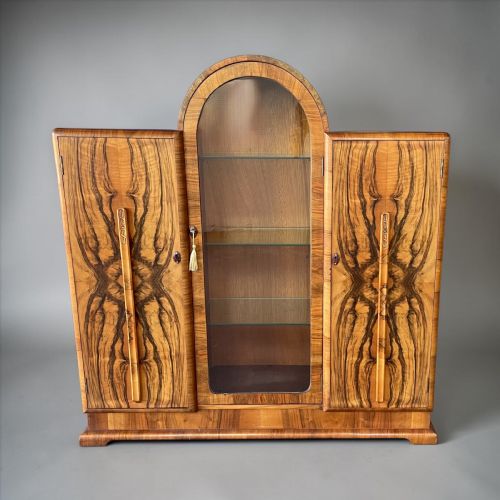
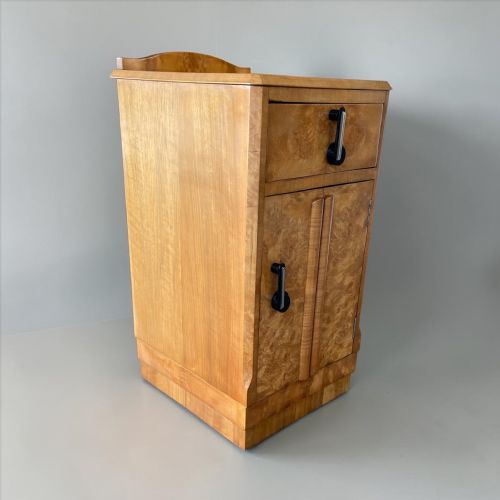
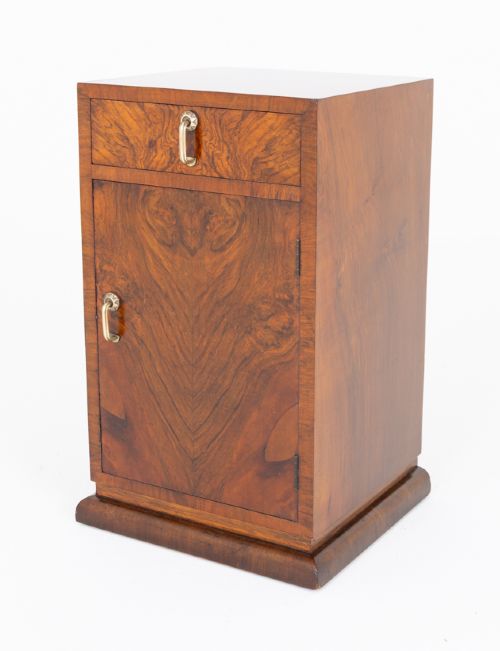
A 1930s walnut cupboard encompasses a variety of storage furniture designed during the interwar period, predominantly following Art Deco principles. The pieces range from tall display cabinets and compactum wardrobes to cocktail drinks cabinets and bedside tables.
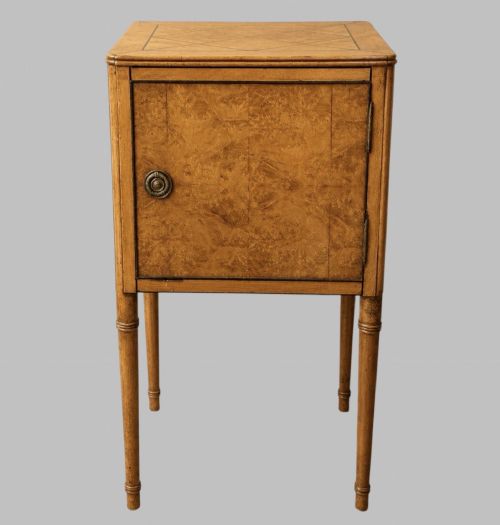
Most items seen here date to the 1930s, though occasional pieces stretch back to the Edwardian era or forward into the 1940s, alongside revivals like Queen Anne and Louis styles.
The form is defined by practical compartments enclosed behind timber doors, frequently paired with glazed display sections or internal shelving for drinks and books.
How they were made
Construction relies heavily on walnut and burr walnut veneer applied over stable secondary woods, accentuating the wild, swirling patterns of the grain. Cabinetmakers combined these rich veneers with contrasting timbers such as satin birch, maple, and satinwood.
Hardware played a functional and decorative role, with makers incorporating brass, chrome, and occasional bakelite handles and hinges to complement the geometric cabinetry.
Cabinet styles span Art Deco, Edwardian periods, and revival designs including Queen Anne, Louis XV, and Louis XVI.
What varies in quality
Quality rests upon the selection and bookmatching of the veneer, where symmetrical grain patterns across large cabinet doors mark out superior examples. The intricacy of internal fittings, such as fitted cocktail compartments with mirror glass and pull-out trays, also distinguishes finer workshops from standard production.
Joinery standards show in the weight and stability of the carcase, the smooth action of fitted drawers, and the integration of decorative marquetry or shaped glazing.
Harry and Lou Epstein·F.H. Marshall and Co Glasgow·Walter Carter Harrods·Rurka·Hille
The 1930s Walnut Cupboard Glossary
- Burr walnut
- Timber harvested from the warted growths on walnut trees, yielding highly figured, swirling veneer patterns. It was favoured by prominent cabinetmakers for decorative door fronts.
- Compactum
- A large fitted wardrobe combining hanging space with internal drawers, shelves, and shoe compartments. It offered comprehensive bedroom storage in a single footprint.
- Art Deco
- The dominant design style of the interwar period, characterised by sleek geometric shapes, stylised symmetry, and streamlined forms. It influenced nearly all cabinet shapes of the decade.
- Marquetry
- The art of applying small pieces of veneer to a structure to form decorative patterns or pictures. Examples often feature floral or abstract geometric compositions on cabinet doors.
1930s Walnut Cupboard: Frequently Asked Questions
What is a 1930s walnut cupboard used for?
These pieces serve multiple storage functions depending on their original design, operating as bedside tables, tall display units, or dedicated cocktail cabinets for entertaining.
Inside, dedicated shelving, hanging space, or mirrored drinks compartments keep domestic items organised while displaying the decorative timber grain outwardly.
How do I identify Art Deco furniture?
Art Deco pieces display symmetrical geometry, stepped outlines, and streamlined forms without excessive ornamentation. The focus remains on clean architectural lines and rich materials.
Cabinet doors often feature bookmatched burr walnut veneer arranged to create symmetrical patterns, complemented by chrome or brass hardware.
Where were these cabinets made?
The selection includes pieces manufactured in British workshops and department stores, alongside examples imported from French and Swedish designers.
British firms and London makers dominated much of the high-end production during this period, utilising exotic veneers imported through international trade.
How do I care for walnut veneer?
Walnut veneer requires protection from direct sunlight and excessive heat, which can dry out the timber and cause the thin surface layer to lift.
Maintain the finish by dusting with a dry cloth and occasionally applying a suitable beeswax to nourish the wood without building up heavy residues.