
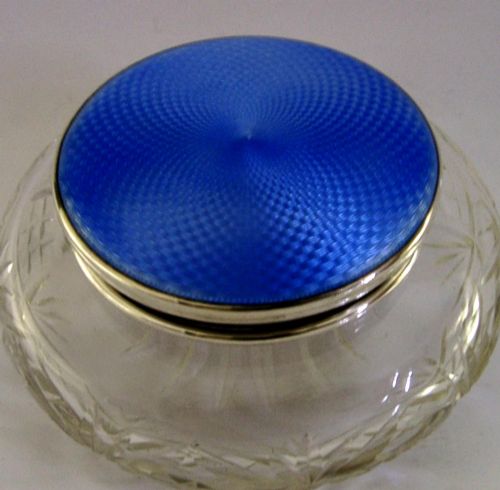


1930s Powder Jar
A 1930s powder jar brings the sharp geometric lines and playful figural sculpture of the interwar dressing table directly into your home.
1930s Powder Jar
When you examine a 1930s powder jar, you encounter vanity accessories designed to hold loose cosmetic powder on a dressing table. These objects typically take the form of ceramic bowls with fitted lids, often surmounted by figural half dolls representing flappers, pierrots, or jesters.
The pieces appearing on this page originate predominantly from the 1930 Art Deco period, with manufacture spanning ceramic workshops in France, Germany, and Austria alongside British silver-mounted glassware. You will frequently find ceramic and porcelain bowls paired with moulded glass or hand-painted figural lids.
Beyond standard powder bowls, the selection includes related vanity items such as trinket boxes, perfume bottles, and powder puff stands. These items reflect the personal grooming habits of the interwar period, combining practical storage with decorative display.
How they were made
The manufacture of these vanity items relies heavily on ceramic, porcelain, and glass casting techniques combined with metalwork. Artisans shaped clay and porcelain into bowls and figural toppers, applying coloured glazes and hand-painted details before firing.
Silver-mounted pieces incorporate sterling silver components, frequently embellished with translucent enamel over guilloche engraving. Cut glass and crystal vessels utilise precision wheel-cutting to create faceted surfaces that catch the light on a dressing table.
Object forms span vanity jars, powder bowls, perfume bottles, and figural powder puff stands from the Art Deco period.
What varies in quality
The precision of the guilloche engraving beneath the enamel and the weight of the sterling silver or cut glass contribute significantly to an object's overall calibre. Well-executed enamel work displays an even, translucent depth without cloudiness or surface pitting.
Fasold And Stuach·Limoges
The 1930s Powder Jar Glossary
- Guilloche
- A decorative mechanical engraving technique that etches precise, intricate geometric patterns into a metal surface. This worked metal is often coated with translucent enamel to let the pattern show through.
- Half doll
- A ceramic or porcelain figure modelled from the waist up, historically used as a decorative lid for powder boxes and tea cosies. These figures often depict stylized flappers or theatrical characters.
- Sterling silver
- An alloy consisting of silver and other metals, typically copper, standardised for purity in silverware manufacture. It provides the rigid mountings and lids found on many glass vanity jars.
- Flapper
- A cultural archetype of the interwar period representing modern, independent young women. Ceramic representations of these figures frequently top dressing table powder jars from the era.
1930s Powder Jar: Frequently Asked Questions
What were 1930s powder jars used for?
These jars sat on dressing tables to hold loose face powder for daily cosmetic application. Women used them alongside associated vanity items like perfume bottles and trinket boxes.
Over time, they evolved from functional containers into decorative display objects that captured the distinctive aesthetic of the Art Deco period.
How do I identify a 1930s powder jar?
Look for characteristic Art Deco styling, geometric forms, and figural motifs such as flapper girls, pierrots, or jesters. Materials typically include glazed ceramic, porcelain, cut glass, and sterling silver with enamel.
Many European pieces carry country of origin marks or manufacturer names on the base, such as French or German ceramic stamps.
Where were these powder jars manufactured?
The pieces recorded here originate from several European countries, with notable ceramic production in France, Germany, and Austria. British workshops contributed silver and glass vanity items, often bearing Birmingham hallmarks.
Regional styles often dictate the material, with continental makers favouring hand-painted porcelain figures while British makers focused on silver and glass.
How should I display a powder jar?
These decorative objects work best displayed on dressing tables, vanity units, or open shelving where their detailed lids and coloured glazes are visible. Placing them on a mirrored surface can help reflect light through glass and enamel elements.
Keep them away from direct heat sources and handle figural lids with care to protect delicate ceramic extremities and painted surfaces.