


1930s Oil Painting
A 1930s oil painting brings canvas and board alive with modernist vigour, offering collectors an authentic window into interwar European and British artistic life.
Understanding 1930s oil paintings
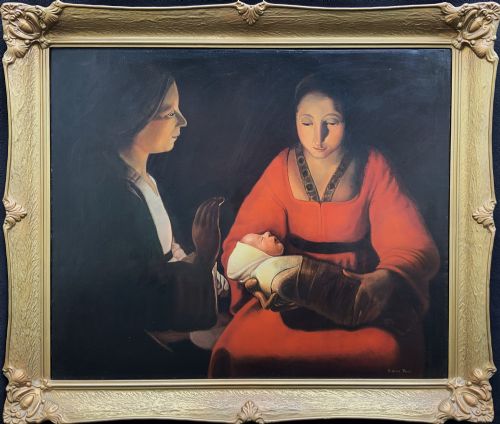
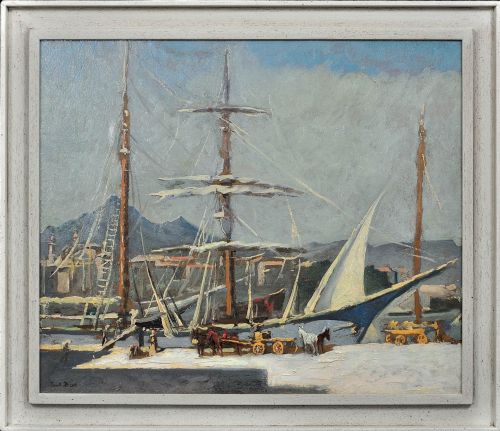
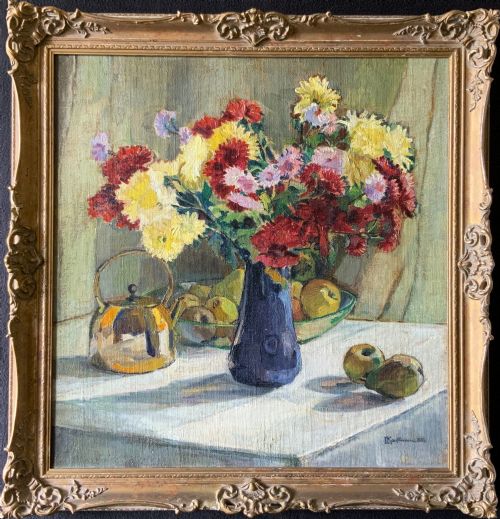
When searching for a 1930s oil painting, collectors encounter diverse works spanning British landscape, French modernism, and European portraiture from the interwar era. These pieces document a dynamic period of artistic experimentation across various regional schools.
The selections on this page encompass works executed on canvas, board, and gessoed wood panels. Subjects range from Yorkshire farmyards and French modernist interiors to intimate female portraits and sunlit continental street scenes.
Materials and construction
Artists of this decade typically applied oil paint directly onto stretched canvas or rigid boards of wood and card. Supports often reveal preparatory gesso grounds underneath the pigmented layers.
Brushwork varies from tight academic realism to loose, expressive marks characteristic of post-impressionist and modernist tendencies. Pigments were worked with brushes and occasionally palette knives to build texture.
Retail Price Guide 2026
Typical UK retail prices for 1930s oil painting, calculated from the Sellingantiques database of over a million retail prices indexed since 2003. This retail price guide relies exclusively on Sellingantiques data; no external sources or auction records are used, so the figures do not describe the wider market.
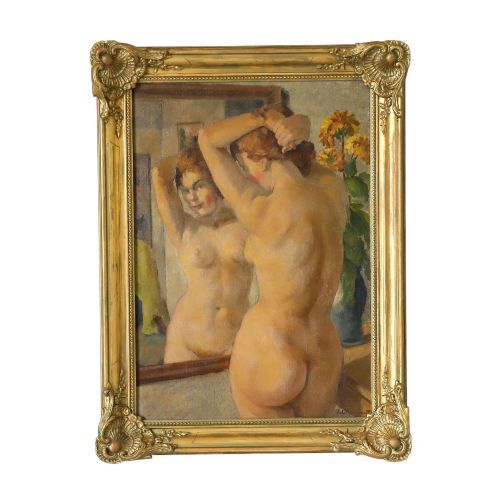
Several paintings capture quiet domestic moments, including a bohemian artist's model resting and a chef enjoying a dinner party.
Assessing quality and execution
Quality rests upon the confidence of the brushwork and the artist's command of light, colour harmony, and spatial composition. Superior examples demonstrate a cohesive palette and assured handling of the medium.
Provenance and documented studio origins elevate certain works, while compositional depth and atmospheric resonance distinguish masterly pieces from routine decorative output.
William JB Jenkins·Philip Naviasky·David Tägtström·Wilhelm Gdanietz·Robert Panitzsch
The 1930s Oil Painting Glossary
- Canvas
- A heavy woven fabric stretched across a wooden frame to serve as a painting support. It provides a flexible and resilient surface for oil application.
- Board
- A rigid flat panel made from wood pulp, compressed paper, or timber used as an alternative to stretched fabric. It offers a firm resistance against the pressure of the brush.
- Gesso
- A white paint mixture consisting of a binder mixed with chalk, gypsum, or pigment. It is applied to prepare wood or canvas surfaces for oil painting.
- Post-Impressionism
- An artistic movement extending impressionist concepts while rejecting its limitations for expressive content. It emphasises symbolic motifs and distinct colour application.
- Modernism
- A global movement in society and culture that sought to break with traditional 19th-century forms of art. It prioritised abstraction, experimentation, and structural simplification.
Frequently Asked Questions
How do I identify a 1930s oil painting?
Examine the stylistic markers typical of the interwar period, such as modernist compositions, post-impressionist brushwork, or distinct modernist interior scenes. Canvas types, framing methods, and artist signatures often provide further chronological clues.
Compare the pigment application and substrate materials with known examples from the era. Archival records and studio provenance listings can also verify the decade of creation.
What subjects are common in these paintings?
Portraits of women, sunlit European street scenes, domestic interiors, and rural landscapes frequently appear in works from this decade. Artists also explored abstraction, coastal views, and bohemian life.
Regional schools across Britain, France, Sweden, and Germany focused on local topography and everyday figures. These diverse subjects reflect the wide geographic reach of interwar artistic production.
Are these paintings executed on canvas or board?
Both canvases stretched over wooden frames and rigid wooden boards serve as primary supports for works from this period. Artists selected their materials based on portability, preference, and availability.
Board supports frequently appear in plein-air landscapes and smaller studio studies. Canvases are typically reserved for larger portraits and composed interior scenes.
How should I care for an oil painting?
Display the artwork away from direct sunlight, high humidity, and radical temperature fluctuations to protect the canvas and oil pigments. Gentle dusting with a soft, dry brush maintains the surface.
Avoid using water or chemical solvents on the paint layer. Professional conservators should handle any structural repairs or varnish cleaning.