


1930s Maple Table
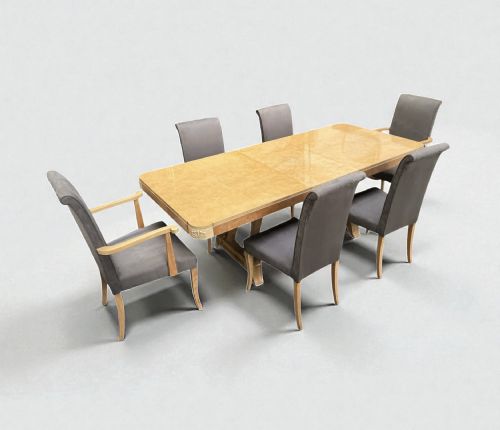
A 1930s maple table brings warm grain and clean lines to a room, offering both practical surface space and distinct period character.
1930s Maple Table
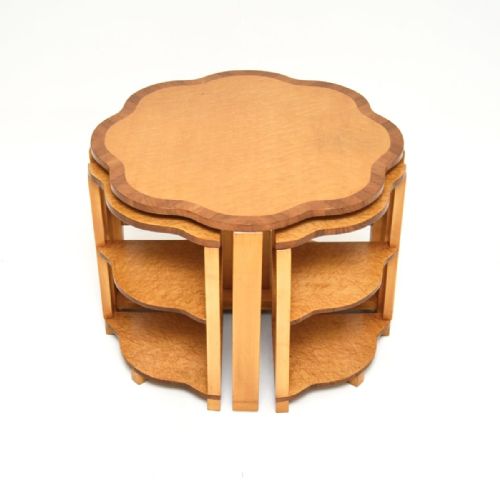
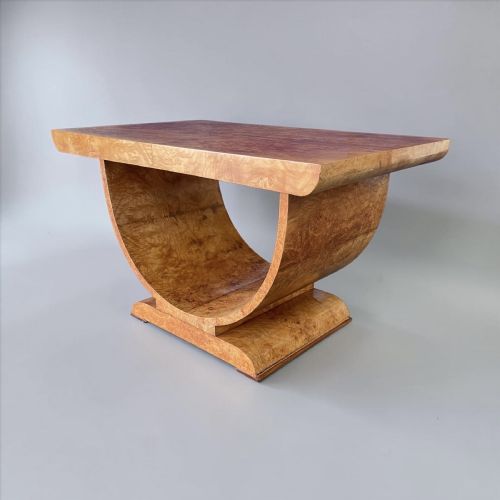
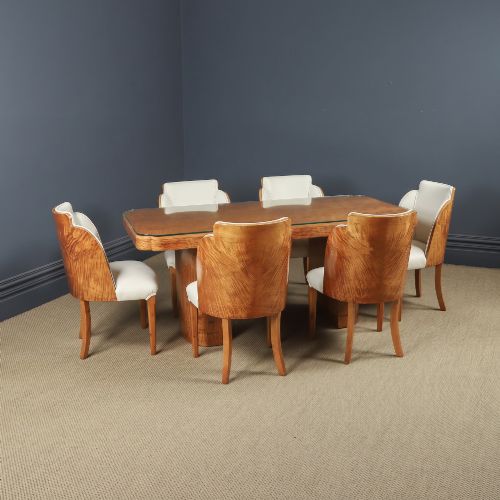
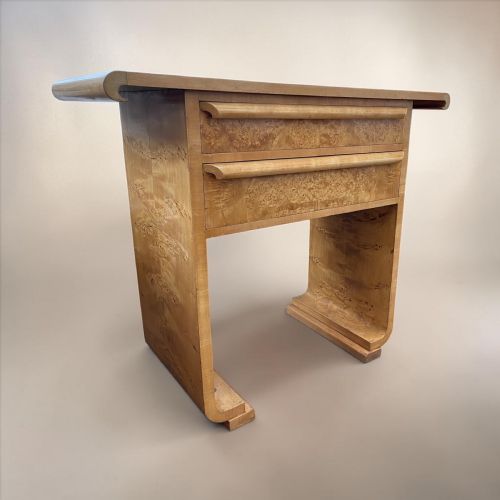
A 1930s maple table represents the clean geometry and streamlined forms of the Art Deco era, often constructed from distinct timbers like birds-eye or burr maple. Buyers searching for a 1930s maple table frequently encounter occasional tables, coffee tables, and larger dining suites designed with both utility and display in mind.
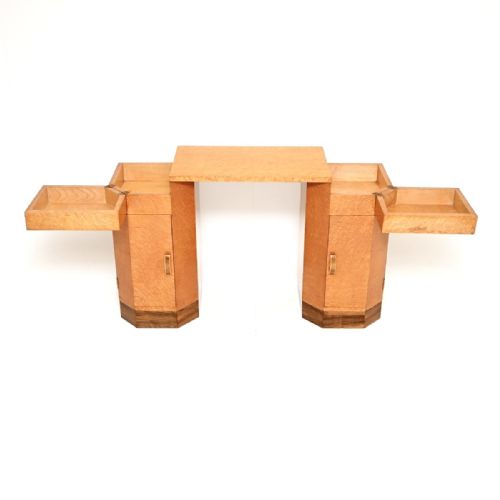
The objects span dining tables, nesting tables, and console tables, frequently paired with contrasting woods such as walnut or rosewood. Most pieces originate from the interwar period, combining traditional cabinet-making with the progressive styling of twentieth-century design.
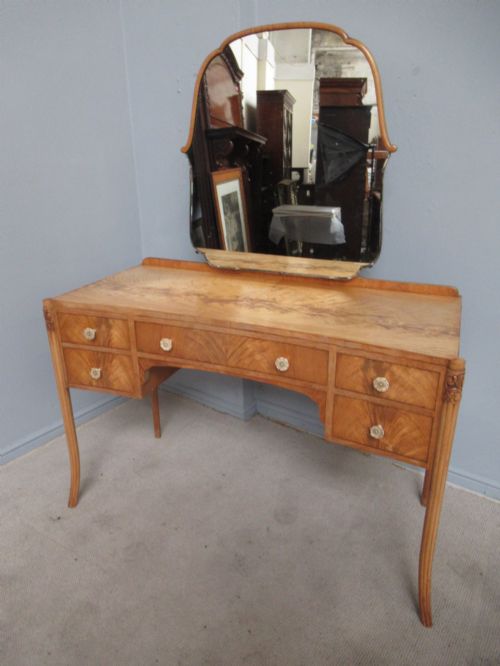
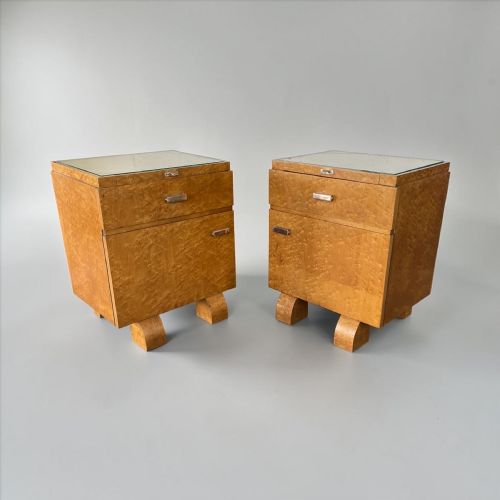
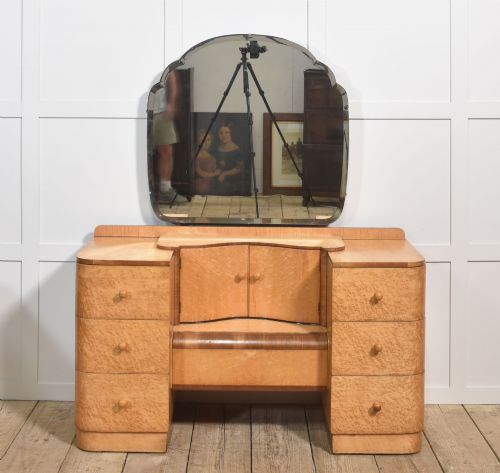
Makers and retailers of the period utilised figured veneers to create striking patterns across table tops and cabinet fronts. These tables range from compact bedside stands to large extendable dining tables capable of seating ten or twelve people.
How they were made
Makers applied thin sheets of birds-eye maple, burr maple, and standard maple veneers over a supportive wood base, allowing them to showcase intricate natural grain patterns across wide surfaces. They frequently combined these light maples with darker timbers like rosewood, walnut, and mahogany to create strong linear contrasts.
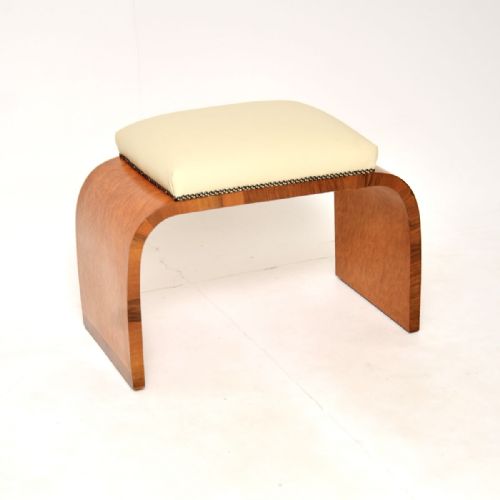
Glass, leather, and silvered glass were occasionally integrated into table tops and companion seating, adding texture and reflective surface quality to the wooden structures. Construction methods relied on solid internal framing paired with precise veneer work typical of Art Deco cabinet production.
Materials recorded across current pieces include glass, leather, satinwood, walnut, rosewood, and several variants of maple.
What varies in quality
The skill of the veneer matching distinguishes simpler production pieces from superior examples by prominent makers. Gradations in quality depend on how evenly the figured grain is balanced across the surface and how well secondary woods are chosen to complement the primary maple.
Proportion and the integration of secondary materials, such as contrasting ebonised details or inlaid rosewood, dictate the visual success of the piece. Tables bearing documented workshop attributions or specific retail provenances generally demonstrate higher levels of finish in their joinery and polishing.
Fortnum and Mason·Hille Furniture Company·Harry and Lou Epstein
The 1930s Maple Table Glossary
- Birds Eye Maple
- A figure in maple wood that resembles tiny, swirling eyes caused by local distortions in the grain growth. It is highly valued for decorative veneer work on interwar furniture.
- Burr Maple
- A growth deformity on a tree that produces intricate, swirling patterns in the timber. Cabinet-makers slice these growths into decorative veneers for table tops.
- Art Deco
- A design style of the 1920s and 1930s characterised by streamlined shapes, geometric ornamentation, and modern industrial materials. It strongly influences the form of these tables.
- Occasional Table
- A small, secondary table designed for a specific, intermittent use rather than central dining. Examples include coffee tables, lamp stands, and two-tier variants.
- Nesting Table
- A set of smaller tables that fit neatly beneath one another to save space. They gained popularity during the interwar period for flexible entertaining.
1930s Maple Table: Frequently Asked Questions
What styles define a 1930s maple table?
These pieces predominantly follow the Art Deco style, marked by geometric symmetry, clean silhouettes, and an emphasis on figured wood grains. Some examples also display influences of Swedish Grace through understated elegance and refined proportions.
Makers utilised the natural patterns of the timber as the primary ornament, keeping structural decoration minimal to highlight the grain.
How do I care for a maple table?
Keep the wood away from direct sunlight and sudden temperature changes to protect the delicate veneer and polished finish. Use dry cloths for dusting and avoid silicone-based polishes that can build up over time.
Placing coasters beneath glasses and hot items prevents moisture rings from forming on the polished surface.
What other woods are paired with maple?
Walnut, rosewood, mahogany, and ebonised wood frequently appear alongside maple in these pieces. These darker timbers provide sharp borders and contrasting panels that accentuate the pale tone of the maple.
In some instances, satinwood is also incorporated into dining room suites alongside leather chair upholstery.
Are these tables suitable for daily dining?
Larger extending dining tables and dining suites from this era were built to accommodate multiple guests for everyday meals. Using table pads or linens protects the veneer surface during regular use.
Smaller occasional and coffee tables serve lighter daily functions, such as holding books or lamps.