
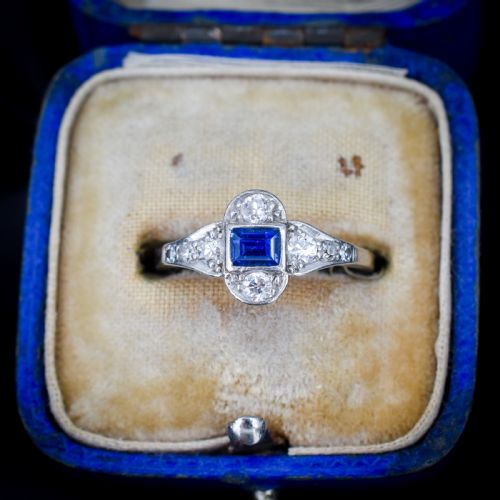


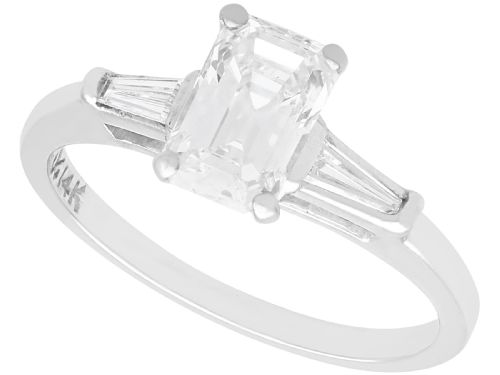


1930s Emerald Ring
A 1930s emerald ring brings unmistakable geometry and vivid colour to the hand, combining platinum settings with old cut diamonds.
What 1930s emerald rings are
A 1930s emerald ring is a piece of period jewellery defined by the geometric geometry of the Art Deco style. These rings generally take the form of dress rings, cocktail rings, or solitaires designed to showcase central green beryl stones.
The versions most commonly met on this page combine emeralds with diamond accents in platinum or 18ct gold mountings. They originate from the nineteen thirties and nineteen twenties, reflecting the prevailing design aesthetic of those decades.
Buyers look for these pieces to secure authentic period character, wearable history, and distinct stone cuts. The selection ranges from delicate three stone arrangements to substantial cluster and cocktail formats.
How they were made
These rings are constructed using precious metals such as platinum and 18ct gold, which provide the structural strength needed to hold intricate stone arrangements securely. Metalwork from this era frequently incorporates fine millegrain edges and precise geometric channel or claw settings.
The stones themselves comprise emeralds paired with diamonds, including old cut diamonds and emerald cut varieties. Goldsmiths shaped the settings by hand to match the angular lines characteristic of Art Deco design.
Retail Price Guide 2026
Typical UK retail prices for 1930s emerald ring, calculated from the Sellingantiques database of over a million retail prices indexed since 2003. This retail price guide relies exclusively on Sellingantiques data; no external sources or auction records are used, so the figures do not describe the wider market.
Listings feature emerald, diamond, platinum, gold, and 18ct gold across the Art Deco style.
What varies in quality
The distinction between tiers of quality rests upon the geological origin and clarity treatment of the central emerald, alongside the carat weight and colour grade of accompanying diamonds. Colombian stones with minor oil treatments and higher carat weights sit firmly at the upper end of the range.
Execution of metalwork further defines a superior piece, where platinum mountings demonstrate crisp geometric lines and immaculate millegrain detailing without past alteration. The balance of the design, from solitaire proportions to complex star cluster layouts, determines the overall visual harmony.
The 1930s Emerald Ring Glossary
- Art Deco
- A design style dominant in the nineteen twenties and thirties characterised by geometric shapes, stylised motifs, and sleek lines. It influenced architecture, fashion, and jewellery alike.
- Millegrain
- A decorative technique featuring a row of tiny raised metal beads along the edge of a setting. It softens the metal profile and adds subtle texture.
- Old cut diamond
- A diamond cut by hand before modern symmetrical standards were established in the twentieth century. These stones feature smaller tables and larger culets that produce a softer candlelit sparkle.
- Platinum
- A dense, durable, and naturally white precious metal favoured in period jewellery for its strength. It allows for delicate wirework and secure claw settings.
- Solitaire
- A ring featuring a single central gemstone mounted on its own. This setting draws complete focus to the primary stone.
Frequently Asked Questions
Are these rings suitable for daily wear?
These pieces require mindful care due to the natural inclusion patterns inherent in emeralds. Regular knocks can risk the integrity of the central stone.
Removal during manual tasks or heavy physical activity ensures the platinum settings and diamond accents remain secure over time.
How can I tell a 1930s ring apart from later reproductions?
Authentic period pieces exhibit hand-finished details like millegrain edges and traditional stone cuts such as old cuts or specific emerald cuts. The construction methods reflect the limitations and techniques of early twentieth-century goldsmithing.
Later copies often display machine uniformity or modern casting marks that lack the organic precision of genuine items.
What metal is most common in these rings?
Platinum and 18ct gold dominate the construction of these items, frequently utilised together within the same mounting. Platinum provided the preferred white backdrop for diamonds during the period.
Yellow gold also appears, particularly in cluster configurations, offering a warmer contrast to the green beryl.
How do I care for an emerald ring?
Cleaning should involve only warm soapy water and a soft brush, avoiding harsh chemical dips or ultrasonic cleaners. Many period emeralds contain natural oils that require gentle treatment.
Storage in a dedicated ring box prevents contact with harder gemstones that might scratch the platinum or the emerald surface.