
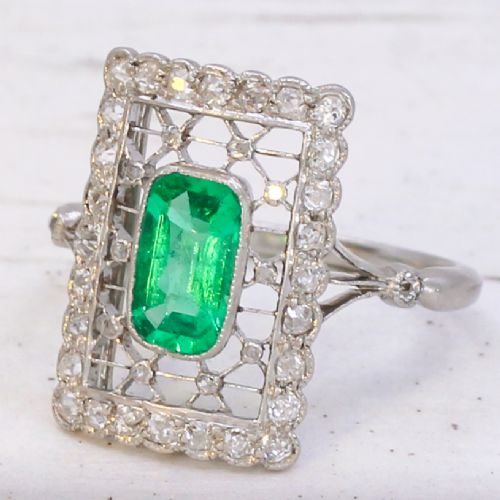
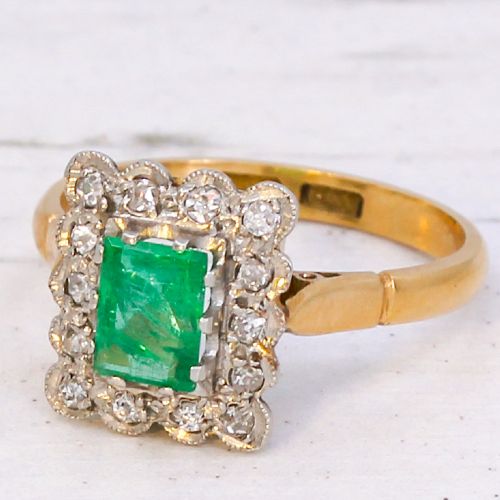
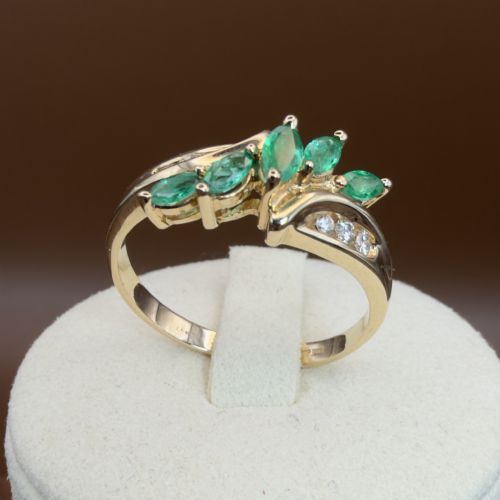
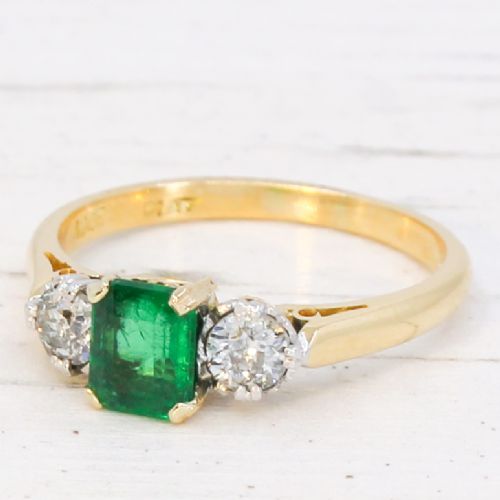
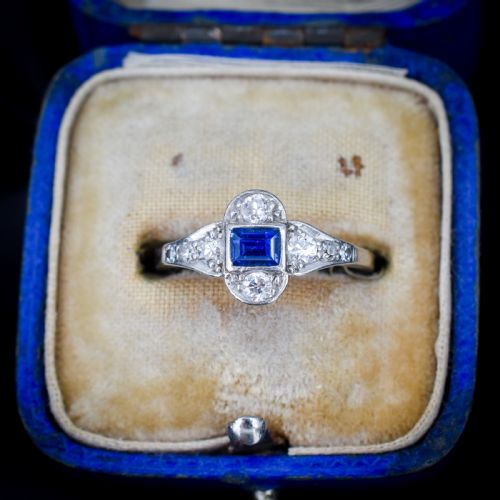
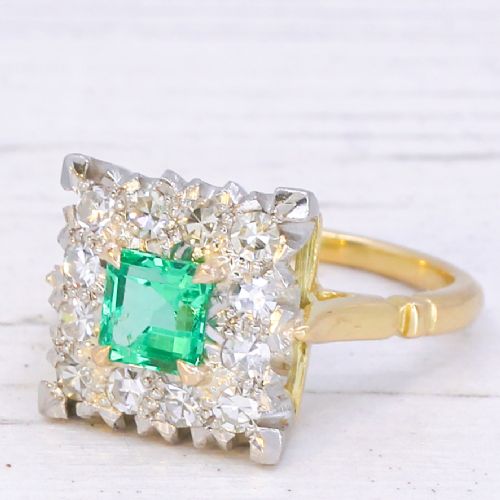
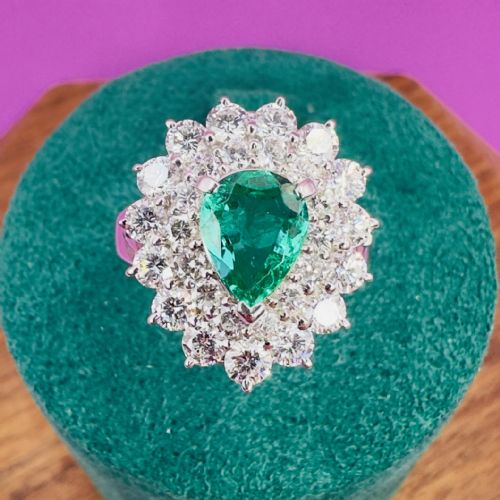
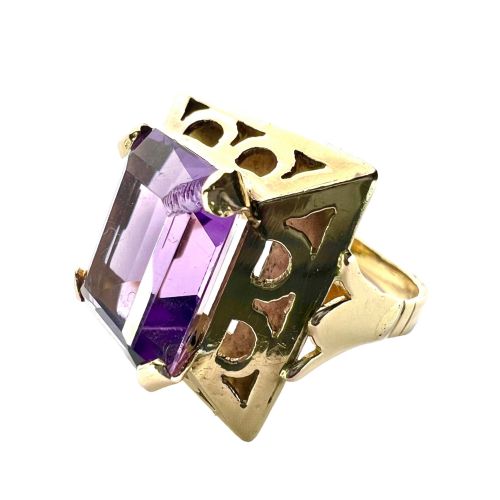
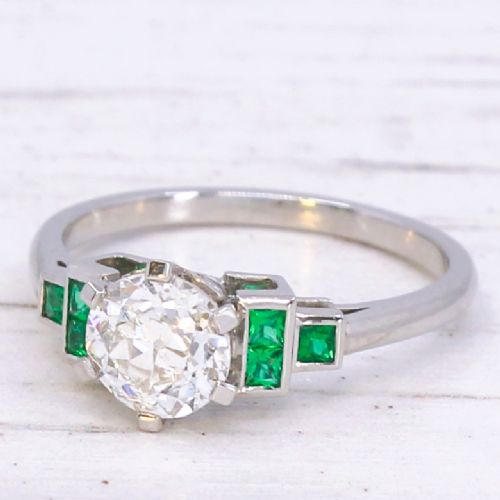
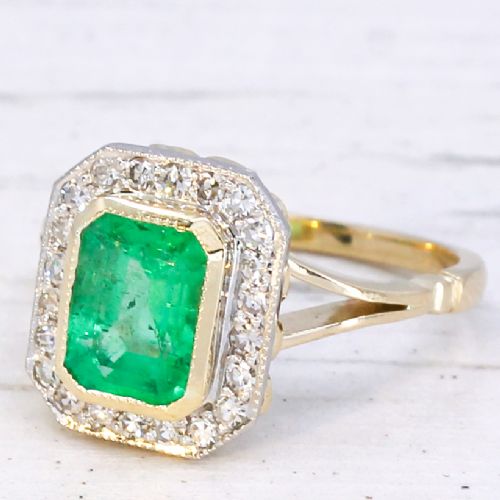

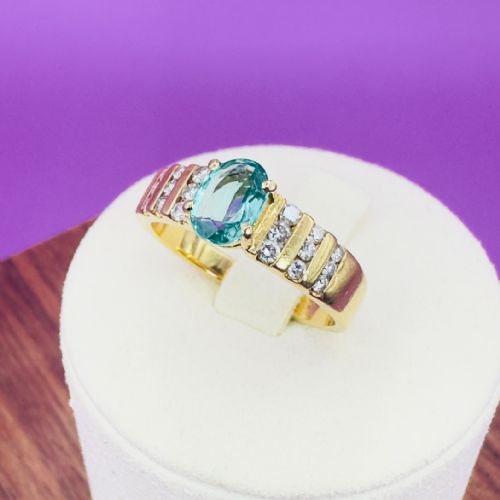
Emerald Cut Ring
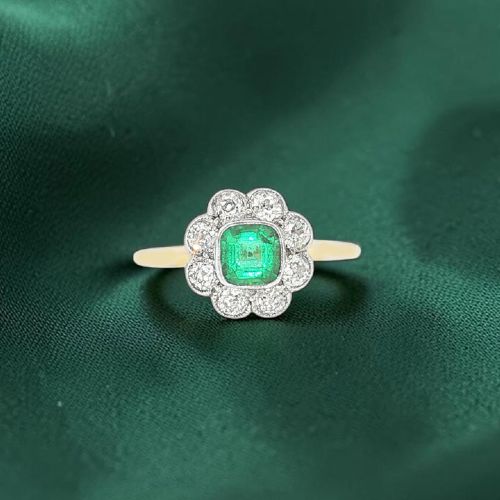
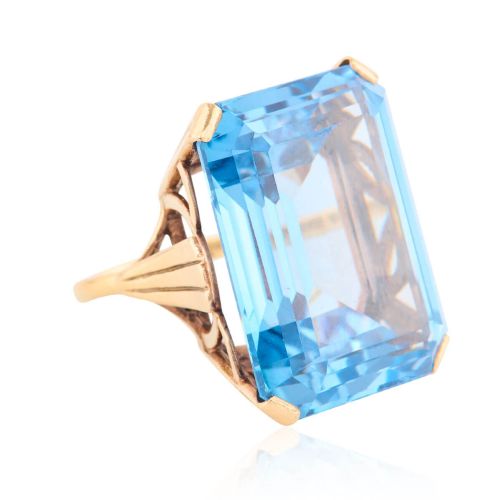
An emerald cut ring gathers stones shaped with clipped corners and stepped facets, favoured for clean geometric lines.
How They Were Made
The fabrication of these rings relies on precious metals including platinum and yellow or white gold, shaped into bands, bezels, and prong settings. Stones are cut with step facets that require precise alignment to display the interior of the crystal clearly.
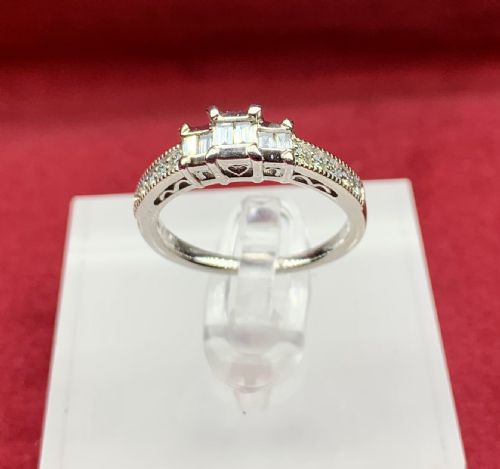
Goldsmiths and platinum workers assembled multi-stone configurations by hand, integrating central emerald cut gems with smaller accent diamonds in cluster, trilogy, or solitaire layouts. Surface details often feature channel work, millegrain edging, and structural gallery wire.
What Varies in Quality
The upper tier of these rings displays superior stone origin certification, such as documentation noting minor oil treatments for natural emeralds, paired with high clarity grades in surrounding diamonds. Metalwork precision, including crisp step faceting and secure claw or bezel settings, separates finely constructed examples from standard production.
Proportion and symmetry dictate visual balance, where the rectangular geometry of the primary stone complements the structural weight of the platinum or gold band. Original hallmarks and intact maker marks further establish the integrity of the piece.
Retail Price Guide 2026
Typical UK retail prices for emerald cut ring, calculated from the Sellingantiques database of over a million retail prices indexed since 2003. This retail price guide relies exclusively on Sellingantiques data; no external sources or auction records are used, so the figures do not describe the wider market.
Some rings manage to smuggle an anchor shape right into the Victorian sweetheart design, just in case love needs mooring.
The Emerald Cut Ring Glossary
- Emerald cut
- A rectangular or square stone shape defined by stepped facets and cropped corners. This geometry prioritises stone clarity over brilliance.
- Millegrain
- A decorative technique featuring a fine line of raised metal beads along the edges of a setting. It adds textural definition to platinum and gold mountings.
- Trilogy ring
- A ring set with three stones representing past, present, and future. These commonly combine a central gemstone with two flanking diamonds.
- Old European cut
- A round diamond cut prevalent before the modern brilliant cut, featuring a small table, high crown, and open culet. This cut produces distinctive broad flash patterns under candlelight.
- Baguette cut
- A small, rectangular step-cut stone shape often utilised for shoulders or side accents. Its linear profile complements geometric mountings.
Frequently Asked Questions
What periods do these rings come from?
The items originate from various decades across the twentieth century, spanning Edwardian work through the Art Deco era and into the mid-century period.
Individual examples also represent later revivals of these historical design movements.
Are all the centre stones emeralds?
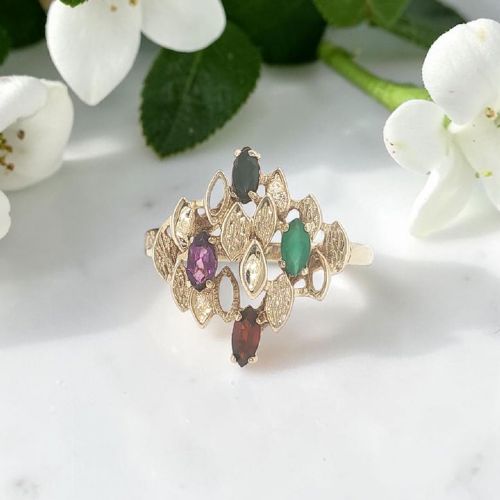
While many settings feature natural emeralds, the category also includes alternative stones shaped with the same rectangular geometry.
Listings encompass varieties such as aquamarine, sapphire, garnet, and diamond cut in the emerald style.
What metals are used in the settings?
The mountings are constructed from platinum and gold of differing purities, including 18ct and 9ct yellow and white gold variations.
Platinum was frequently chosen during the Art Deco period for its strength in holding intricate stone configurations.
How do I care for an antique ring?
Daily maintenance involves removing the jewellery during physical activities and cleaning gently with warm soapy water and a soft brush.
Harsh chemical dips should be avoided, particularly for treated emeralds or softer coloured stones.
What is a minor oil treatment?
This refers to the traditional practice of filling minor surface-reaching fissures in natural emeralds with a small amount of oil to improve clarity.
Certified minor oil treatments are viewed favourably by collectors compared to more heavily treated stones.