
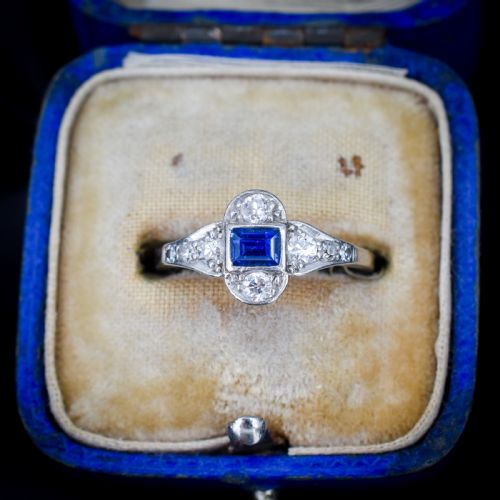


1920s Emerald Ring
A 1920s emerald ring brings together vibrant green stones and geometric settings from the Art Deco period.
What these rings are
The versions most commonly met on this page are platinum or gold band configurations featuring step-cut or brilliant gemstones. They reflect the distinct geometric aesthetic of the era through symmetrical arrangements and precise stone settings.
How they were made
Makers utilised precious metals including platinum, 18ct white gold, and 9ct gold to construct the foundational bands and intricate settings. Platinum provided the necessary strength for delicate claw or channel settings holding multiple stones.
Goldsmiths set natural emeralds alongside sparkling diamonds, securing them within geometric cluster and solitaire formations. The metalwork often incorporated fine detailing to frame the principal green stones.
Retail Price Guide 2026
Typical UK retail prices for 1920s emerald ring, calculated from the Sellingantiques database of over a million retail prices indexed since 2003. This retail price guide relies exclusively on Sellingantiques data; no external sources or auction records are used, so the figures do not describe the wider market.
Every green flash tells a story of jazz-age dinners.
What varies in quality
Quality in a 1920s emerald ring rests in the scale and clarity of the central gemstone alongside the proportion of the surrounding diamonds. Pieces featuring substantial carat weights command attention through their visual presence and stone depth.
The choice of metal also defines the tier of the piece, with solid platinum and 18ct white gold settings representing finer construction than 9ct gold alternatives. The precision of the Art Deco geometric layout dictates the overall harmony of the design.
The 1920s Emerald Ring Glossary
- Art Deco
- A design style from the 1920s and 1930s characterised by geometric shapes, symmetry, and stylised motifs. It defines the structural appearance of these rings.
- Solitaire
- A ring featuring a single central gemstone mounted on a metal band. This setting highlights the primary emerald without distraction.
- Cluster ring
- A ring design where a central stone is surrounded by a group of smaller gemstones. This arrangement maximises sparkle and visual impact.
- Platinum
- A dense, durable white metal utilised in fine jewellery manufacture. It allows for secure and slender stone settings.
Frequently Asked Questions
What defines a 1920s emerald ring?
These rings are defined by their Art Deco design, utilising geometric arrangements of diamonds and emeralds set in platinum or gold.
They originate from the 1920 and 1930 periods, showcasing the characteristic craftsmanship and aesthetic of that era.
How do I wear an antique ring daily?
Wearing an antique ring daily requires mindful care, particularly given the delicate nature of emeralds and platinum or gold settings.
It is wise to remove the jewellery during rigorous activities to protect the stones and metalwork from unnecessary impact.
Are these rings made of solid platinum?
The listings show that many of these pieces are constructed from solid platinum, while others utilise 18ct white gold or 9ct gold.
Platinum was favoured for its strength, allowing jewellers to create secure, fine settings for emeralds and diamonds.
What stone cuts appear in these rings?
The evidence records various diamond and emerald cuts integrated into solitaire, dress, and panel cluster configurations.
These cuts work together within the symmetrical parameters of the Art Deco style.