
Antique Emerald Jewellery
Antique emerald jewellery brings together deep green beryl and diamonds set in platinum, gold, and silver across periods from the Georgian era to the mid-twentieth century.
Antique Emerald Jewellery
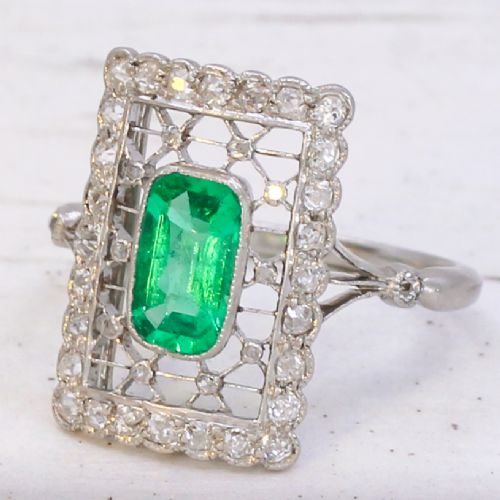
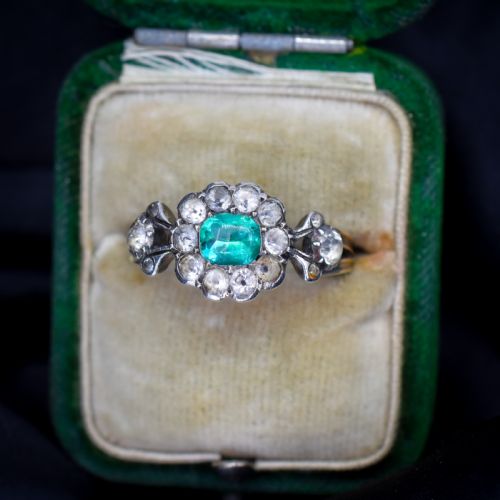
When you search for antique emerald jewellery, you encounter rings, brooches, necklaces, and pendants spanning the Georgian, Victorian, Edwardian, Art Deco, and mid-century periods. These pieces combine natural emeralds with diamonds, pearls, and occasionally paste or coloured gemstones, mounted in yellow gold, white gold, platinum, or silver.
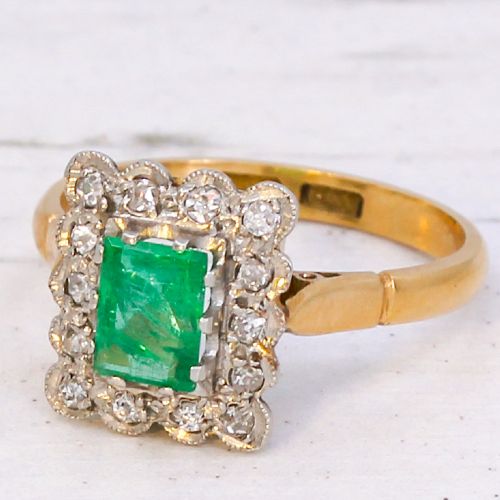
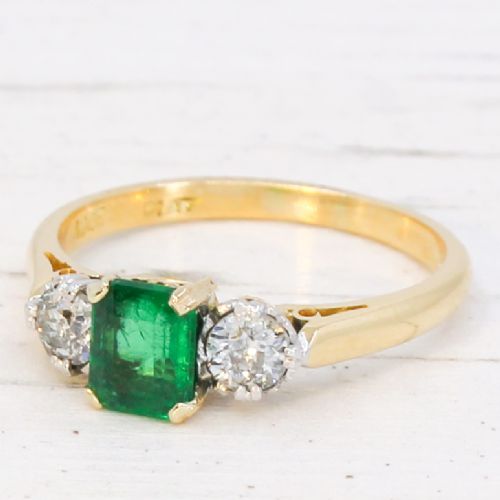
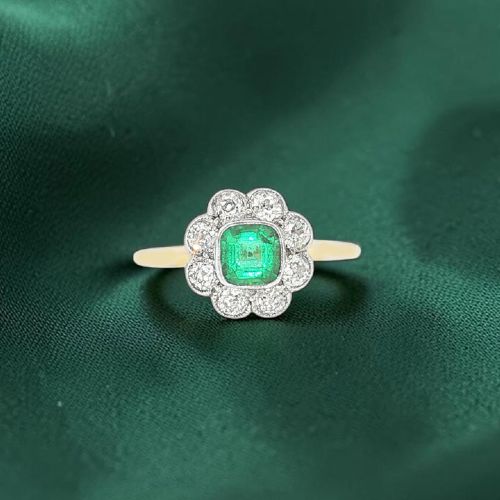
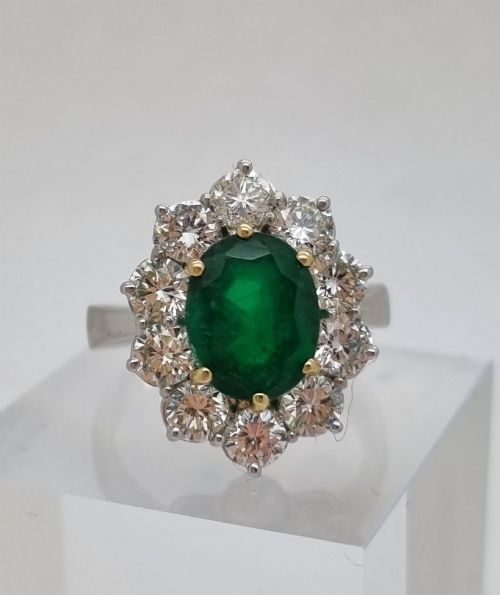
The most common forms on this page are cluster rings and diamond-accented dress pieces from the early decades of the twentieth century. Art Deco designs and Edwardian platinum settings appear frequently alongside earlier nineteenth-century gold work.
How they were made
Goldsmiths and platinumsmiths utilised hand-fabrication and casting techniques, mounting old-cut diamonds around central emerald cuts, marquis cuts, or pear cuts. Platinum gained prominence during the Edwardian and Art Deco eras for its strength in delicate wirework and millegrain edges.
Earlier pieces from the Georgian and Victorian periods relied on gold and silver foils behind paste or stones to enhance colour, while later twentieth-century examples employed white and yellow gold in heavier cast clusters and band rings.
Antique Emerald Jewellery Retail Price Guide 2026
Typical asking prices for emerald jewellery among the pieces listed under this phrase on Sellingantiques today, from the lower quarter to the upper quarter. They describe what is for sale here now, not the wider market.
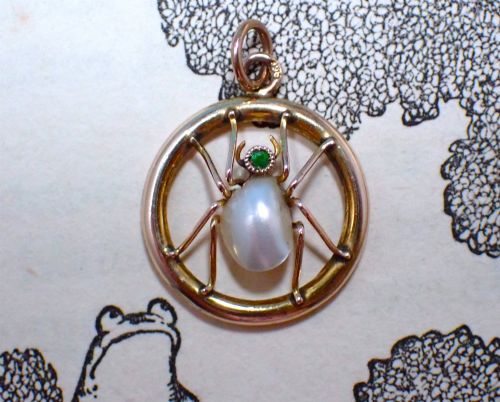
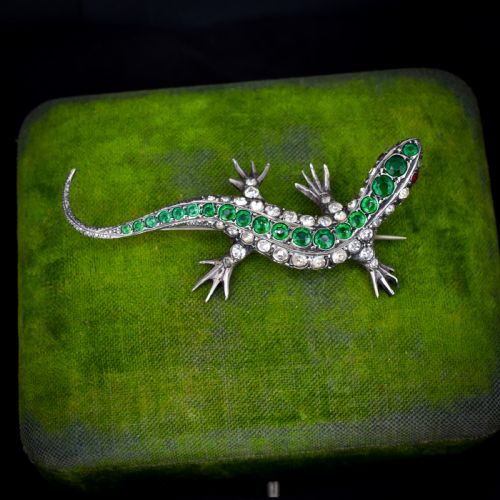
A silver lizard brooch watches quietly from the Victorian lineup, guarding its tiny emerald eyes.
What varies in quality
Quality in these items depends upon the origin and clarity treatment of the emeralds, such as negligible or minor oil enhancement in Colombian stones, paired with the cut and colour of accompanying old-cut diamonds. The integrity of the original metalwork, whether platinum, gold, or silver, also dictates the standard of the piece.
Maker skill shows in the precision of stone setting and the preservation of delicate details like millegrain borders. Pieces retaining their original configuration without later stone replacements or structural alterations command greater interest.
The Antique Emerald Jewellery Glossary
- Colombian emerald
- A stone originating from the mines of Colombia, historically prized for a superior depth of green colour. These stones often exhibit specific natural inclusions known as the jardin.
- Millegrain
- A decorative technique featuring a row of tiny raised metal beads along the edges of a setting. This Edwardian and Art Deco detail softens the transition between metal and gemstone.
- Old-cut diamond
- A hand-faceted diamond cut before the standardisation of the modern brilliant cut in the early twentieth century. These stones typically display smaller tables and broader culets.
- Paste
- Hand-cut lead glass used to simulate gemstones in antique jewellery. Georgian and Victorian paste pieces display high craftsmanship despite lacking precious stones.
- Cluster ring
- A ring design featuring a central gemstone surrounded by a border of smaller stones, usually diamonds. This arrangement maximises visual impact and light reflection.
Antique Emerald Jewellery: Frequently Asked Questions
What periods do these pieces span?
The selection covers items from the Georgian and Victorian eras through the Edwardian, Art Deco, and mid-twentieth-century periods. Each era brought distinct shifts in metal choice and mounting style.
Platinum dominates the Edwardian and Art Deco pieces, while yellow gold and silver characterise the nineteenth-century items.
How are emeralds usually set?
Goldsmiths mounted emeralds in claw settings, bezel settings, and cluster arrangements surrounded by diamonds. Platinum and white gold frequently held the stones in geometric Art Deco patterns.
Earlier pieces often utilised yellow gold or silver settings, sometimes incorporating closed-back foils to alter the light passing through the gemstone.
What metals appear in these items?
Materials include platinum, silver, 9ct gold, 15ct gold, 18ct yellow gold, 18ct white gold, and occasional mixed gold settings. Platinum became widely used in the early twentieth century.
Earlier nineteenth-century pieces frequently combined gold and silver to mount stones securely while maintaining a bright appearance on the face of the jewel.
Are all the stones natural emeralds?
Most listings feature natural emeralds, sometimes accompanied by certification noting origin or clarity enhancements like oil treatment. Certain items from the nineteenth century utilise green paste instead of mined stones.
Paste jewellery represents a distinct decorative tradition rather than an imitation intended to deceive, utilising high-lead glass to achieve vivid colour.