
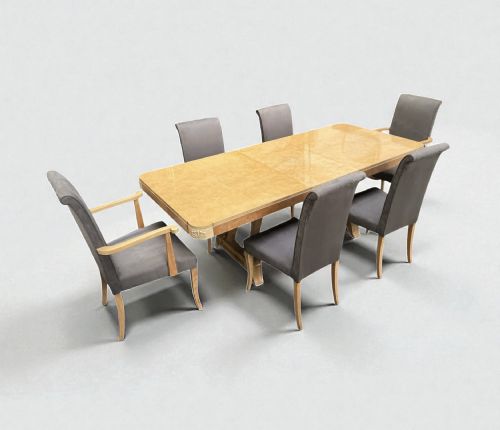


1930s Dining Chairs
These 1930s dining chairs offer striking modernist lines and solid timber construction that anchor a dining room with genuine period character.
1930s Dining Chairs
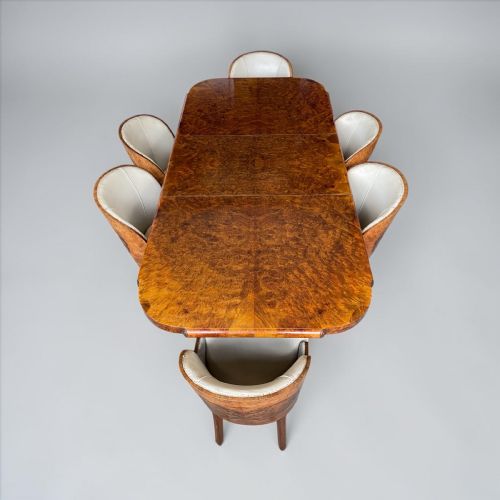
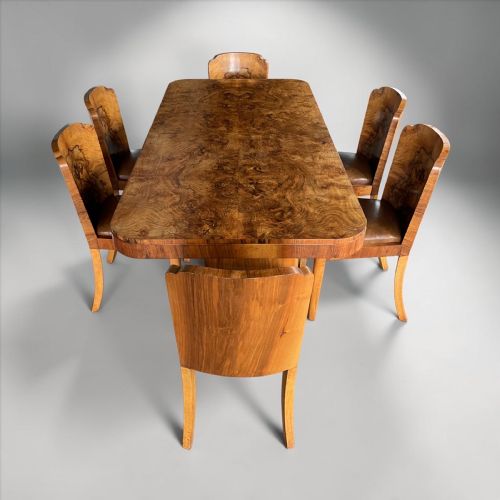
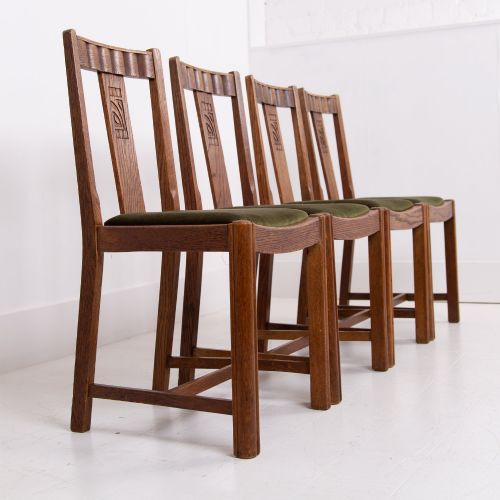
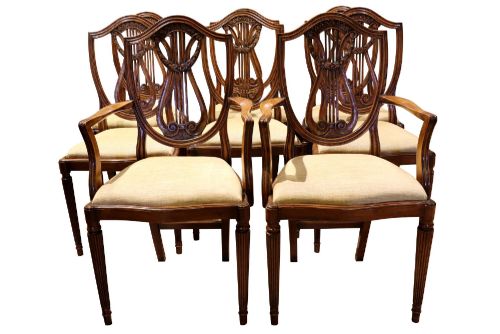
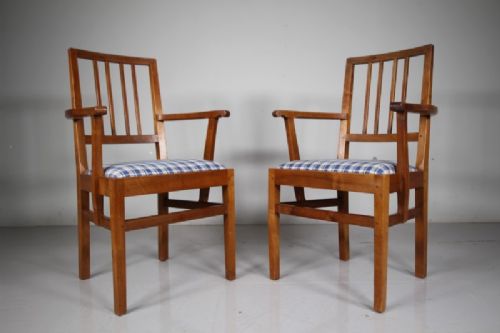
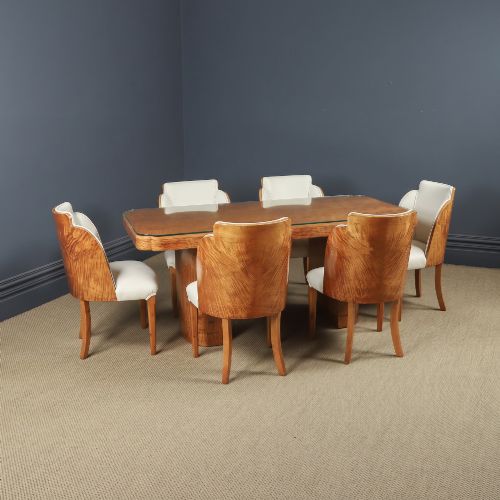
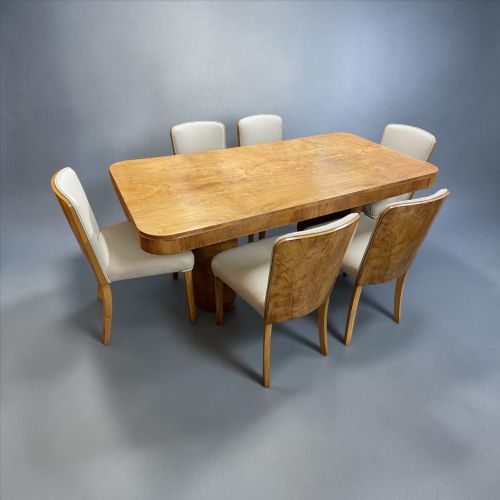
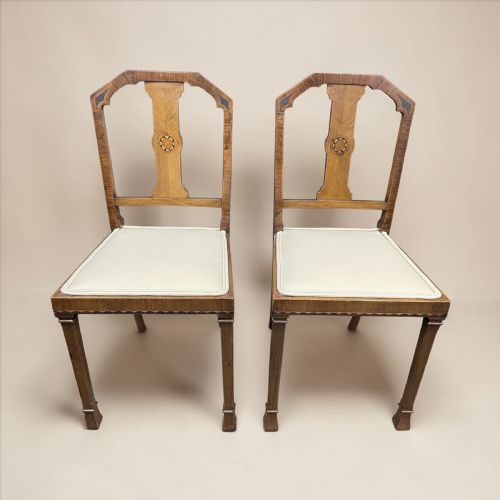
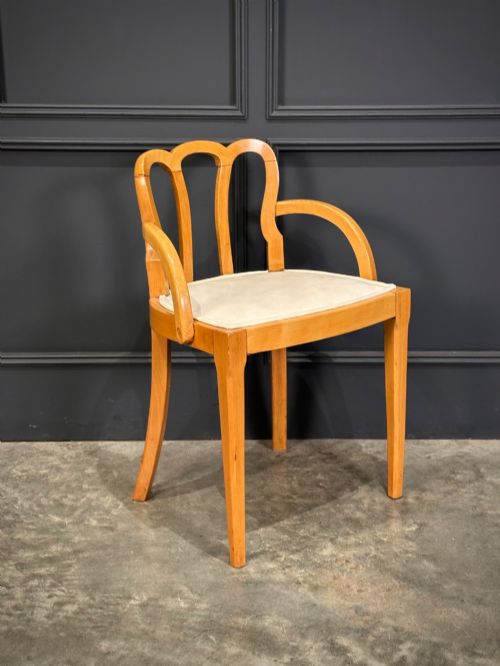
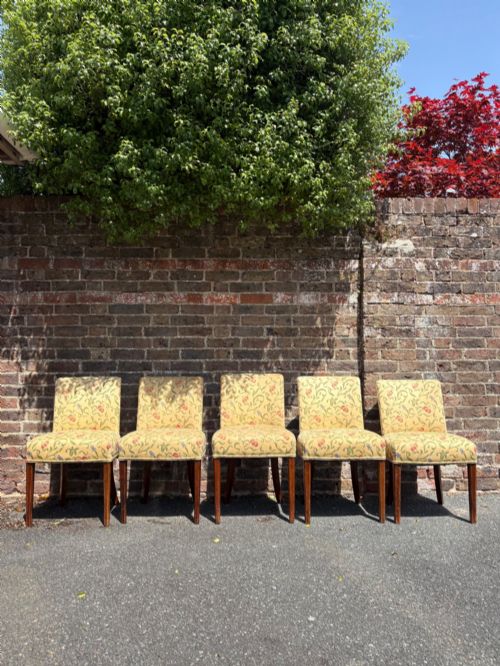
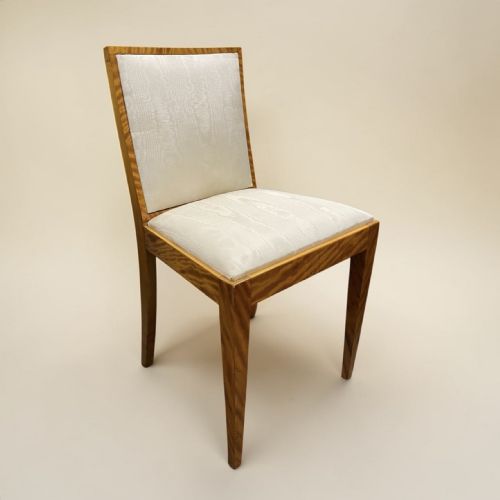
When you search for 1930s dining chairs, you encounter seating that ranges from straightforward oak ladderbacks to sculptural Art Deco walnut suites. The version you are most likely to meet on this page is an upholstered side chair or armchair rooted in the Art Deco or Arts and Crafts traditions, often acquired alongside a matching dining table.
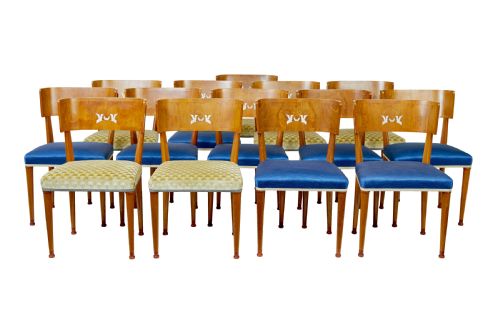
The materials and forms vary considerably, reflecting both traditional revival styles like Hepplewhite and Chippendale alongside forward-looking Swedish Grace and British studio designs. These chairs served formal dining rooms and modest kitchens alike, resulting in survivors built from sturdy domestic oak as well as exotic veneered hardwoods.
How they were made
Cabinet makers utilised solid timbers such as oak, walnut, and mahogany for structural frames, employing traditional joinery to ensure everyday durability. Decorative surfaces frequently display figured veneers including burr walnut, burr maple, satinwood, and calamander.
Seating portions were constructed with sprung or webbed foundations, finished in materials ranging from supple leather and velvet to woven rush and standard upholstery fabric.
Makers marked their territory with everything from hot irons to paper labels, occasionally hiding signatures beneath the seat rails.
What varies in quality
The distinction between ordinary and exceptional chairs rests largely on the ambition of the design and the pedigree of the maker. Pieces bearing stamps from known cabinet makers or workshops demonstrate superior timber selection, precise veneer matching, and heavier gauge framing.
Simpler production pieces rely on plain oak or beech with standard joinery, whilst top-tier examples exhibit meticulous attention to the curve of a cloud back or the sweep of a klismos form.
Maurice Adams·Harry and Lou Epstein·Bath Cabinet Makers·Hille·Edward Barnsley·Dicon Nance·Heals
The 1930s Dining Chairs Glossary
- Art Deco
- A design style characterised by sleek geometric shapes, stylised motifs, and luxurious materials popular between the wars.
- Klismos
- An ancient Greek chair design revived in the twentieth century featuring curved legs and a sweeping concave backrest.
- Cloud Back
- A rounded, upholstered chair back configuration popular in high-end Art Deco suites, resembling a stylised cloud.
- Ladderback
- A traditional chair design featuring horizontal slats across the backrest, frequently seen in oak dining seating.
- Veneer
- A thin layer of decorative timber applied over a secondary wood base to showcase complex grain patterns like burr walnut.
1930s Dining Chairs: Frequently Asked Questions
Are 1930s dining chairs sturdy enough for daily use?
Most solid timber frames from this decade remain exceptionally robust and handle daily seating without issue.
Buyers should inspect the joints and upholstery webbing to ensure the internal structure supports regular sitting.
How do I identify Art Deco dining chairs?
Look for symmetrical geometric shapes, rounded waterfall edges, and polished exotic veneer surfaces like walnut or maple.
These chairs often form part of a larger dining suite rather than standing as single occasional seats.
Can I mix these chairs with a modern table?
Mixing period seating with contemporary tables creates an effective contrast, particularly when timber tones complement each other.
Armchairs work well at the table ends while side chairs line the sides.
What is the difference between side chairs and armchairs?
Side chairs feature a backrest and seat without armrests, designed to tuck neatly beneath a dining table.
Armchairs include supportive side rests and usually occupy the head and foot positions of the table.