



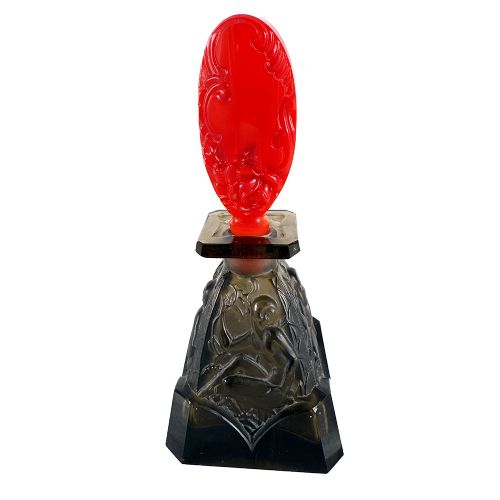


1930s Czech Art Glass
These pieces of 1930s czech art glass bring bold geometric lines and vibrant enamel decoration into modern interiors.
1930s Czech Art Glass
Collectors seeking 1930s czech art glass encounter striking items produced during the Art Deco period in Czechoslovakia. The selection centres heavily on functional and decorative objects created in the 1930s, alongside some pieces dating to the 1920s.
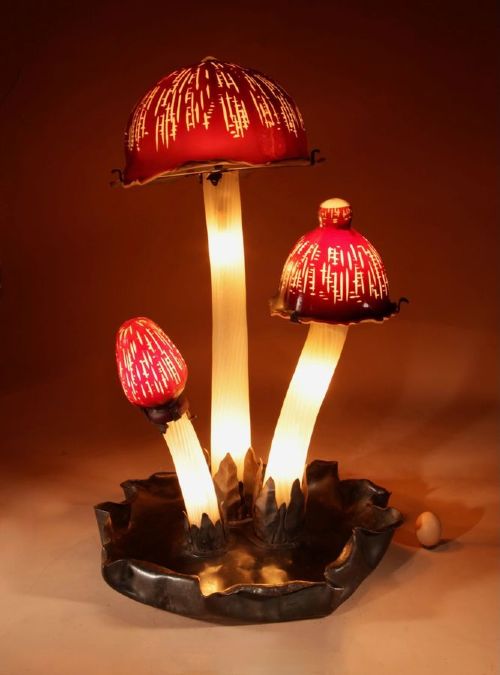
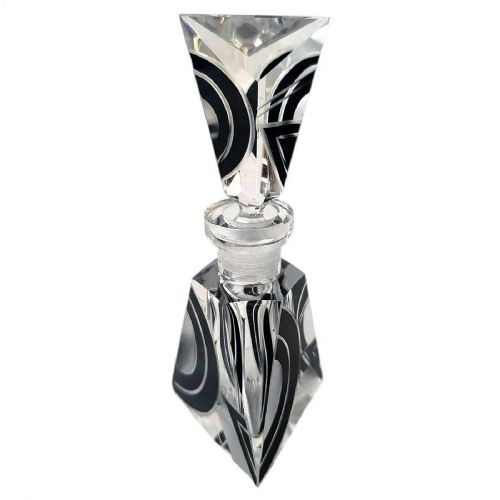
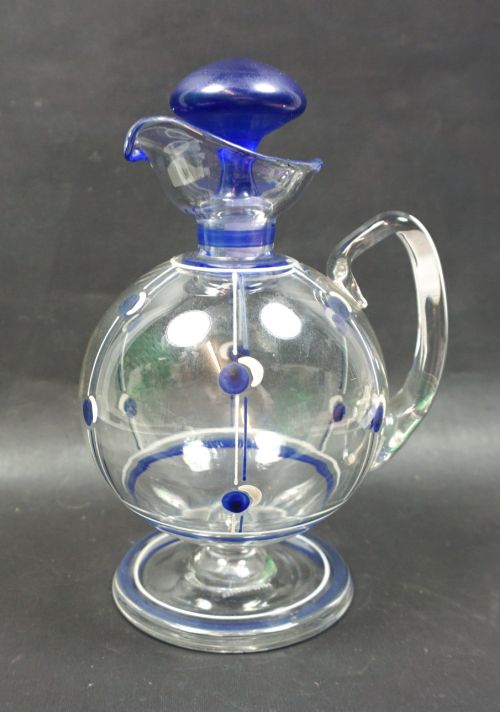
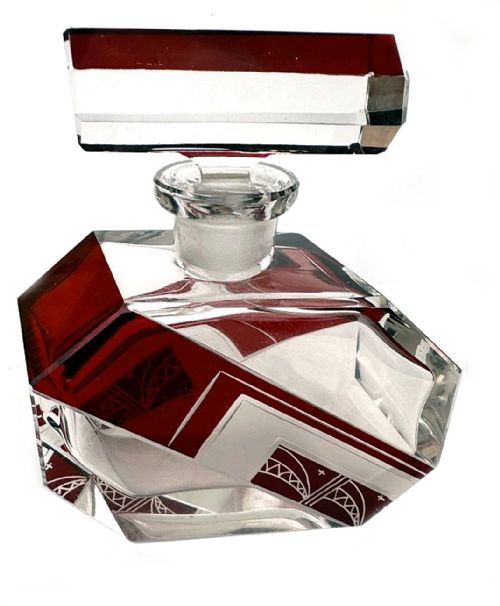
Vases, perfume bottles, and decanter sets dominate the form of these pieces, alongside table lamps and wine jugs. Perfume bottles and atomisers appear frequently, often matched with stoppers or accompanying glasses.
The aesthetic relies entirely on the Art Deco style, combining stark geometric cuts with colourful glass bodies. Objects range from tall vessels to compact scent bottles designed for dressing tables and display cabinets.
How They Were Made
Makers utilised glass, lead crystal, and cut glass as the primary physical media for these works. Molten material was moulded, blown, or shaped into sharp angles and smooth curves characteristic of the period.
Surface decoration involved precise etching, gold leaf application, and hand-painted enamel work in colours like blue, black, and amber. Chrome mounts and fabric components appear selectively on specific lamp and atomiser designs.
What Varies in Quality
The standard of execution depends heavily on the crispness of the geometric cutting and the precision of the enamel detailing. Works by known designers show deliberate attention to proportion and symmetry in the glass body.
Material choice separates standard glass pieces from heavier lead crystal items that catch light with greater clarity. The complexity of etched patterns and the integration of enamel and gold leaf dictate the visual depth of the object.
Karl Palda·Libochovice·Rudolf Hlousek·Hermanova·Mosey
The 1930s Czech Art Glass Glossary
- Art Deco
- A design style characterised by sleek geometric shapes, stylised motifs, and modern industrial materials popular during the interwar period.
- Lead crystal
- A type of glass containing metallic oxide that increases weight, brilliance, and refractive index for sharper cutting.
- Atomiser
- A spray bottle mechanism fitted to perfume containers, often constructed with metal mounts and bulb pumps.
- Enamel
- Opaque vitreous material fused onto the surface of glass objects to add decorative colour and pattern.
- Decanter set
- A matched grouping consisting of a serving vessel and a series of drinking glasses intended for spirits.
1930s Czech Art Glass: Frequently Asked Questions
What defines 1930s czech art glass?
These items combine Art Deco geometric forms with characteristic glass techniques from Bohemian workshops. They represent a specific period of interwar design leadership in Central Europe.
Objects rely on moulded or cut crystal bodies enhanced with coloured enamel, etching, and metal fittings. Their distinct styling sets them apart from earlier Victorian glassware.
How were decanter sets used?
Decanter sets served drinks from matching carafes into small glasses arranged on trays for guests. They occupied prominent positions on sideboards and cocktail cabinets in interwar homes.
Hosts utilised these matched groupings for formal entertaining and evening hospitality. The coordinated design created a unified display when not in active use.
Where should perfume bottles be displayed?
Perfume bottles and atomisers suit dressing tables, vanity trays, and glass-fronted display cabinets. Their compact size allows them to catch light effectively in small spaces.
Placement away from direct sunlight protects coloured enamel and glass surfaces from fading over time. Grouping multiple bottles together highlights their varied geometric cuts.
How do I identify a Karl Palda piece?
Karl Palda designs often feature distinct geometric etching, black or coloured enamel work, and architectural crystal silhouettes. His workshop produced many of the iconic decanter sets and vases from this era.
Examining the precision of the surface decoration and the heft of the lead crystal helps separate these works from unmarked productions. Many pieces showcase characteristic combination of cut glass and contrasting enamel.