





1930s Burr Walnut Desk
A 1930s burr walnut desk brings striking grain and period character to a modern workspace.
What They Are
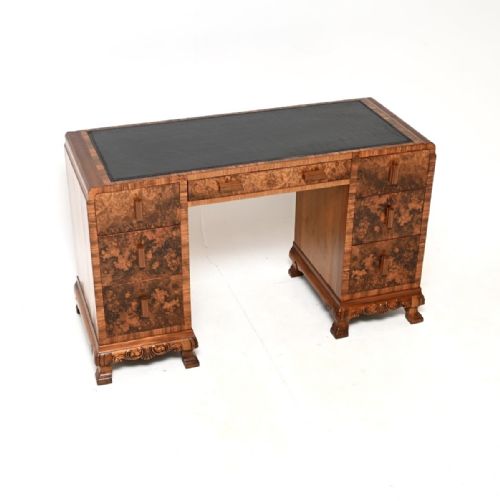
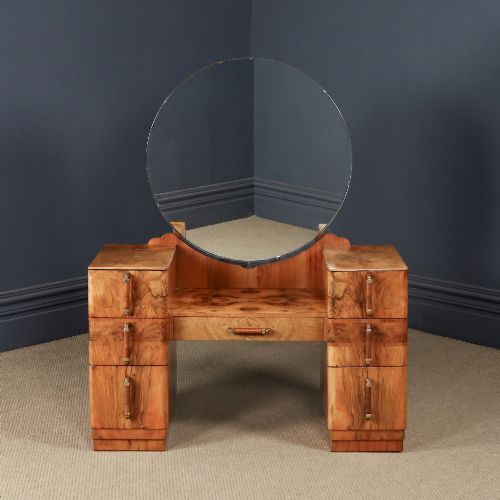
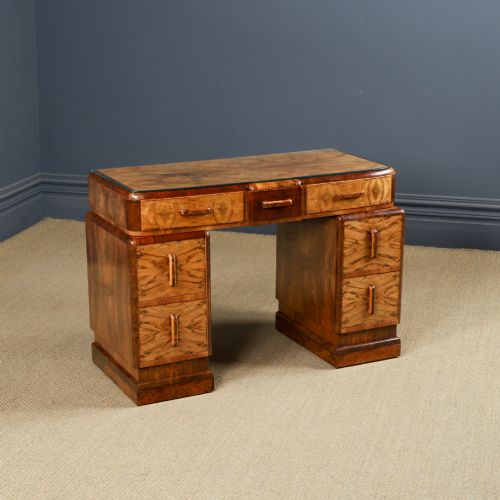
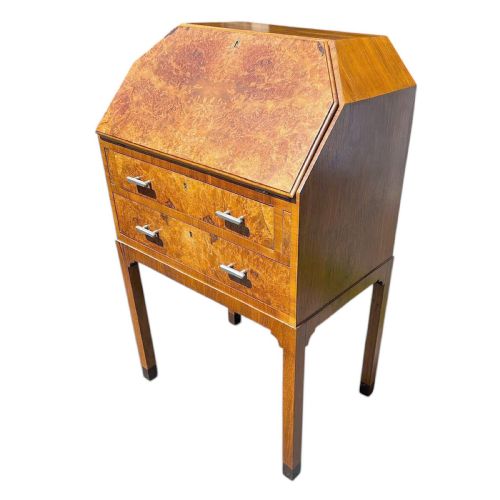
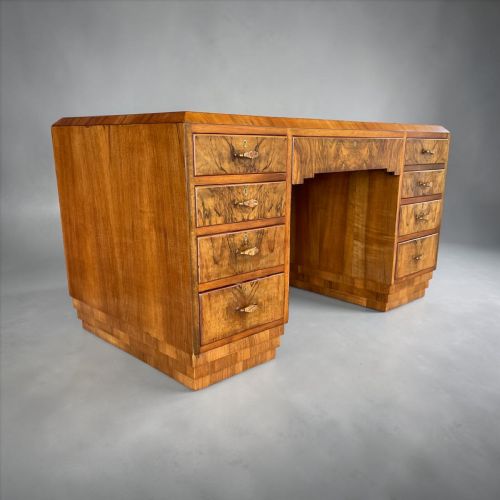
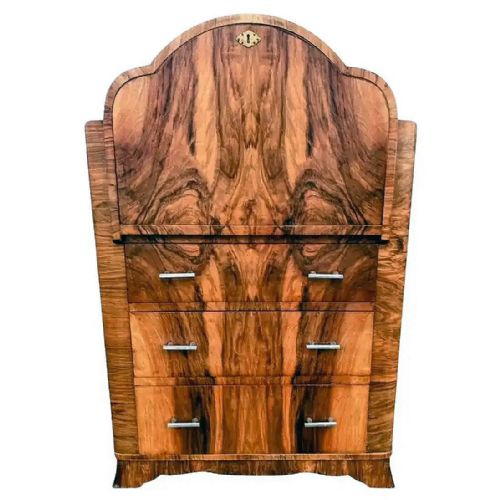
A 1930s burr walnut desk is a distinctive piece of Art Deco office furniture defined by rich figuring and practical design. Buyers seeking this phrase encounter pedestals, office writing desks, and cloud-shaped writing bureaux.
Originating from English workshops around 1930, these pieces combine solid wood structures with decorative veneers. The forms range from traditional pedestal layouts to more avant-garde shapes.
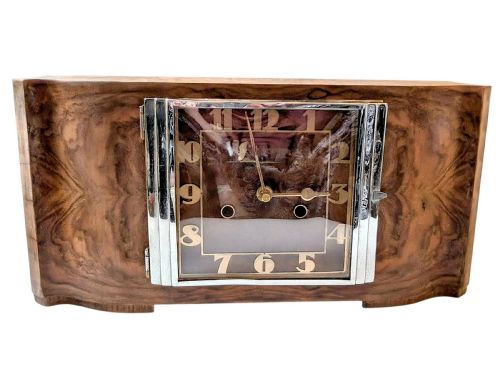
The defining characteristic remains the patterned burr walnut veneer, which creates natural movement across the surface. Many examples incorporate contrasting materials such as leather writing inserts and glass tops.
How They Were Made
Craftsmen applied thin slices of burr walnut veneer over solid wood carcases to create dramatic symmetrical patterns on the drawer fronts and writing surfaces. This technique allowed cabinetmakers to maximise the decorative potential of heavily figured timber.
Desks were frequently fitted with inset leather writing surfaces and polished glass protective tops. Metal elements like brass and chrome hardware were integrated to accent the streamline aesthetic of the Art Deco period.
Retail Price Guide 2026
Typical UK retail prices for 1930s burr walnut desk, calculated from the Sellingantiques database of over a million retail prices indexed since 2003. This retail price guide relies exclusively on Sellingantiques data; no external sources or auction records are used, so the figures do not describe the wider market.
What Varies in Quality
The visual impact of a 1930s burr walnut desk relies heavily on the symmetry and depth of the veneer selection. Superior examples display carefully matched grain patterns that flow seamlessly across multiple drawers and panels.
Construction methods and hardware integration separate standard production from finer work. The inclusion of original brass or chrome details and the quality of the internal solid wood framing dictate the standing of each piece.
The 1930s Burr Walnut Desk Glossary
- Burr walnut
- A specialised wood veneer harvested from the wart-like growths on walnut trees, prized for its swirling, organic patterns. It forms the primary decorative surface on these Art Deco pieces.
- Pedestal desk
- A form featuring two independent stacks of drawers supporting a central writing surface. This layout provides substantial storage alongside a generous top.
- Writing bureau
- A compact desk style often featuring a sloping fall-front lid that opens to reveal internal compartments. Cloud-shaped variants reflect the playful geometry of the 1930s.
- Art Deco
- A design movement prevalent in the 1930s characterised by sleek lines, geometric forms, and modern materials. It governs the architectural silhouette of these desks.
Frequently Asked Questions
How do I care for burr walnut?
Keep the wood away from direct sunlight and excessive heat to prevent the veneer from drying out or fading. Regular dusting with a soft cloth maintains the polished finish.
Apply a quality beeswax occasionally to nourish the timber and preserve the chatoyancy of the grain.
Are these desks practical for daily work?
Most pedestal forms offer ample drawer space and broad writing surfaces suited for modern laptops and paperwork. The integrated leather tops provide a durable writing plane.
Some bureau variants feature compact storage compartments that suit lighter correspondence or notebook use.
What defines Art Deco desk design?
The style relies on streamlined silhouettes, contrasting materials, and decorative wood veneers rather than heavy carved ornamentation. Chrome and brass accents frequently complement the warm tones of the walnut.
Unusual forms like cloud-shaped writing desks showcase the experimental spirit of the 1930s.
How do I identify a 1930s piece?
Look for characteristic construction methods, specific wood selections, and distinct stylistic markers associated with the period. English pieces from this decade often combine walnut with glass and metal hardware.
The presence of burr walnut veneer paired with pedestal or bureau forms points directly to the era.