


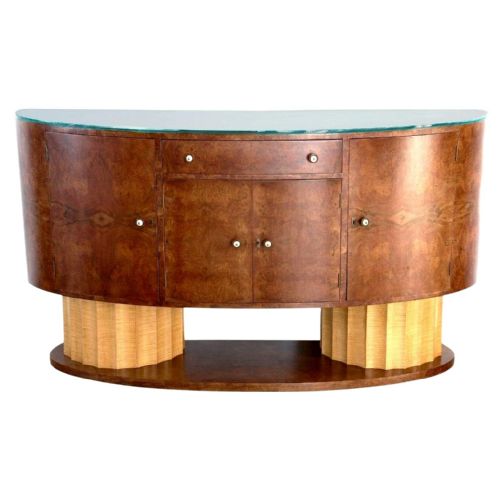


1930s Burr Walnut Credenza
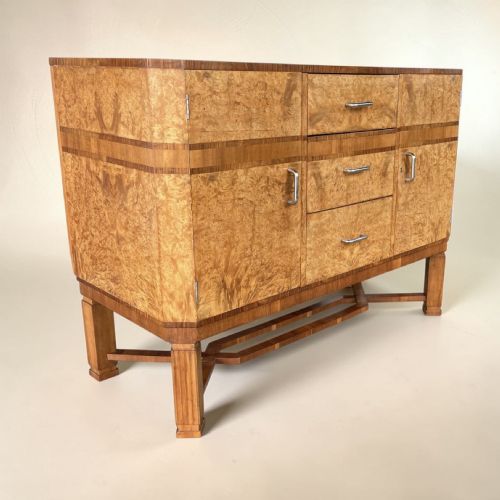
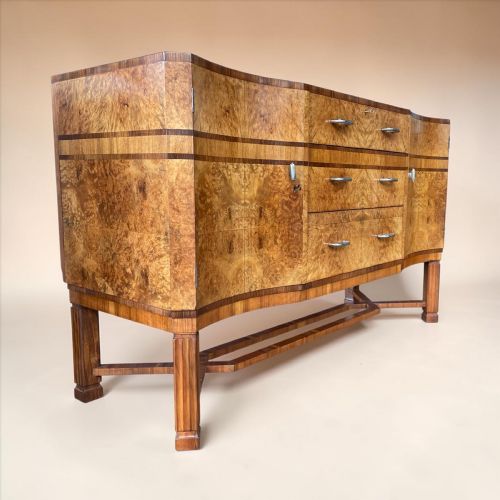
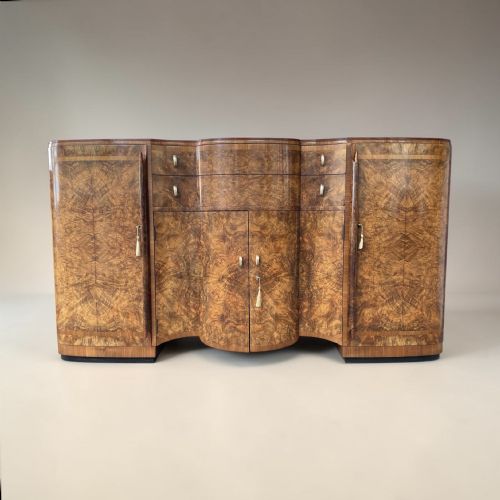
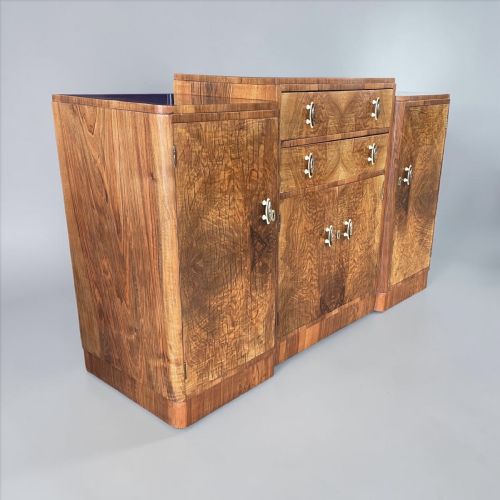
A 1930s burr walnut credenza brings dramatic twentieth-century grain patterns and practical storage to a modern interior.
1930s Burr Walnut Credenza
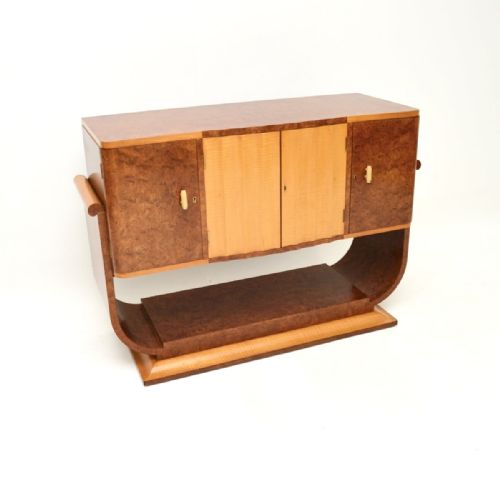
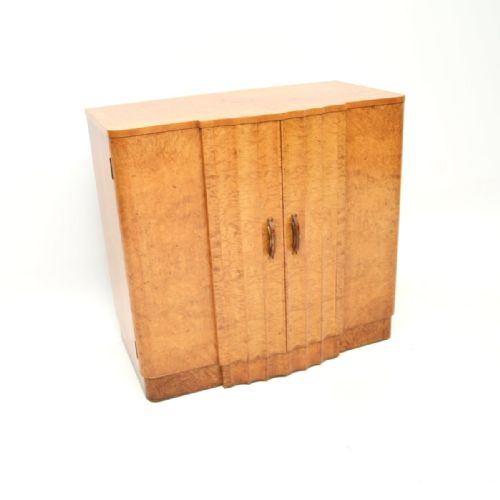
A 1930s burr walnut credenza encompasses substantial low storage furniture from the interwar period, most commonly appearing as sideboards, cocktail cabinets, and console tables. These pieces serve as striking focal points in a room while offering concealed shelving and fitted compartments for dining or entertaining.
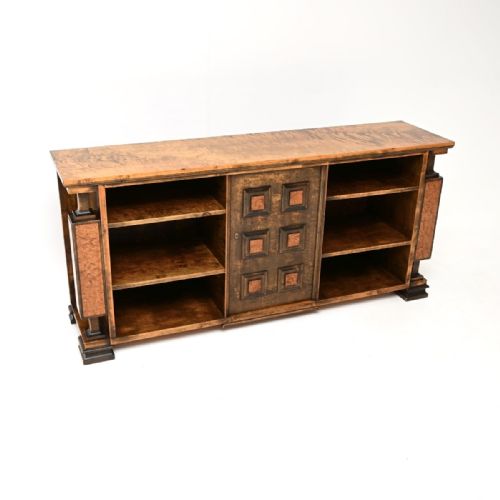
The dominant style on this page is Art Deco, alongside occasional Queen Anne Revival influences, reflecting the fashionable tastes of the period. Forms range from clean-lined British sideboards to architectural Italian cabinets and Swedish bookcases.
Makers working during this era utilised striking timbers to create functional art for the home. Buyers encounter everything from dedicated drinks cabinets with mirrored interiors to long sideboards designed for formal dining rooms.
How they were made
Cabinet makers constructed these pieces using solid wood carcases overlaid with burr walnut and plain walnut veneers, chosen for their swirling and mottled grain patterns. Sycamore often appears as a contrasting interior wood, while occasional satin birch provides pale accents in Scandinavian pieces.
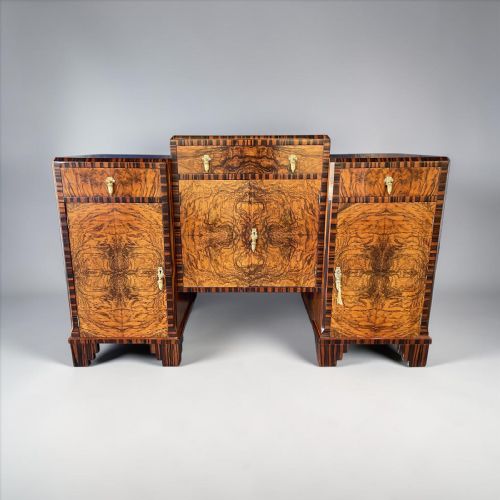
Decoration relied on the natural figure of the timber rather than carved ornamentation, arranged in symmetrical book-matched patterns across doors and drawer fronts. Metal, brass, glass, and occasional Bakelite details completed the handles, hinges, and interior display sections.
Listings feature items from the 1920s and 1930s, constructed predominantly in burr walnut and walnut veneer with brass, glass, and bakelite details.
What varies in quality
The distinction between standard production and top-tier workshop output lies in the ambition of the veneer matching and the precision of the cabinetwork. Master cabinet makers selected the most intensely figured burr sections and laid them with absolute symmetry across expansive curved fronts.
Internal fitting also separates the grades, with superior examples offering fully plumbed or mirrored cocktail compartments, sliding glass trays, and integrated drawer fittings lined in quality fabrics. The reputation of the maker, such as Hille or Epstein, marks the upper tier of construction.
Maurice Adams·Harry and Lou Epstein·Hille·Hamptons of Pall Mall London
The 1930s Burr Walnut Credenza Glossary
- Burr walnut
- A prized wood harvested from the irregular growths on walnut trees, yielding complex swirling grain patterns. It is sliced into thin veneers for decorative furniture surfaces.
- Art Deco
- A dominant design style of the 1920s and 1930s characterised by streamlined geometric forms, smooth surfaces, and modern industrial materials. It replaced heavy Victorian ornamentation with clean, striking silhouettes.
- Veneer
- A thin layer of superior timber applied over a secondary wood carcase to create decorative stability. This technique prevents warping while displaying expensive grain patterns.
- Cocktail cabinet
- A specialised form of drinks furniture popularised in the interwar period, featuring drop-down serving surfaces, mirrored backs, and dedicated glass storage. They catered to the modern cocktail culture of the era.
- Console table
- A narrow table designed to stand against a wall, frequently paired with mirrors or used in hallways and reception rooms. In 1930s design, these often featured curved walnut legs and polished burr tops.
1930s Burr Walnut Credenza: Frequently Asked Questions
What is a 1930s burr walnut credenza?
A 1930s burr walnut credenza is a low storage cabinet or sideboard dating from the interwar period, celebrated for its decorative wooden grain and Art Deco styling.
These versatile pieces were built to serve dining rooms and living spaces, offering cupboards, drawers, and sometimes specialised compartments for entertaining.
How do I identify Art Deco furniture?
Art Deco furniture is recognised by its geometric lines, smooth polished finishes, and minimal reliance on traditional carving.
The style prioritizes the natural beauty of materials like burr walnut and exotic veneers, often enhanced by contrasting light woods such as sycamore.
Where were these cabinets placed in a home?
Original homes utilised these credenzas and sideboards in dining rooms to store formal tableware, linens, and serving dishes.
Cocktail variants were equally at home in sitting rooms and reception spaces, acting as dedicated stations for evening drinks and entertaining guests.
How should I clean burr walnut veneer?
Burr walnut veneer requires gentle maintenance using a soft, dry cloth to remove dust without scratching the polished surface.
Moisture and direct sunlight should be avoided to prevent the delicate wood veneers from fading, drying out, or lifting over time.