

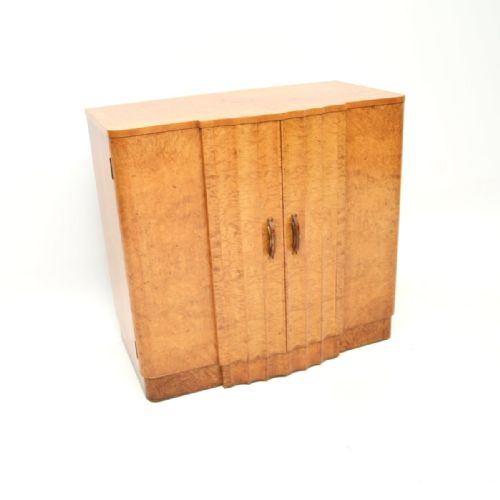
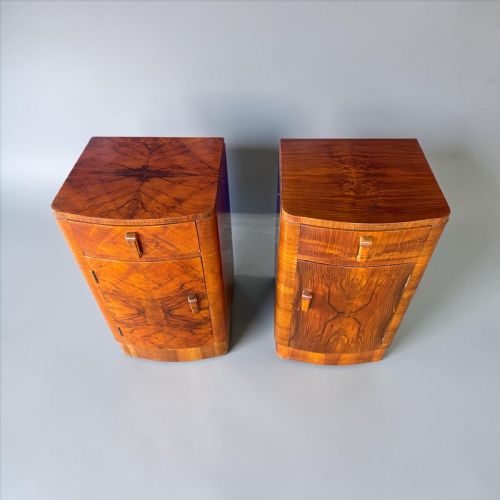
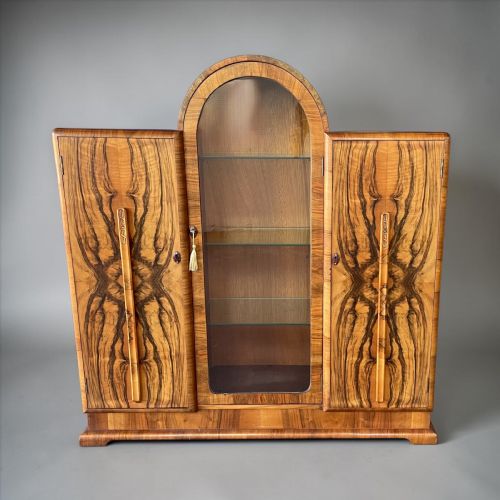
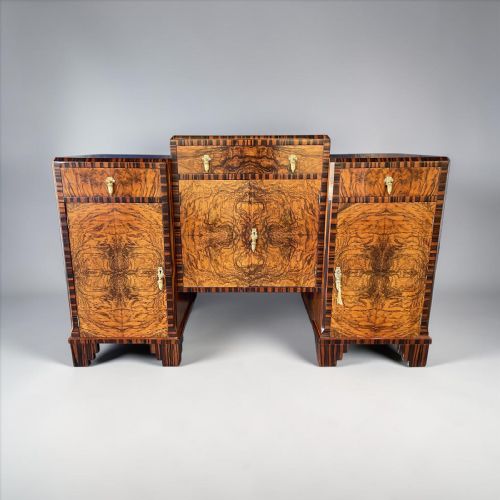
1930s Burr Walnut Cabinet
A 1930s burr walnut cabinet brings striking grain patterns and geometric lines to a room, offering both practical storage and distinctive period character.
1930s Burr Walnut Cabinet
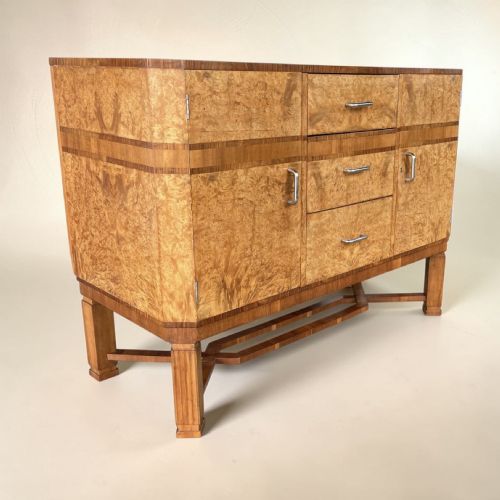
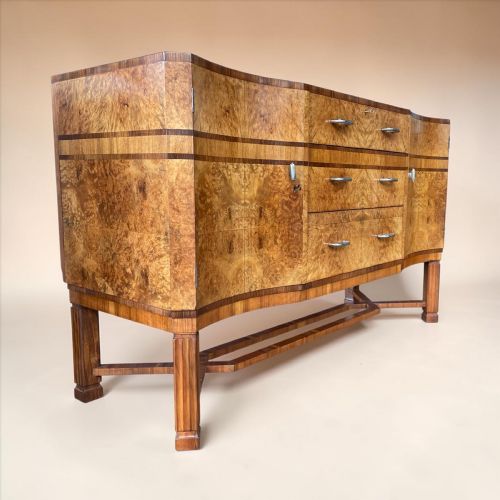
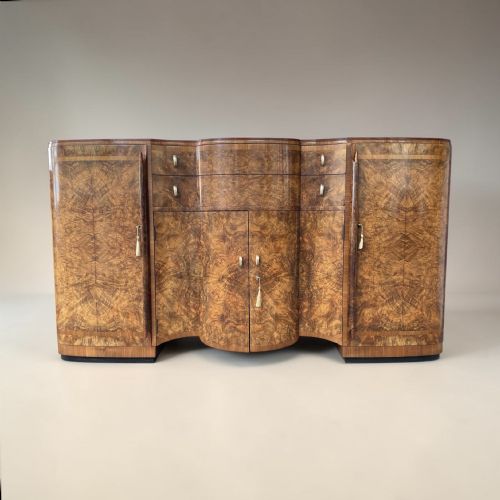
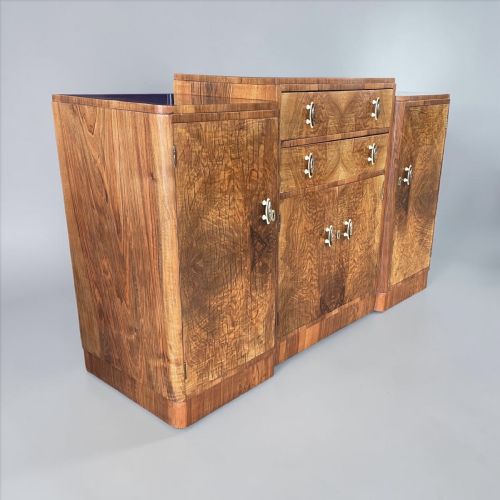
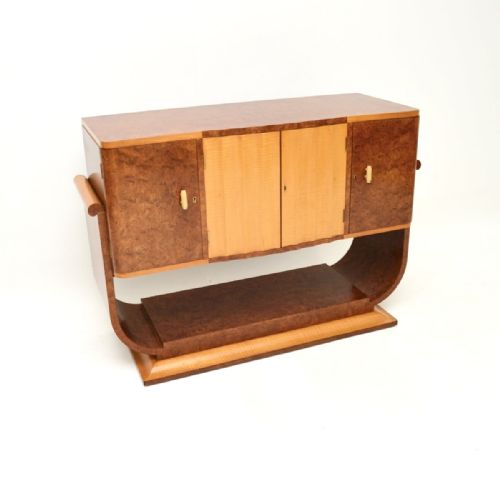
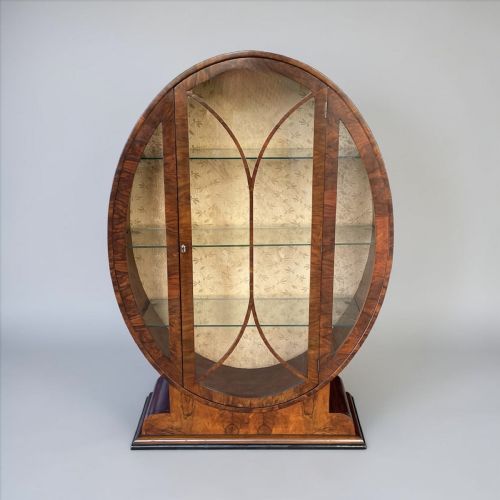
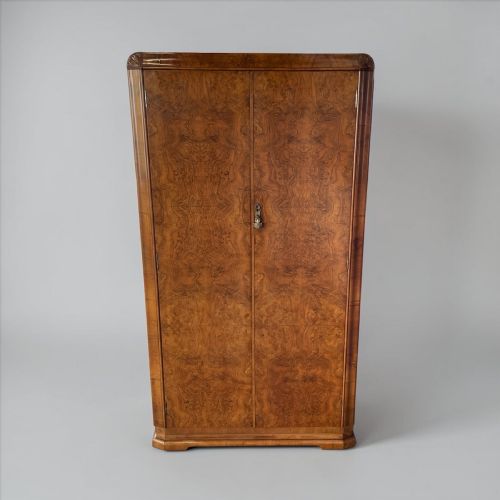
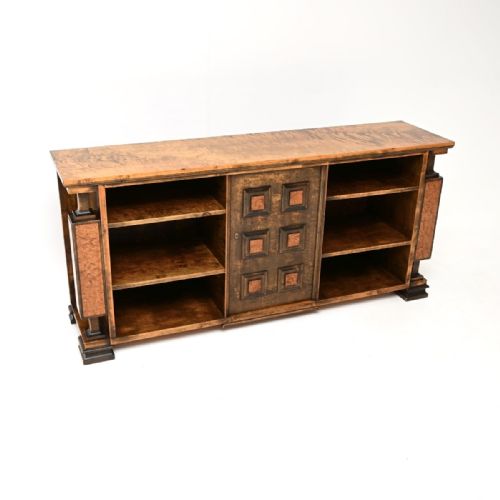
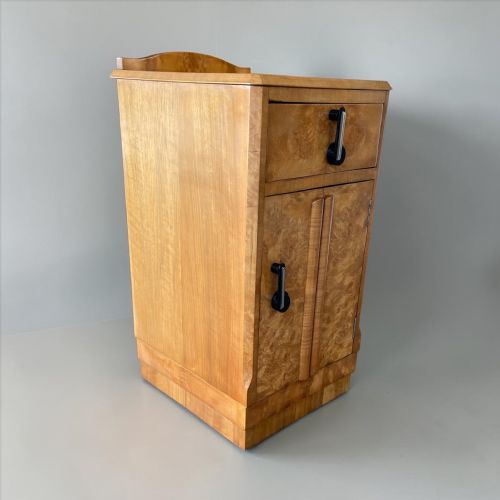
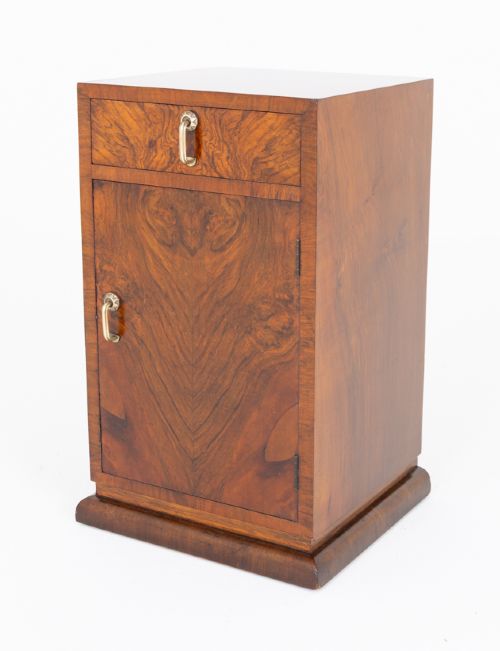
A 1930s burr walnut cabinet typically showcases the rich, swirling grain of burr walnut veneer across its surface. These pieces frequently appear in forms such as cocktail cabinets, display cabinets, sideboards, and bedside cabinets.
The dominant style defining these pieces is Art Deco, alongside occasional examples of Queen Anne Revival. Buyers most commonly encounter items originating from the 1930 period, constructed primarily in England and Sweden.
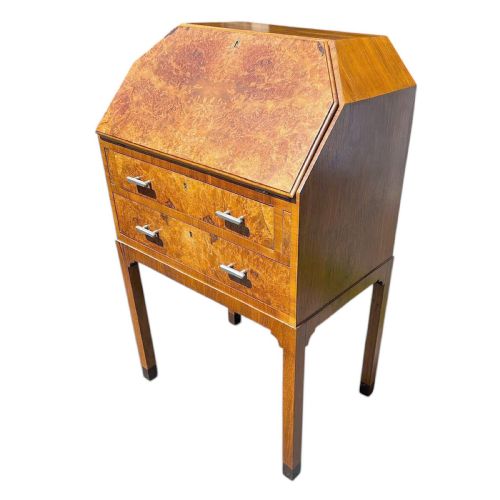
Beyond standard storage cabinets, related forms in this material include tallboys, compactums, chests of drawers, and writing desk bureaus. Each format utilises the figured wood to create a strong visual focal point.
Materials and construction
Cabinet makers applied burr walnut veneer over solid timber carcases to display the complex, swirling patterns of the wood. Secondary woods such as sycamore and satin birch often appear alongside walnut in these constructions.
Hardware details typically include brass, chrome, and occasional bakelite fixtures, particularly on cocktail and display cabinets. Glass doors feature on glazed display and cocktail versions to showcase interior shelving.
Listings feature items spanning the 1920s to the 1940s, with the vast majority originating from 1930 in walnut, burr walnut veneer, brass, and chrome.
Assessing quality and craftsmanship
The visual impact of a 1930s burr walnut cabinet rests heavily on the symmetry and book-matching of the veneer panels. Master makers selected burls with dense, unblemished eyes and arranged the grain carefully across doors and drawer fronts.
Construction standards are evident in the integration of secondary timbers like sycamore and the quality of fitted interiors, especially in cocktail cabinets featuring mirrored backs and glass shelves. Maker attribution also separates standard production items from workshop-specific commissions.
Maurice Adams·Harry and Lou Epstein·Walter Carter Harrods·Hille
The 1930s Burr Walnut Cabinet Glossary
- Burr walnut
- A veneer sliced from the woody growths or burls on walnut trees, prized for its intricate, swirling grain patterns. This material defines the primary aesthetic of the period.
- Art Deco
- A design style characterised by sleek geometric shapes, streamlined forms, and modern materials that dominated the 1930s. Most cabinets from this era reflect these distinct architectural lines.
- Cocktail cabinet
- A specialised storage piece designed for entertaining, usually featuring a drop-down serving flap, mirrored interior, and glass shelving. These drinks bars represent some of the most elaborate forms found in walnut.
- Compactum
- A large, multi-functional wardrobe and storage unit combining hanging space, drawers, and shelving. This form maximised domestic storage efficiency during the period.
- Tallboy
- A traditional upright chest of drawers standing higher than standard drawer units. In walnut variants, the height showcases continuous vertical grain patterns.
1930s Burr Walnut Cabinet: Frequently Asked Questions
What is a 1930s burr walnut cabinet?
A 1930s burr walnut cabinet is a piece of furniture finished with highly figured walnut veneer, typically built in the Art Deco style. These items include cocktail units, display cases, and bedside cabinets.
They serve as both functional storage and decorative centrepieces, defined by the swirling patterns of the burl timber and geometric silhouettes.
How do I identify Art Deco cabinets?
Art Deco cabinets feature clean geometric lines, symmetry, and smooth polished wood surfaces. They often incorporate contrasting materials like chrome, brass, or lighter woods such as sycamore.
The absence of heavy Victorian ornamentation distinguishes these pieces, focusing instead on the natural beauty of the walnut grain.
Were these cabinets used for drinks?
Many specific models from this era were designed precisely as cocktail cabinets or dry bars. These particular pieces include drop-down preparation shelves, mirror-backed compartments, and specialised storage for glassware and bottles.
Other variants served as general display cabinets or bedside storage rather than hospitality units.
How do I care for burr walnut veneer?
Burr walnut veneer requires protection from direct sunlight and excessive moisture to prevent fading and lifting of the wood. Regular dusting with a soft, dry cloth maintains the polished finish.
Avoid placing these items near heat sources that can dry out the historic timber and cause hairline cracks in the veneer.