



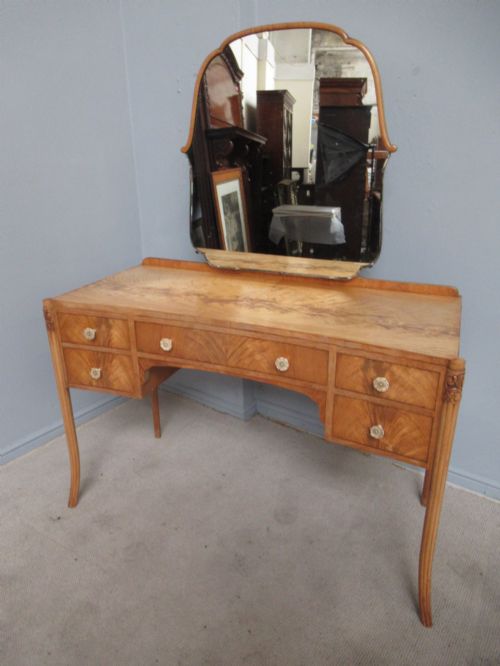
1930s Art Deco Table
A 1930s art deco table brings geometric modernism and rich figured veneers into a room.
Identifying a 1930s art deco table
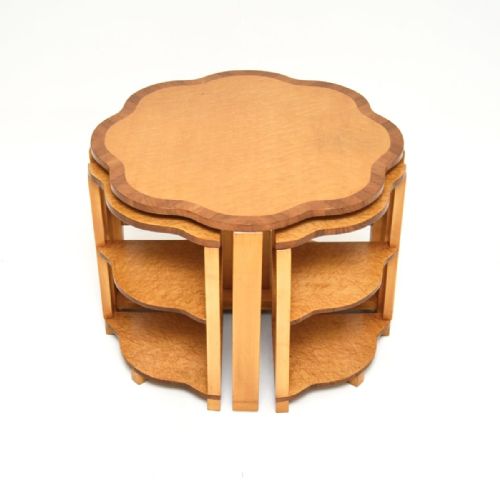
A 1930s art deco table spans practical forms such as occasional tables, coffee tables, nests of tables, and side tables. These pieces capture the modernist push of the era, favouring clean lines, geometric shapes, and functional tiers.
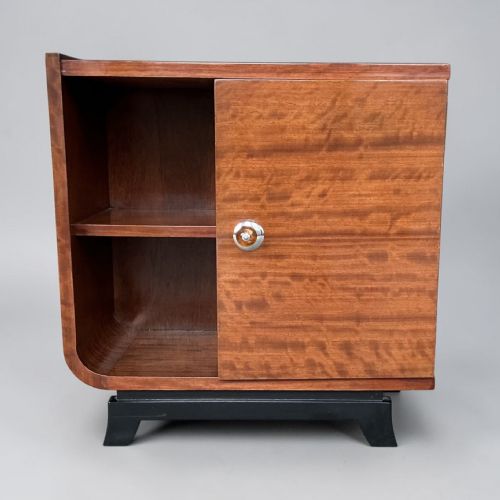
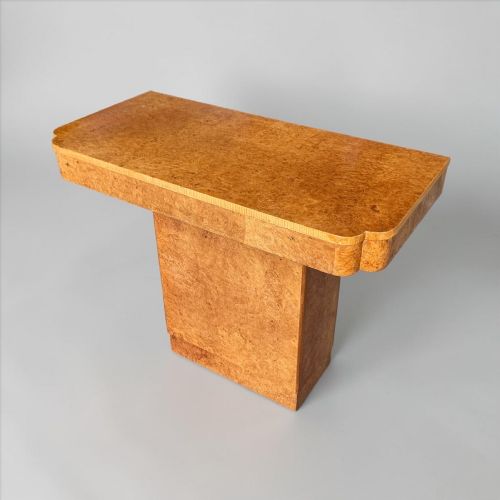
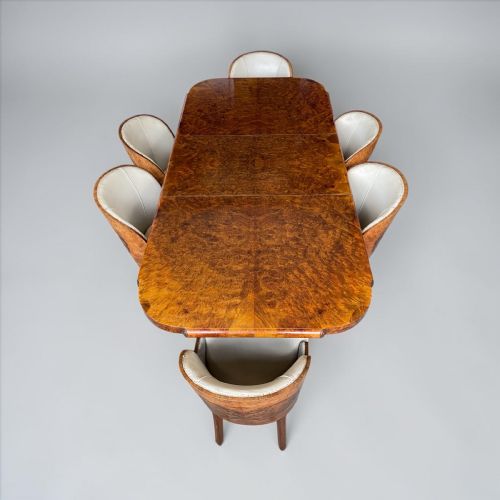
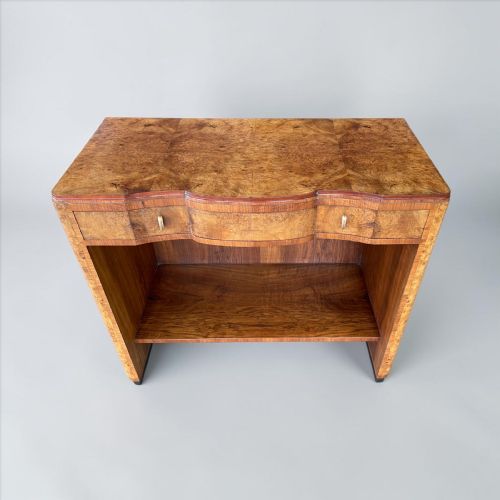
The most common version met on this page is the occasional table or coffee table constructed in rich wood veneers. Walnut and figured walnut dominate the selection, often arranged to display striking grain patterns across the top surface.
Makers such as Harry and Lou Epstein appear in the records alongside English and French workshop pieces. Forms range from compact octagonal shapes to tiered coffee tables and multi-piece nest sets.
Materials and construction
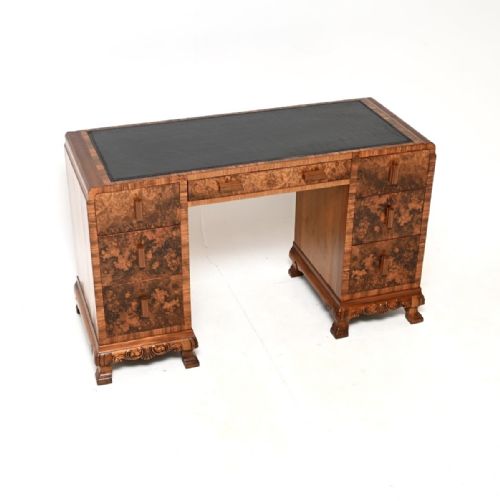
Makers utilised timber frames finished with thin surface veneers of walnut, rosewood, ebony, and maple. These decorative veneers were carefully sliced and laid out in symmetrical geometric patterns to catch the light.
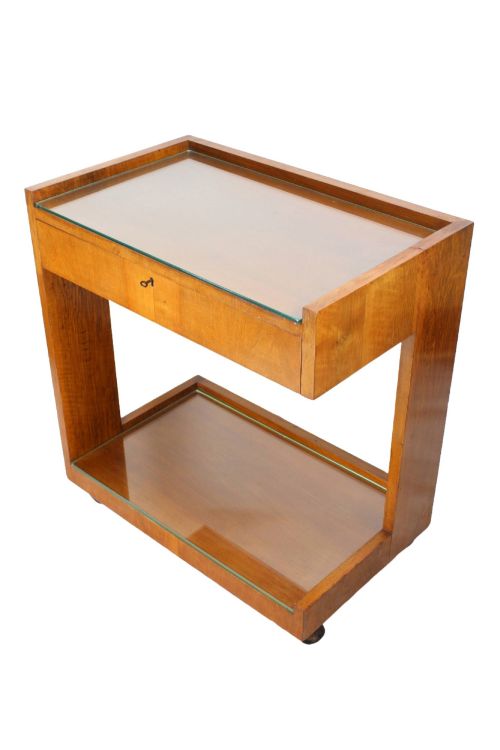
Secondary materials like brass, glass, and timber provide structural support and surface contrast. Joinery relies on sturdy internal framing hidden beneath the sleek exterior surfaces characteristic of the style.
Retail Price Guide 2026
Typical UK retail prices for 1930s art deco table, calculated from the Sellingantiques database of over a million retail prices indexed since 2003. This retail price guide relies exclusively on Sellingantiques data; no external sources or auction records are used, so the figures do not describe the wider market.
Listings feature walnut, rosewood, brass, and glass across various occasional and coffee table formats.
Distinguishing quality
The distinction between tiers of quality rests upon the selection and matching of the veneer. Superior examples display highly figured wood grains mirrored across the centre seam, whilst simpler pieces use plain timber boards.
Construction intricacy also separates standard production from workshop craftsmanship. Nesting sets and two-tier designs by known cabinet makers demonstrate superior geometric precision in their cuts and joints.
Harry and Lou Epstein
The 1930s Art Deco Table Glossary
- Figured walnut
- Walnut timber showing an ornamental, swirled grain pattern naturally occurring in the tree. It was highly prized for table tops during the interwar period.
- Nest of tables
- A set of graduated tables designed to fit neatly underneath one another. They offer space-saving surface area in smaller rooms.
- Occasional table
- A small, movable table intended for specific, intermittent use rather than dining. Common forms include side tables and lamp tables.
Frequently Asked Questions
What defines a 1930s art deco table?
These tables rely on geometric forms, clean silhouettes, and decorative wood veneers like walnut and rosewood. They reflect the interwar shift towards modernism and functional domestic design.
Craftsmen prioritized symmetrical grain patterns and compact arrangements such as nests and two-tier surfaces.
How do I care for wood veneer?
Keep veneer surfaces away from direct sunlight and excessive moisture to prevent warping and lifting. Regular dusting with a soft, dry cloth preserves the polished finish.
Avoid commercial silicone sprays and place coasters under drinks to protect the delicate antique polish.
Where were these tables made?
The pieces originate primarily from English and French workshops and cabinet makers active during the 1930s. Workshops ranged from specialist London furniture makers to continental designers.
Construction methods and material choices often reflect regional preferences for walnut or exotic veneers.
Are nest of tables practical?
A nest of tables provides flexible surface space that stores compactly beneath the main table when not in use. They suit modern living rooms requiring adaptable furniture layouts.
The graduated sizes allow multiple users to place drinks or books simultaneously.