





1920s Woven Area Rug
A 1920s woven area rug brings distinct tribal and regional character to a room through traditional pile and flatweave construction.
1920s Woven Area Rug
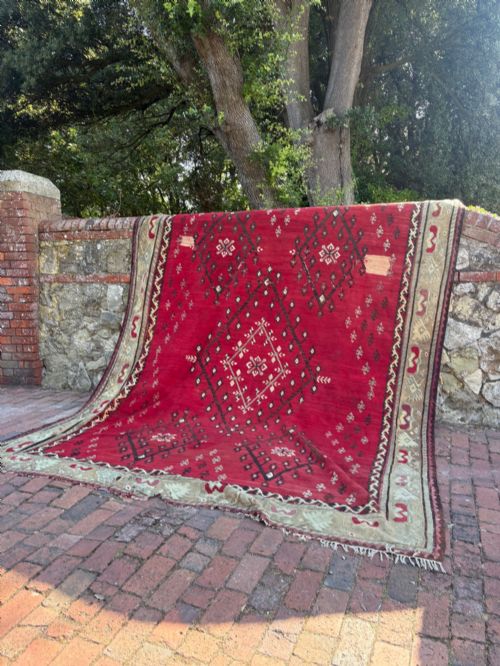
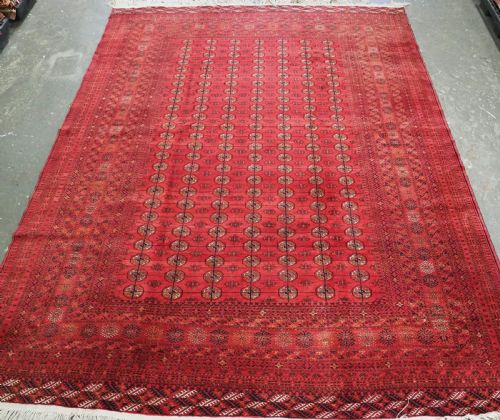
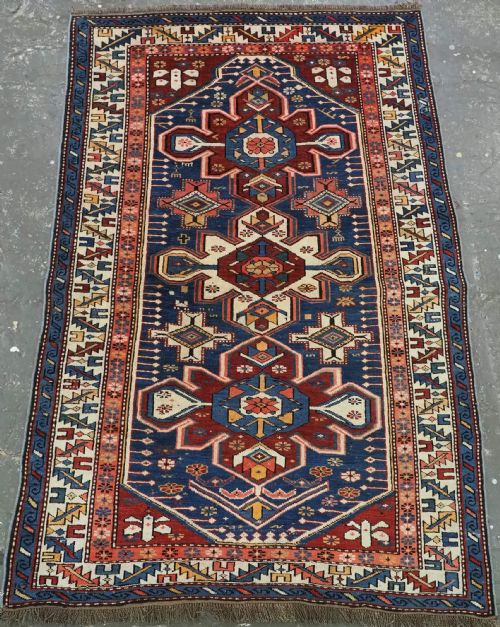
A 1920s woven area rug encompasses a wide variety of handmade floor coverings originating from Persia, Anatolia, the Caucasus, and the Balkans. Buyers searching this phrase encounter room-sized carpets, smaller prayer rugs, and flatwoven kilims produced during the 1920 period.
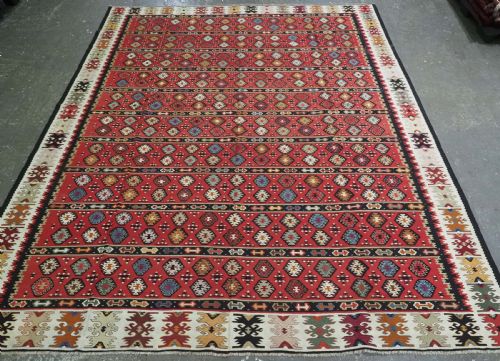
The regional types span Persian village and city workshops alongside tribal pieces from Baluch, Afghan, Kurdish, and Qashqai weavers. Flatwoven examples include Pirot and Sarkoy kilims from the Balkans, while piled formats feature classic medallion and all-over floral designs.
These textiles serve primarily as floor coverings, bringing historical patterns such as guls, boteh motifs, and flowering trees into domestic spaces. The selection relies heavily on traditional village and tribal aesthetics rather than standardised industrial output.
How they were made
Weavers utilised natural animal fibres, predominantly wool, lambswool, and cotton, occasionally pairing a lambswool pile with a silk foundation. These materials were hand-knotted or flatwoven into rugs and carpets using traditional regional looms and techniques.
Many large kilims, such as certain Turkish and Afghan examples, were constructed in two separate parts and joined down the centre. Dyes and structural patterns reflect specific local traditions, from the banded chevrons of Baluch pieces to the intricate floral layouts of Kashan and Tabriz workshops.
Listings feature wool, cotton, and silk materials across Persian, Anatolian, Caucasian, and Balkan styles.
What varies in quality
Quality in these textiles depends on the fineness of the weave, the structural integrity of the foundation, and the preservation of the pile or flatweave surface. Tighter, denser knots and finer foundational materials such as silk elevate a piece above standard village production.
Condition also plays a significant role, distinguishing pristine or well-preserved examples from those showing timeworn repairs or heavy structural wear. The sophistication of the regional design execution and the balance of the composition further separate ordinary utility items from finer collector pieces.
The 1920s Woven Area Rug Glossary
- Kilim
- A flatwoven rug or carpet produced without a pile, common in Anatolian, Balkan, and tribal traditions. These pieces rely on interlocking weft threads to create geometric and banded patterns.
- Medallion
- A central ornamental design motif placed in the middle of a rug field. Classic examples feature single, triple-lobed, or star variations surrounded by floral or geometric borders.
- Gul
- A repeating octagonal or medallion-like motif frequently found in Turkmen and Afghan carpet weaving. Each tribal group utilised distinct variations of this shape.
- Boteh
- An almond-shaped or paisley motif with a curved upper end, originating in Persian design. It appears widely across village and tribal rugs from regions like Shiraz.
- Foundation
- The underlying structure of a rug, consisting of warp and weft threads that support the pile or flatweave. Materials range from sturdy cotton to fine silk.
1920s Woven Area Rug: Frequently Asked Questions
Where were these rugs made?
The pieces originate from diverse regions including Persia, Anatolia, the Caucasus, Afghanistan, and the Balkans. Local weavers followed distinct tribal or workshop traditions specific to their geographic areas.
Production spanned nomadic encampments, rural villages, and established weaving centres like Kashan, Tabriz, and Kayseri.
How do I care for an antique woven rug?
Gentle vacuuming without a rotating beater bar helps remove dust and grit from the fibres. Professional cleaning tailored to antique wool and silk textiles preserves the natural dyes and structural integrity.
Keeping the rug out of harsh, direct sunlight prevents fading of the traditional dyes over time.
How can I identify the regional style?
Regional attribution relies on examining specific design motifs, colour palettes, and structural characteristics such as edge finishes and knotting techniques. Turkmen carpets display signature guls, while Caucasian and Persian pieces often feature geometric medallions or detailed floral vases.
Comparing the weave structure and secondary motifs helps distinguish between neighbouring traditions like Kurdish, Afshar, and Baluch work.