
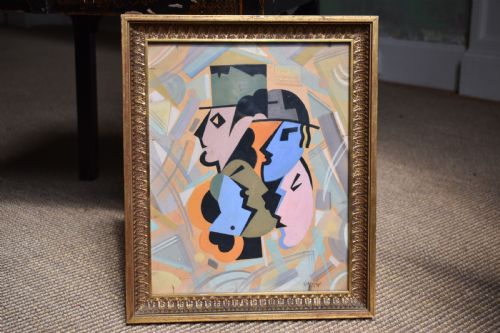
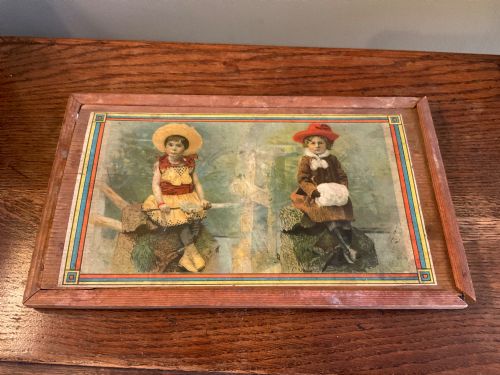


1920s Watercolour Painting
These 1920s watercolour painting works capture interwar life through fluid pigment and delicate washes.
1920s Watercolour Painting
A 1920s watercolour painting encompasses landscape views, architectural studies, portrait miniatures, and figure subjects created during the interwar period.
The selections on this page range from cottage gardens and townscapes to theatrical scenes, equestrian subjects, and portrait miniatures.
Works on paper from this era reflect styles including Art Deco, Modern British, English Impressionism, and Interwar Realism.
How they were made
Artists applied watercolour pigment alongside gouache, ink, and charcoal directly onto paper supports to build tone and line.
Framed examples typically utilise wood mouldings, glass protection, and sometimes brass elements to secure and present the works.
Several artists preferred painting whimsical circus clowns and racehorses rather than quiet landscapes.
What varies in quality
Quality rests upon the artist's handling of pigment transparency, brushwork precision, and the composition of light and shadow within the scene.
Condition varies according to how well the paper support has survived exposure to light, moisture, and acid migration from framing materials.
Owen Bowen·Susie Lassam·Edward Horace Thompson·Edith E Caswall·Fred Lawson·Maurice Asselin·Montagu Barstow·Kees van Dongen·Dame Laura Knight·George Graham·Leo Klin
The 1920s Watercolour Painting Glossary
- Watercolour
- A paint consisting of a pigment suspended in a water-soluble vehicle. It is typically applied to paper in transparent washes.
- Gouache
- An opaque water-based paint containing pigment mixed with a binding agent and white filler. It provides solid, opaque passages alongside translucent watercolour.
- Portrait miniature
- A small-scale painted portrait, often executed on a fine surface such as ivory, vellum, or heavy paper during the period.
- Interwar Realism
- An artistic approach gaining prominence between the First and Second World Wars that focused on representational depiction of everyday subjects.
1920s Watercolour Painting: Frequently Asked Questions
How should I frame a watercolour painting?
Watercolour works require framing behind glass with a mount that keeps the paper from touching the glazing directly.
Acid-free backing boards protect the paper from yellowing and degradation over time.
Where should I hang these paintings?
Display these works on interior walls away from direct sunlight to prevent the water-based pigments from fading.
Stable room temperatures and low humidity help preserve both the paper and any wooden framing.
How do I identify a 1920s piece?
Look for stylistic markers such as Art Deco line work, interwar dress, and specific framing or paper types typical of the period.
Signatures, dates on the mount, and artist attribution provide further confirmation of the era.
What subjects are common in these works?
Common subjects include British and European townscapes, architectural landmarks, rural landscapes, and intimate portrait miniatures.
Artists also recorded theatrical scenes, dancers, and equestrian events during this prolific decade.