


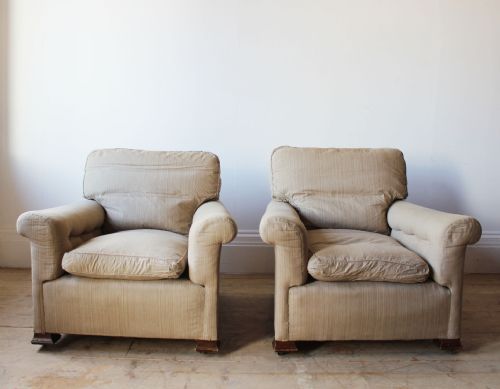
1920s Upholstered Armchairs
These 1920s upholstered armchairs bring substantial frames and period character to a room, offering deep seats built for actual use.
1920s Upholstered Armchairs
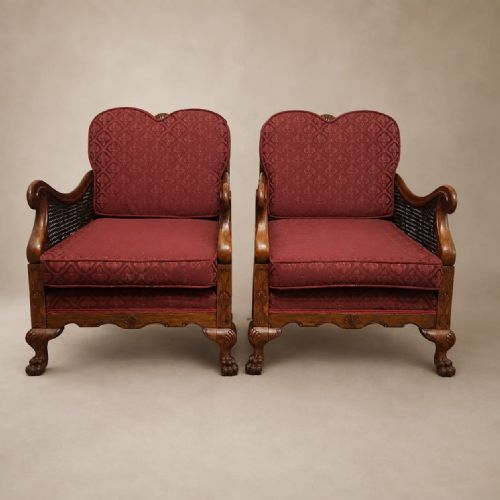
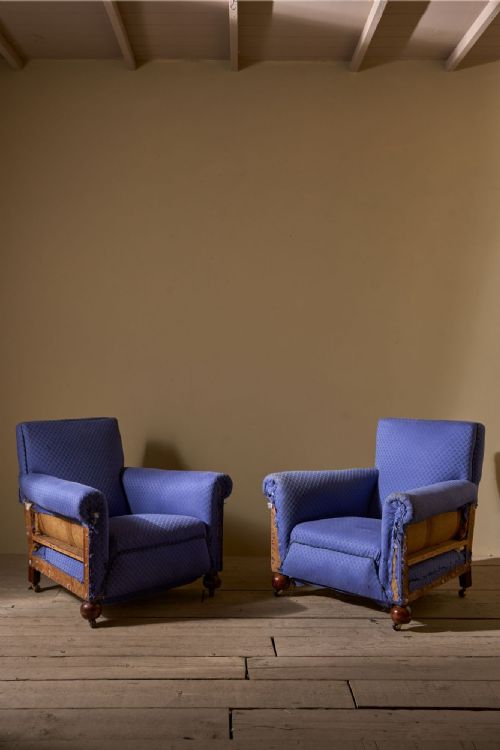
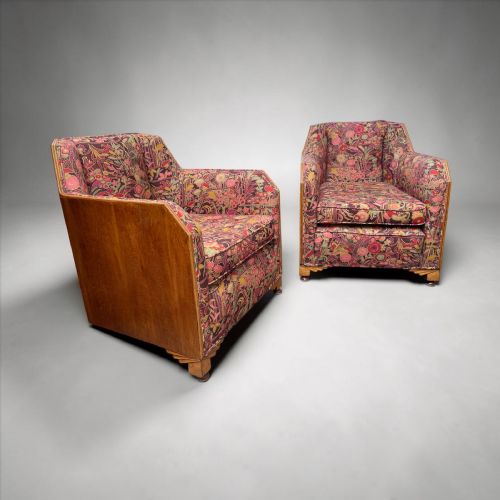
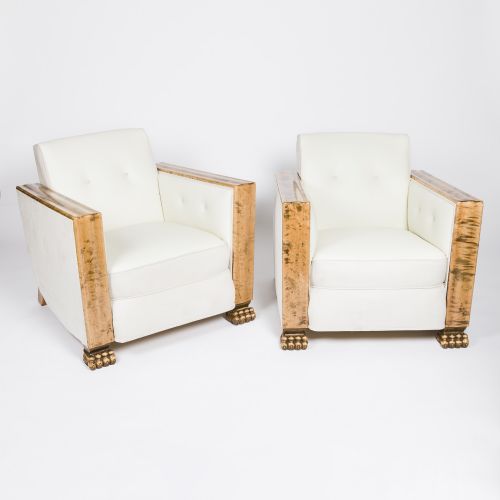
When you search for 1920s upholstered armchairs, you are looking at substantial seating from a transitional era that combined heavy period revival forms with emerging modernist lines. The pieces available here span robust Art Deco club chairs, generous wing armchairs, and barrel backs alongside French style open armchairs.
You will frequently encounter walnut frames, exposed hardwood, and occasional gilt or metal details supporting varied textile coverings. Alongside standard armchairs, the selection includes specific variants such as library chairs, rocking chairs, and bergere easy chairs with split cane panels.
Most examples date firmly to the 1920 and 1930 decades, though occasional pieces draw on 19th Century traditions, Edwardian influences, and Georgian or Neoclassical revivals. These chairs function as focal seating in a study, drawing room, or library, balancing ornamental wood framing with generous upholstery.
What varies in quality
Quality in these armchairs rests primarily on the substance of the timber frame and the architectural integrity of the design. Walnut frames and solid hardwood structures command attention for their durability and the crispness of any carved revival detail.
The execution of the upholstery work and the choice of covering materials, whether heavy leather, velvet, or woven fabric, define the overall finish. Pieces retaining original split cane work or well-executed re-upholstery demonstrate the lasting viability of the form.
The inventory spans the 1920 and 1930 decades alongside occasional 19th Century and Edwardian pieces.
The 1920s Upholstered Armchairs Glossary
- Bergere
- An enclosed upholstered armchair with a wooden frame, frequently featuring cane work on the sides and back. This French form offers a lighter appearance than heavy club chairs.
- Club chair
- A deep, low-slung upholstered armchair designed for comfort, often covered in leather or heavy fabric. The style became prominent during the early twentieth century.
- Wing armchair
- A high-backed chair with side panels designed to shield the sitter from draughts. These pieces often feature exposed wooden legs and scroll arms.
- Fauteuil
- An open-framed upholstered armchair originating in France, characterised by exposed wooden arms and carved frame details. The style persists in various revival forms.
- Barrel back
- An armchair featuring a semi-circular upholstered backrest that curves continuously around to form the arms. This shape provides a contained and supportive seat.
1920s Upholstered Armchairs: Frequently Asked Questions
How do I identify Art Deco armchairs?
Art Deco armchairs typically feature streamlined silhouettes, geometric forms, and smooth leather or fabric upholstery without excessive ornamentation. They often present as club chairs or low tub seats designed for comfort.
Look for clean horizontal or vertical lines in the design and materials such as walnut framing combined with smooth hides or ribbed textiles.
Where should I place a wing armchair?
Wing armchairs suit living rooms, studies, or libraries where their high backs and substantial presence can anchor a seating arrangement. They work well positioned near a fireplace or in a corner reading nook.
Ensure adequate clearance around the chair to accommodate the flared wings and generous arm span typical of the period.
Are these chairs suitable for daily use?
These chairs are built on solid hardwood and walnut frames designed for practical seating rather than mere display. Many survive because their sturdy construction supported decades of domestic life.
Chairs that have undergone re-upholstery offer refreshed internal padding while retaining the original period frame and proportions.
What is a bergere chair?
A bergere chair is a French-derived armchair featuring an enclosed upholstered seat and back set within a visible wooden frame. Many examples incorporate woven cane panels along the sides and back.
This construction lightens the visual weight of the chair while maintaining a formal and structured appearance.
How do I distinguish French revival from traditional American styles?
French revival chairs frequently display carved gilt frames, open arms, and lighter proportions inspired by Louis styles. Traditional American pieces in this selection tend toward heavier rocking chairs or robust utility seating.
The choice of woodwork, decorative carving, and overall silhouette separates the continental elegance of French styles from utilitarian American forms.