

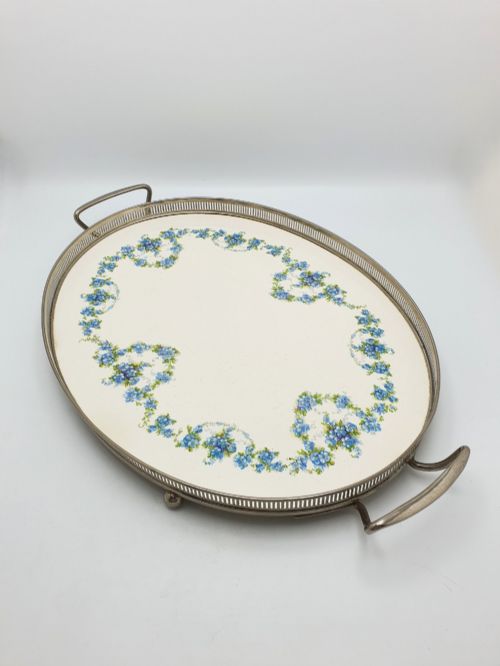
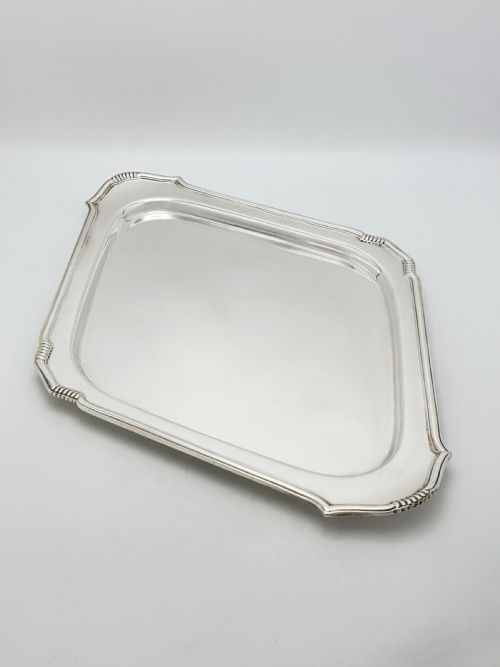


1920s Silver Tray
A 1920s silver tray brings the sharp geometry and utilitarian flair of the Jazz Age straight to your table.
1920s Silver Tray
A 1920s silver tray encompasses a range of domestic metalware produced during the decade, frequently encountered in silver plate or sterling silver forms. Buyers searching for a 1920s silver tray will find serving trays, cocktail trays, and smaller trinket dishes designed for entertaining or personal use. The selection spans domestic English productions, George V pieces, and Continental decorative items.
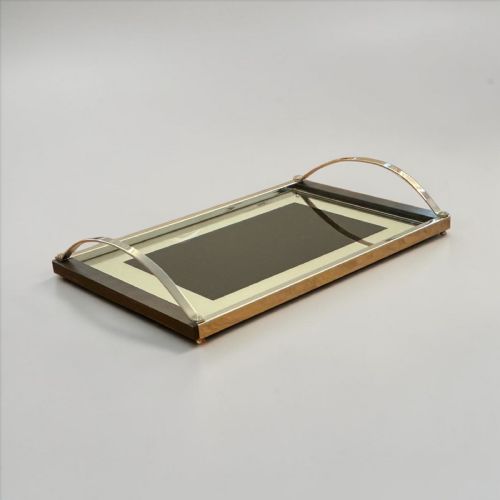
Art Deco styling heavily influences the period, delivering geometric layouts, shell borders, and clean lines suited to contemporary cocktail service. Alongside pure metal forms, variations incorporate mahogany, cobalt blue mirror glass, cut glass, and guilloche enamel. Makers range from large British silversmiths to Continental workshops and Anglo-Indian creators.
Materials and construction
Makers utilised sterling silver and silver plate over base metals, applying techniques such as stamping, casting, and hand-finishing to achieve crisp geometric profiles. Cocktail trays often combine silver-plated mounts with wooden bases like mahogany, or insert mirrored glass and cut glass panels into the metal frame to create reflective surfaces.
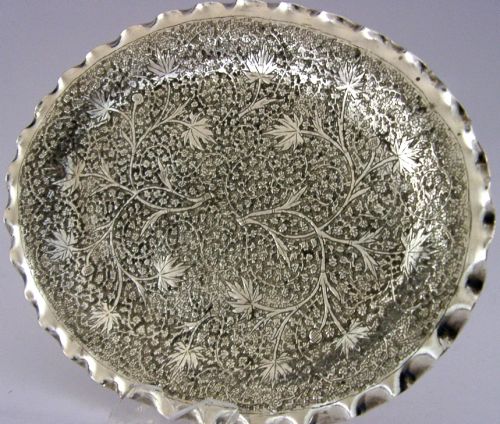
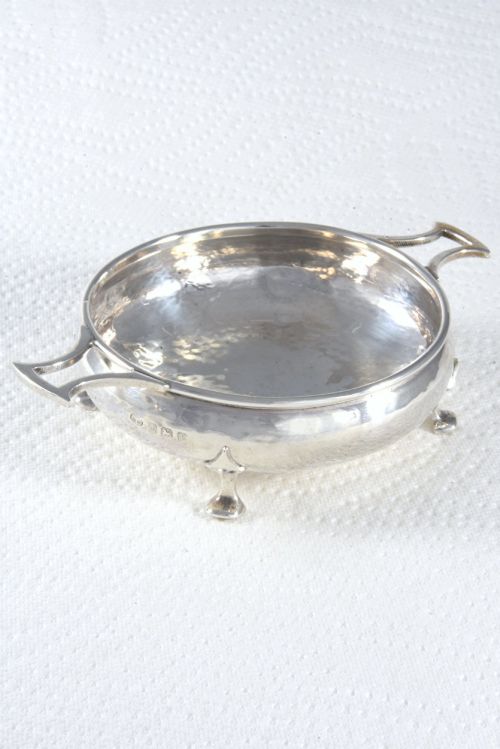
Decorative elements involve applied borders, engraved motifs, and enamelling, as seen in guilloche enamel sections. Structural components are soldered or riveted together, while handles and feet are cast separately and attached to the main tray body.
1920s Silver Tray Retail Price Guide 2026
Typical asking prices for 1920s silver tray among the pieces listed under this phrase on Sellingantiques today, from the lower quarter to the upper quarter. They describe what is for sale here now, not the wider market.
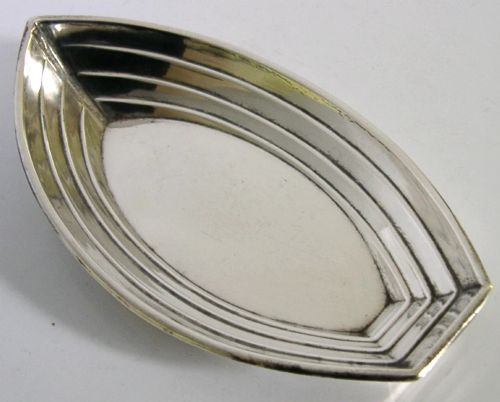
A sailing boat dish from the 1920s lets you serve canapés aboard a miniature silver vessel.
Evaluating quality and manufacture
Quality in a 1920s silver tray is determined by the weight of the metal, the crispness of the Art Deco stamping, and the integrity of any secondary materials like glass or wood. Substantial gauge silver plate and solid sterling examples hold their plating and structure better through decades of service.
Finishing details separate standard production from superior pieces, particularly in the precision of engraved patterns, the snugness of glass inserts, and the maker's mark stamped into the metal. The presence of named makers adds documentary weight to the object.
Wallace·Elkington·Walker and Hall·John Collyer and Co·Roberts and Belk·Atkin Brothers
The 1920s Silver Tray Glossary
- Silver Plate
- A base metal foundation coated with a thin layer of pure silver through electroplating. This method allowed makers to produce large serving trays at a lower cost than solid sterling silver.
- Guilloche Enamel
- A decorative technique where translucent enamel is layered over engine-turned metal engraving. It produces a repeating geometric pattern visible beneath the coloured glass surface.
- Sterling Silver
- An alloy consisting of pure silver and other metals, standardised at a fineness of ninety-two point five percent. Pieces made from this material bear official hallmarks indicating purity and origin.
- Art Deco
- A design style dominant during the 1920s characterised by streamlined forms, geometric shapes, and stylized motifs. It replaced the flowing curves of earlier decorative movements.
- Wine Coaster
- A small, often circular tray or stand designed to hold a wine bottle and protect table surfaces. Examples from this era frequently combine turned mahogany bases with silver-plated galleries.
1920s Silver Tray: Frequently Asked Questions
What were 1920s silver trays used for?
These trays served primarily for domestic hospitality, carrying cocktails, liqueurs, and tea services across the drawing room. Smaller versions functioned as trinket dishes or dressing table receptacles for personal items.
During the 1920s, the rise of cocktail culture made specialised serving trays an essential accessory for home entertaining. Their surfaces were designed to display glassware and bottles securely during social gatherings.
How do I clean a silver plated tray?
Cleaning requires a mild silver polish and a soft cloth, applied gently to avoid wearing through the thin plated surface. Avoid harsh abrasive cleaners that can strip the silver layer from the base metal.
For pieces incorporating wood, glass, or enamel, keep moisture away from the edges where different materials meet. Store the tray in a dry environment to slow down future tarnishing.
How can I tell Art Deco trays apart?
Art Deco trays are distinguished by their geometric shapes, such as diamonds, hexagons, and octagons, alongside stepped motifs and clean borders. Unlike earlier Victorian designs, they reject floral clutter in favour of architectural symmetry.
Look for contrasting materials like cobalt blue mirror glass and ebonised wood paired with nickel or silver-plated frames. These combinations define the aesthetic of the decade.
Are these trays marked with maker's stamps?
Many trays carry manufacturer stamps, hallmarks, or retailer marks on the underside or rim. Sterling silver pieces feature official assay office hallmarks indicating the year and standard of purity.
Silver-plated items usually display maker initials or company names alongside indicators like EPNS, denoting electroplated nickel silver. These marks help identify the workshop and approximate production date.