


1920s Silver Pot
A 1920s silver pot brings functional elegance to a table or dressing surface, taking forms from mustard containers to lidded dressing table jars.
1920s Silver Pot
When you search for a 1920s silver pot, you encounter an array of functional vessels spanning condiment sets, dressing table jars, trinket boxes, and tea services. The examples on this page reflect the aesthetic shifts of the period, moving through George V traditionalism towards distinct Art Deco geometry and earlier Edwardian or Arts and Crafts survivals. Most pieces you meet combine metal with other media, uniting utilitarian purpose with decorative craftsmanship.
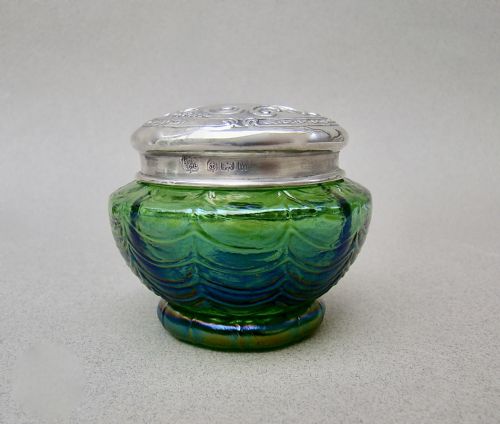
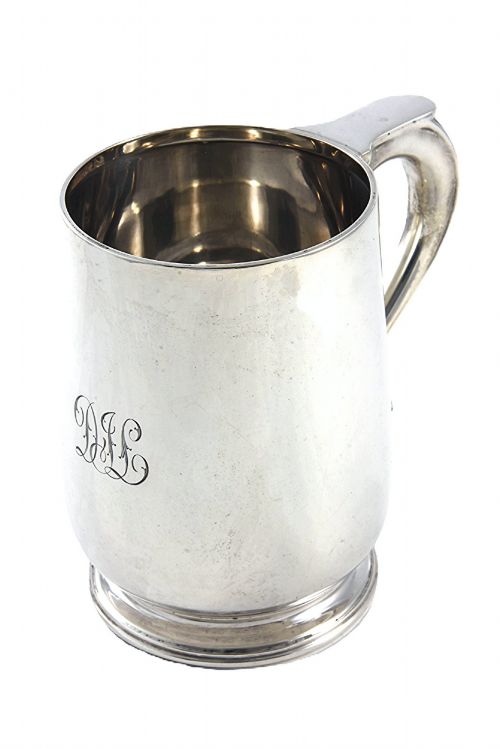
The material forms vary considerably across the selection, ranging from solid sterling silver tankards and mustard pots to silver-mounted glass and enamel containers. You will frequently find lidded trinket boxes, preserve jars modelled as fruit, and heavy cut glass dressing table jars secured with hallmarked silver tops. These vessels served daily domestic roles in wealthy households, functioning variously at the breakfast table, the cocktail bar, or the vanity dresser.
What varies in quality
The distinction between standard production and superior craftsmanship rests in the weight of the silver and the complexity of the design. Pieces produced by notable makers exhibit crisper hallmarks, heavier gauge metal, and more intricate finishing, such as hand-engraved details or complex figural shapes like apples and pagodas. Simpler condiment sets and mass-produced silver-plated items rely on basic geometric forms with minimal embellishment.
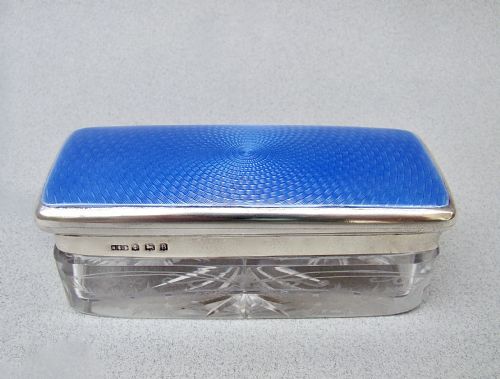
The integration of secondary materials also defines the tier of a piece. High-quality items feature flawless guilloche enamel, perfectly fitted glass liners, and heavy cut glass with deep, sharp facets. Lesser examples show simpler glass moulding and standard flat silver lids without coloured enamel or decorative mounting.
The listings feature diverse periods including 1920, 1930, and Georgian eras, executed in styles spanning Art Deco, Art Nouveau, and Arts and Crafts.
A. J. Pepper & Co·Henry Clifford Davis·Hukin and Heath·Hasset & Harper·Wilmot Manufacturing Co·Omar Ramsden·Elkington and Company·Gorham
The 1920s Silver Pot Glossary
- Guilloche enamel
- A decorative technique involving precise, intricate mechanical patterns engraved beneath a translucent layer of coloured enamel. This finish frequently adorns the lids of dressing table jars and trinket boxes from the period.
- Hallmark
- An official stamp applied to precious metals indicating the standard of purity, the assay office, and the year of manufacture. British pieces typically display maker marks alongside city symbols.
- Sterling silver
- An alloy consisting of ninety-two point five percent silver and seven point five percent other metals, usually copper. This standard composition is used across the solid silver pots and tankards in the collection.
- Silver plate
- A base metal, such as copper or nickel brass, coated with a thin layer of pure silver. This method provided an accessible alternative to solid sterling for tea sets and condiment stands.
- Cut glass
- Glassware shaped and patterned through abrasive wheel cutting to create deep, light-reflecting facets. It forms the bodies of many vanity jars, condiment pots, and preserve containers.
1920s Silver Pot: Frequently Asked Questions
What is a 1920s silver pot used for?
These vessels served diverse domestic functions, ranging from holding mustard and preserves at the dining table to containing cosmetics and trinkets on a dressing table. Tea and coffee pots were manufactured for beverage service.
Smaller lidded boxes functioned as vanity containers for rouge or pins. The variety of forms reflects the specific social rituals of the early twentieth century.
How do I identify a 1920s silver piece?
You identify the date by examining the hallmarks stamped into the silver, which include date letters corresponding to specific assay years like those from the nineteen-twenties. Birmingham and other British assay offices marked pieces with standard symbols.
Stylistic indicators also help, such as the geometric patterns of Art Deco or the survival of Neoclassical and George V motifs. Maker marks provide further confirmation of origin.
How do I care for silver and glass items?
Maintain the silver components by using a soft cloth and a reputable silver polish to remove tarnish, avoiding abrasive substances that scratch the metal. Keep polish away from glass and enamel surfaces.
Wash glass bodies gently in warm, soapy water without submerging cemented silver mounts. Store items in a stable environment away from excessive moisture.