
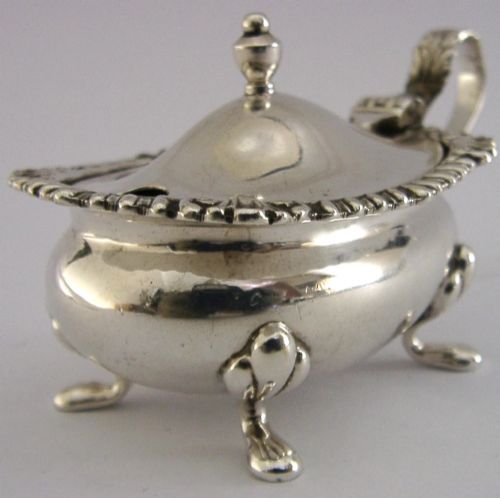


Antique Condiment Jar
These antique condiment jar examples bring practical elegance to the table, offering refined silver and glass vessels for your dining room.
Antique Condiment Jar
When you search for an antique condiment jar, you encounter a diverse selection of dining table ware designed for holding preserves, mustard, honey, and spices. These objects span several centuries, encompassing Georgian, Victorian, Edwardian, and Art Deco periods.
The most common versions on this page are silver and cut glass preserve pots and mustard pots, often fitted with coloured glass liners in cobalt blue, ruby red, or cranberry. You will also find more specialised forms, such as treen spice towers and multi-bottle cruet sets.
Originating from domestic dining traditions, these pieces reflect the shifting tastes of the eighteenth, nineteenth, and twentieth centuries. They range from simple silver plate and glass combinations to heavy sterling silver mounts by notable makers.
Materials and Methods
The construction of these items relies on the combination of sterling silver or silver plate with blown, cut, and lead crystal glass. Metalsmiths shaped mounts and lids through casting, stamping, and silver-smithing techniques in workshops across cities like Birmingham and Sheffield.
Glass components include mould-blown vessels, wheel-cut crystal, and vibrant cranberry or vaseline glass, often paired with turned wood for treen items like the spice tower. Makers secured silver rims and hinged lids directly to the glass bodies to create functional tableware.
One piece takes the whimsical form of an apple, proving that Victorian dining tables had room for a touch of orchard charm.
Assessing Quality and Execution
Quality in these pieces is dictated by the weight of the silver, the precision of the glass cutting, and the integrity of the maker's mark. Superior examples exhibit thick gauge sterling silver, crisp hallmarks, and heavy lead crystal with deep, clean facet cuts.
The harmony between the metal mount and the glass liner also defines the standard of craftsmanship. Finer pieces demonstrate a seamless fit and careful attention to functional details like hinged lids and matching spoons.
Hukin and Heath·Asprey and Co·Walker and Hall·Elkington and Company
The Antique Condiment Jar Glossary
- Sterling silver
- A silver alloy containing 92.5 percent pure silver and 7.5 percent other metals, usually copper. This standard is marked by the lion passant on British silver.
- Silver plate
- A base metal, such as copper or nickel brass, coated with a thin layer of pure silver. It provided an accessible alternative to solid silver for dining wares.
- Cut glass
- Glass decorated by cutting facets or patterns into the surface using a rotating wheel. This technique enhances the refractive qualities of crystal and heavy glass.
- Cranberry glass
- A transparent pinkish-red glass created by adding gold chloride to the molten batch. It became popular during the Victorian and Edwardian eras for decorative tableware.
- Treen
- Small handmade wooden household objects and wares. Turned wood items like spice towers fall under this category.
Antique Condiment Jar: Frequently Asked Questions
What were antique condiment jars used for?
These vessels held table condiments such as mustard, preserves, honey, and spices during meals. They sat on dining tables and sideboards for easy access by guests and household staff.
Over time, their designs evolved from utilitarian containers into decorative dining accessories reflecting the fashion of their respective eras.
How do I identify the period of a jar?
Dating relies heavily on hallmarks stamped into the silver mounts, which indicate the assay office, year of manufacture, and maker. Stylistic clues such as Georgian lines, Victorian ornamentation, or Art Deco geometry also help determine age.
The materials and manufacturing techniques, such as hand-cut crystal or specific glass colours like cranberry, offer further context for period identification.
Are glass liners original to the jars?
Many pieces retain their original blown or moulded glass liners, which were matched specifically to the silver mounts. Coloured glass liners in blue, red, or cranberry are characteristic of Victorian and Edwardian dining wares.
Replacements do occur due to accidental breakage over the decades, so checking the fit inside the silver mount is standard practice.
How should I care for silver and glass?
Maintenance involves gentle cleaning of the silver mounts using appropriate metal polishes while avoiding abrasive contact with the glass. Hand washing with warm soapy water preserves both the metal finish and the glass surface.
Storing pieces away from excessive moisture helps protect silver from tarnishing and keeps hinges on lids functioning smoothly.