


1920s Platinum Diamond Pin
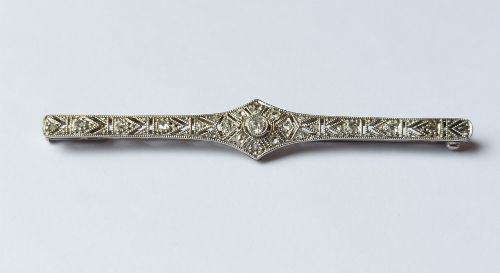
A 1920s platinum diamond pin brings together geometric geometry and brilliant stones, offering the unmistakable elegance of the Art Deco period.
1920s Platinum Diamond Pin
When you search for a 1920s platinum diamond pin, you are looking at brooches and pendants shaped during the height of the Art Deco movement. These pieces range from linear bar brooches to large statement designs set with old cut diamonds.
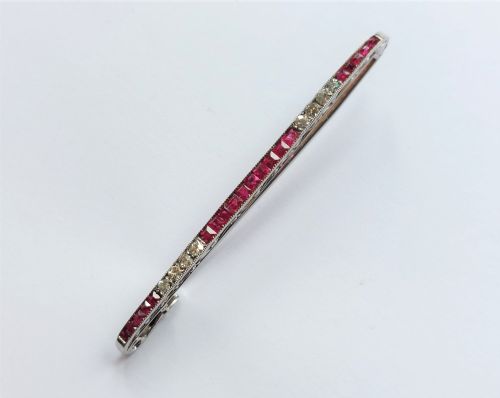
The version you are most likely to meet on this page is a platinum-set piece from around 1920, often incorporating diamonds alongside contrasting materials like onyx, rubies, or pearls. Some examples combine platinum with 18ct or 14ct yellow gold.
Originating from periods such as the Edwardian era extending into the 1920s, these items functioned as versatile fasteners and ornaments. Certain pieces double as brooches and pendants, reflecting the adaptable jewellery design of the time.
How they were made
The construction relies heavily on platinum, a metal chosen for its strength which allowed jewellers to form delicate, intricate settings without bulk. Old cut diamonds are meticulously mounted within these metal frameworks to maximise their sparkle under artificial light.
Makers integrated contrasting elements such as carved black onyx, pink pearls, and calibré-cut rubies to punctuate the monochrome brilliance of the diamonds. Yellow gold occasionally forms the reverse or structural base of pieces that display a platinum face.
Some pins hide secret loops so cunningly integrated that the brooch transforms into a pendant without leaving a single trace of its dual life.
What varies in quality
The precision of the piercing and milling on the platinum framework separates standard workshop output from exceptional examples. Finer workmanship demonstrates sharper geometric lines and a seamless integration between the primary gemstones and auxiliary materials.
Cartier Paris
The 1920s Platinum Diamond Pin Glossary
- Art Deco
- A design style dominant in the 1920s characterised by symmetry, geometric shapes, and stylised motifs. It marked a sharp departure from the flowing curves of the preceding Edwardian period.
- Old cut diamond
- A diamond cut with a small table, high crown, and large culet, typical of stones shaped before modern brilliant cutting standards were established. These stones possess a distinctive, softer scintillation.
- Bar brooch
- A horizontal pin featuring a central decorative element mounted on a narrow metal bar. This form was exceptionally popular during the 1920s for securing lapels and scarves.
- Calibré-cut
- Small gemstones cut specifically to fit a tight, tailored geometric setting within a larger design. They are frequently seen edging platinum diamond motifs with lines of ruby or onyx.
- Platinum
- A dense, durable precious metal that gained widespread favour in jewellery during the early twentieth century. Its strength permitted secure, ultra-fine claw and bezel settings for diamonds.
1920s Platinum Diamond Pin: Frequently Asked Questions
How do I wear a 1920s platinum diamond pin today?
These pieces suit heavy fabrics such as wool coats, heavy knit sweaters, or velvet lapels where the weight of the platinum and stones finds stable support. They also anchor silk scarves or fasten draped evening wear securely.
For a contemporary approach, pin one to the shoulder of a tailored blazer or position it centrally on the neckline of a plain dress to let the geometric work stand out.
Are these pins also pendants?
Certain examples feature integrated folding bails or hidden loops on the reverse that allow a chain to pass through. This dual functionality was common in 1920s jewellery design, offering versatility to the wearer.
Inspecting the back of the piece reveals whether conversion elements were built into the original platinum frame.
What is the difference between Edwardian and 1920s styles here?
Edwardian pieces often lean towards lace-like garland motifs with softer, organic curves executed in platinum and gold. The transition into the 1920s introduced strict geometry, clean lines, and stark contrasts.
Listings from this era frequently bridge both aesthetics, combining delicate millegrain work with bold Art Deco symmetry.
How should I store my diamond brooch?
Store each piece individually in a lined jewellery box or a soft pouch to prevent the platinum settings and diamonds from scratching adjacent items. Because old cut diamonds and softer accent stones like pearls or onyx react differently to pressure, separation is essential.
Keep them away from direct sunlight and damp environments to protect any organic components like pearls.