
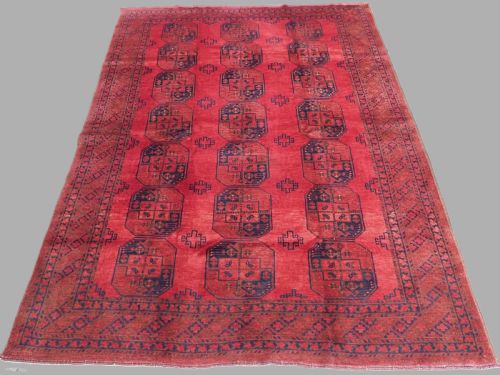


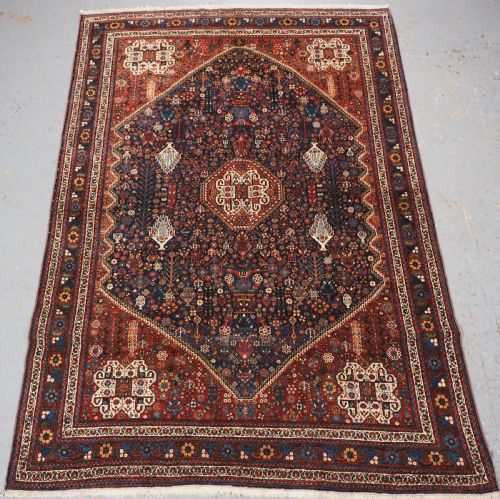

1920s Persian Rug
A 1920s persian rug brings rich tribal character and centuries of weaving tradition directly to the floor.
1920s Persian Rug
When searching for a 1920s persian rug, buyers encounter hand-knotted floor coverings originating from specific regional centres, urban workshops, and nomadic tribal groups across Persia and surrounding areas. These pieces encompass everything from room-sized Heriz carpets with bold geometric medallions to fine Kashan prayer rugs displaying intricate floral vase designs.
Village and tribal weaves dominate the selection, including pieces from Afghan, Baluch, Afshar, and Qashqai makers, alongside larger formats like Mahal kellehs and Tabriz runners. Buyers are most likely to meet wool-pile floor coverings that combine traditional craftsmanship with the warm red, ivory, and soft pastel tones typical of the era.
The practical utility of these carpets remains high, functioning equally well as country house furnishings or focal points in modern interiors. Their diverse formats range from long hallway runners to small prayer mats and grand area carpets.
Materials and Construction Techniques
The construction relies heavily on wool, hand-spun wool, lambswool, and occasionally silk foundations, anchored by sturdy cotton warps and wefts. Artisans utilised natural dyes to achieve deep red grounds, rich ivory fields, and gentle pastel colourways that mellow gracefully over decades of use.
Weaving techniques vary from the very fine knotting seen in urban Isfahan and Tabriz workshops to the robust, hard-wearing pile produced by village and tribal weavers. Each rug takes shape through meticulous hand-knotting, resulting in dense structures designed to withstand generations of daily foot traffic.
1920s Persian Rug Retail Price Guide 2026
Typical asking prices for 1920s persian rug among the pieces listed under this phrase on Sellingantiques today, from the lower quarter to the upper quarter. They describe what is for sale here now, not the wider market.
Listings feature wool, cotton, lambswool, and silk materials worked into runner, carpet, and prayer rug formats.
Distinctions in Quality
Knot density and fineness of weave separate everyday village production from the exceptional output of urban master workshops. A higher concentration of knots per square inch allows for sharper delineation of intricate floral lattices, medallion contours, and pictorial elements.
The choice of materials also dictates the upper tier of the range, particularly pieces employing fine lambswool on silk foundations or superior hand-spun wool paired with stable natural dyes. Integrity of structure and preservation of the original pile depth ensure that higher-grade examples endure without losing the crispness of their traditional designs.
Benlian·Saber
The 1920s Persian Rug Glossary
- Medallion
- A large central ornamental motif dominating the field of the rug. It frequently appears as a geometric star or a complex floral arrangement.
- Prayer rug
- A small format featuring a mihrab or arch design indicating the direction of prayer. These pieces were historically used for personal devotion.
- Kilim
- A flat-woven carpet or rug produced without a pile. They utilise interlocking weave techniques to create crisp, geometric banded chevron patterns.
- Herati design
- An all-over pattern composed of a central rosette enclosed by a diamond lattice and flanked by curved leaves. It is a classic motif found across many traditional Persian formats.
- Boteh
- A stylised almond or pear-shaped motif representing a sprouting bush or cypress tree. This ancient symbol appears frequently in tribal and village weavings.
1920s Persian Rug: Frequently Asked Questions
How do I identify a Heriz carpet?
Heriz carpets typically present a large, bold geometric medallion set against a contrasting ground colour, often red or ivory. They are known for their sturdy, hard-wearing construction and heavy wool pile.
Their robust nature made them popular furnishing carpets for large rooms, distinguishing them from the finer, more curved floral designs found in urban workshop rugs.
What is a Baluch runner?
Baluch runners are narrow, elongated floor coverings produced by nomadic or semi-nomadic weavers using traditional tribal motifs. They often feature deep, saturated tones and geometric repeat patterns.
These pieces served functional roles as passageway coverings in homes, offering durability and distinctive tribal character in a compact format.
Where were Kashan rugs made?
Kashan rugs originate from a historic city in north-west central Persia renowned for urban workshop production. These pieces usually feature sophisticated floral vase designs, prayer arches, or pictorial elements.
The city's weavers utilised fine knotting techniques and high-quality materials to achieve exceptional detail and refined artistic expression.
How should I care for an antique rug?
Vacuuming with a standard upright brush roll turned off helps remove embedded dirt without pulling at the wool pile. Professional cleaning by a specialist in antique textiles ensures the natural dyes and fibres remain protected.
Placing the rug out of harsh, direct sunlight prevents the vegetable and natural dyes from fading prematurely over time.