


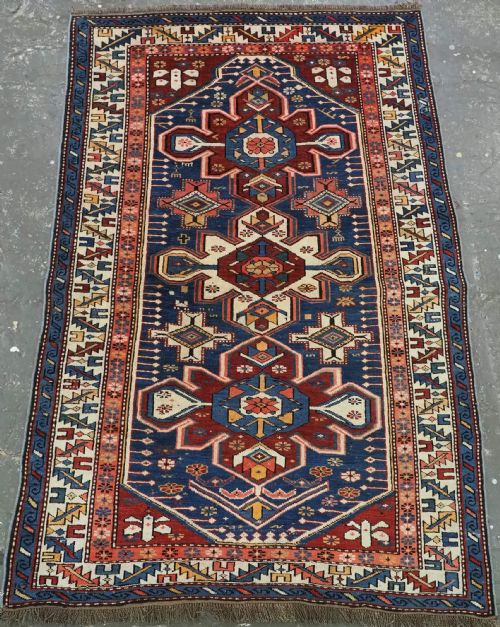


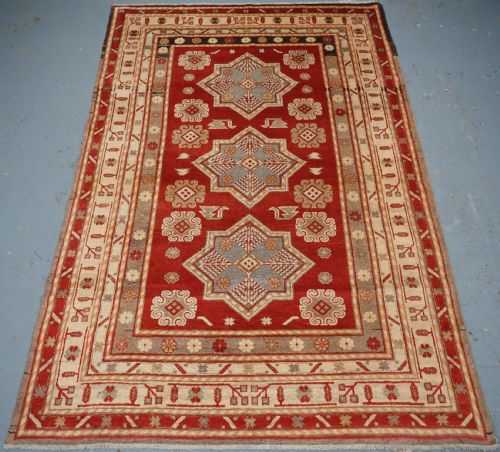
1920s Oriental Runner Rug
These 1920s oriental runner rugs bring enduring tribal and village craft into a hallway, offering rich colour and pattern from an era of skilled hand-knotting.
1920s Oriental Runner Rug
A 1920s oriental runner rug provides a narrow format designed for hallways, corridors and passageways, woven across various tribal and village regions. These floor coverings emerge from traditions such as Afghan Pashtun, Persian Heriz, Sarab and various Anatolian weaving centres.
The pieces on this page span styles from Caucasian geometric medallions to traditional Persian floral designs and flatwoven kilims. Buyers encounter long formats created by village weavers utilising wool and cotton foundations.
Many examples feature specific regional motifs, including prayer mihrabs, garden patterns and traditional border designs from the nineteen-twenties period. Each runner reflects the distinct cultural aesthetics of its maker, whether from Turkish Oushak or Kurdish districts.
How they were made
The construction of these runner rugs relies primarily on hand-knotted wool and hand-spun wool secured to sturdy cotton or wool foundations. Weavers worked by hand on vertical or horizontal looms to build dense pile surfaces.
Makers employed natural dyes to colour the wool yarns, producing tones that age gracefully over time. Certain items incorporate flatwoven kilim ends rather than knotted pile, demonstrating diverse regional techniques.
One exceptional nineteen-twenties runner manages to squeeze an entire traditional garden design into a remarkably narrow corridor format.
What varies in quality
Quality in these runner rugs depends on the tightness of the knotting and the fineness of the wool used in the pile. Tighter structures provide greater resilience against heavy corridor footfall.
The precision and clarity of the regional design execution, along with the depth of natural dye colours, set superior examples apart from standard village work. Well-balanced borders and crisp geometric or floral motifs indicate higher craftsmanship.
Tuduc
The 1920s Oriental Runner Rug Glossary
- Runner
- A long, narrow carpet format specifically proportioned for corridors, hallways and stairs. This shape guides movement through a domestic space.
- Kilim
- A flatwoven textile produced without a pile by tightly interweaving warp and weft threads. These items often feature sharp geometric patterns.
- Mihrab
- A niche design element found on prayer rugs, representing the direction of prayer. It typically appears as an arched silhouette at one or both ends.
- Medallion
- A central ornamental motif placed in the field of a rug. It can take circular, lobbed or geometric forms depending on the weaving region.
- Warp
- The stationary vertical threads stretched lengthwise on a loom that form the structural foundation of the rug. Weft threads are woven across them.
1920s Oriental Runner Rug: Frequently Asked Questions
Where should I place a runner rug?
These narrow formats suit long hallways, corridors, landings and galley kitchens where floor coverings add warmth and texture.
Their elongated dimensions protect high-traffic wooden flooring while defining transitional spaces in a home.
How do I identify a village rug?
Village rugs often display asymmetric motifs, charming irregularities and straightforward geometric layouts woven by independent artisans.
Unlike workshop carpets, they showcase the personal choices of individual makers using local materials and traditional designs.
What is the difference between pile and kilim?
Pile rugs feature a dense surface of knotted wool yarns that stand upright from the foundation, creating a soft texture underfoot.
Kilims are flatwoven without any pile, resulting in a thin, reversible textile with a smooth surface.
How do natural dyes age?
Natural dyes derived from plants and minerals mellow gradually over decades, developing a harmonious patina known as abrash.
This subtle variation in shade adds depth and character to the wool across the surface of the rug.