
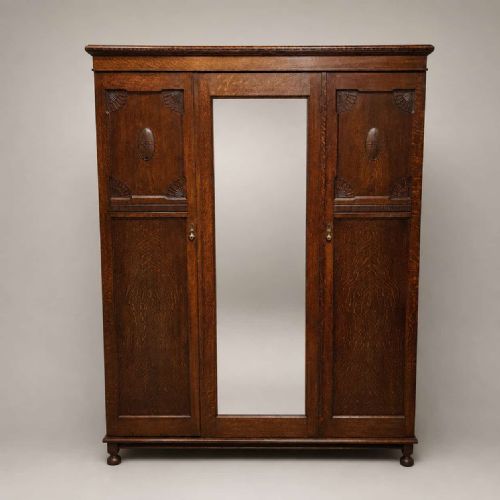
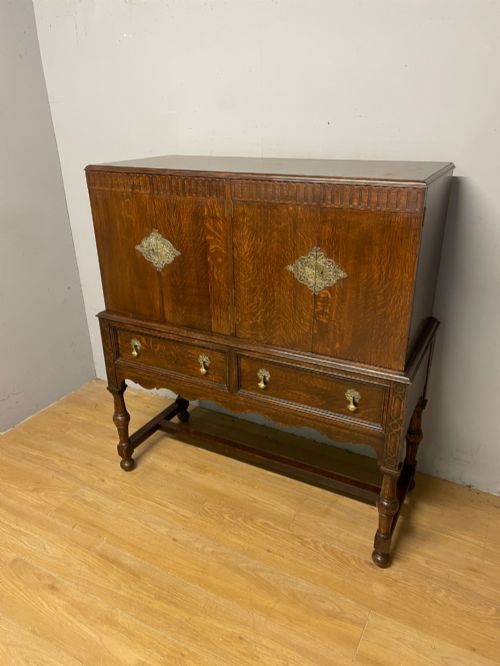


1920s Oak Cupboard
A 1920s oak cupboard brings sturdy timber and practical storage into a room, offering period character through solid construction and varied revival styles.
1920s Oak Cupboard
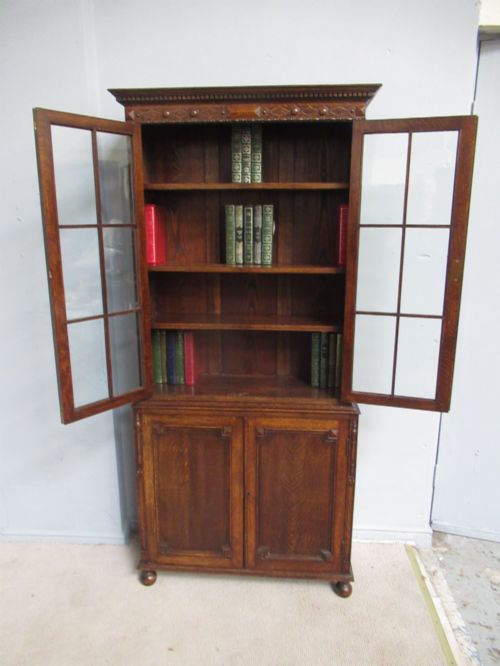
A 1920s oak cupboard spans a wide array of domestic and institutional forms, including wardrobes, bookcases, sideboards, bedside cabinets, and storage units. Buyers exploring this category encounter pieces rooted primarily in the 1920s alongside Edwardian survivals.
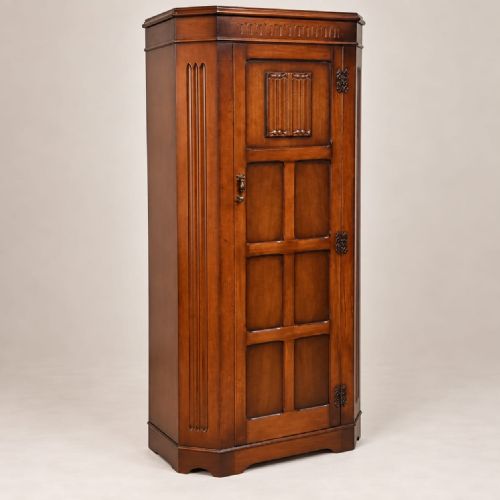
The domestic selection ranges from small bedside cabinets with carved friezes to large double and triple wardrobes, plus complete bedroom suites. Institutional and commercial pieces also appear, such as school library book cabinets, draper countertop needle drawer units, and display cases.
Stylistic influences vary significantly across these items, drawing heavily from Jacobean Revival, Gothic Revival, Art Deco, and interwar commercial designs. The most common manifestations on this page combine functional storage with period timber finishes, including limed oak and solid oak builds.
Distinctions in Quality
Quality in these pieces is dictated by the integrity of the timber selection and the precision of the joinery rather than surface ornamentation alone. Solid oak builds with well-fitted doors and stable internal framing stand apart from lighter commercial iterations.
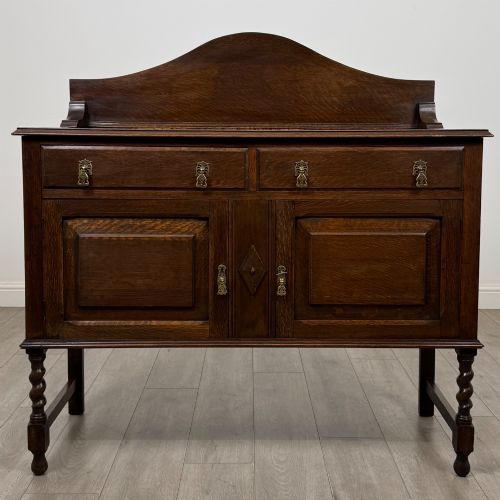
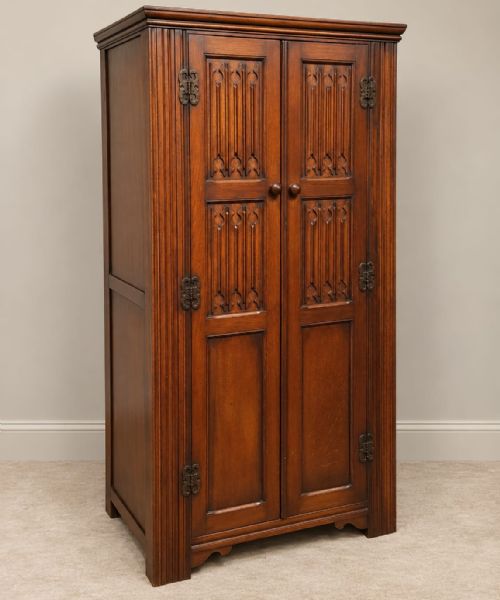
The execution of stylistic details, from crisp linen fold carving to balanced barley twist turnings, separates standard production items from workshop pieces bearing maker signatures. Finished treatments, such as carefully applied limed oak surfaces or fitted leaded glass, also indicate higher tiers of craftsmanship.
Needle drawer counters once kept haberdashery organised before finding new life storing modern trinkets.
Heals of London
The 1920s Oak Cupboard Glossary
- Jacobean Revival
- A style popular in the early twentieth century that emulates seventeenth-century English furniture. It frequently incorporates dark oak, geometric moulding, and heavy turnings.
- Limed Oak
- A wood finishing technique that leaves a white pigment in the grain of the oak. This treatment achieved a modern, light appearance favoured during the interwar period.
- Linen Fold
- A carved decorative motif that simulates folded parchment or linen cloth. It appears frequently on the panels of cupboards and wardrobes from this era.
- Barley Twist
- A turned column or spindle resembling a twisted rope. This decorative detail is commonly found on the legs and uprights of sideboards and cabinets.
1920s Oak Cupboard: Frequently Asked Questions
What styles define a 1920s oak cupboard?
These pieces display a mix of traditional revival aesthetics and early modern design. Examples range from heavy Jacobean and Gothic Revival forms to clean-lined Art Deco and interwar commercial styles.
Maker-designed pieces often lean towards limed oak finishes and subtle modernism, while standard domestic items retain classic period details like carved panels and barley twists.
How do I identify a school or institutional cupboard?
Institutional pieces usually feature robust construction designed for heavy daily use in locations like libraries, sports departments, or classrooms. They often include specialised configurations such as narrow drawers or open display shelving.
Their proportions tend to be strictly functional, lacking the decorative friezes or intricate hardware typically found on domestic bedroom wardrobes.
Are bedside cabinets different from larger storage cupboards?
Bedside cabinets are scaled down significantly to sit alongside a bed, usually incorporating a single door or small drawer with a carved frieze. Larger storage cupboards and hall robes offer full-height hanging space or extensive shelving.
Both categories utilise solid oak and share similar hardware, but their functional roles dictate distinct interior layouts and exterior proportions.
Where were these cupboards used originally?
Domestic examples furnished Edwardian and interwar bedrooms, dining rooms, and hallways as wardrobes, sideboards, and bookcase units. Commercial and educational versions served in shops as countertop display cases and in schools as library cabinets.
Their versatility allowed them to transition easily from utilitarian spaces into modern residential settings.