
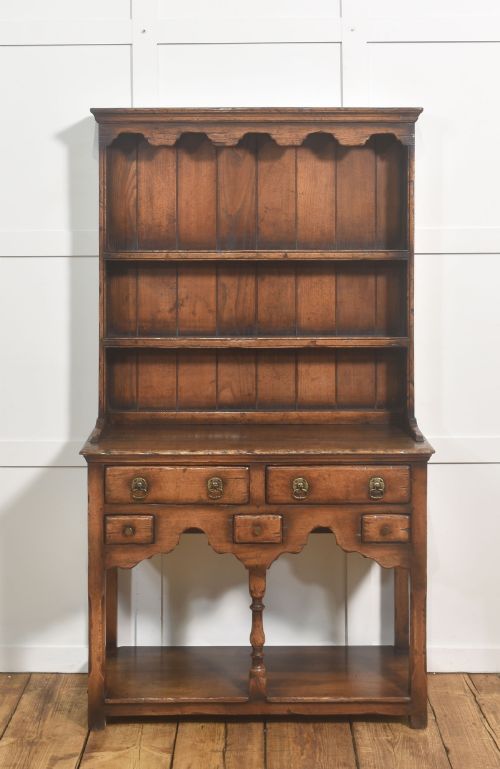
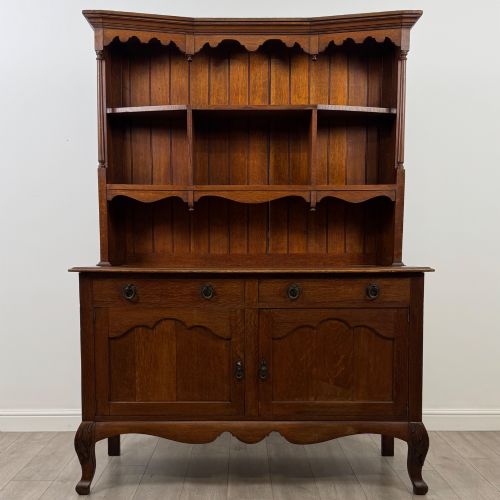
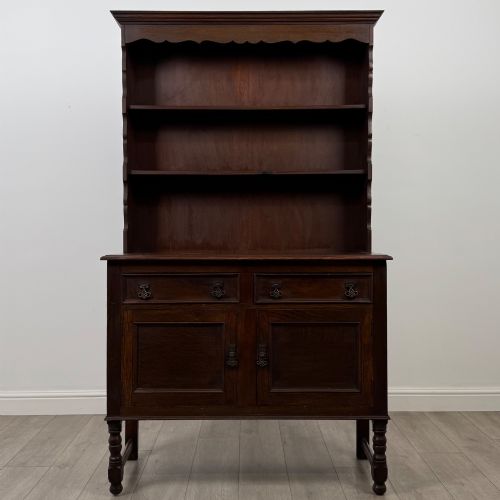
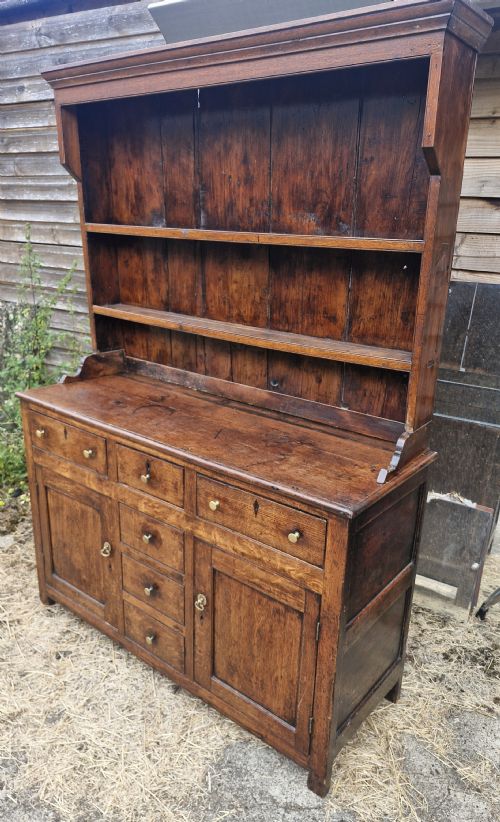
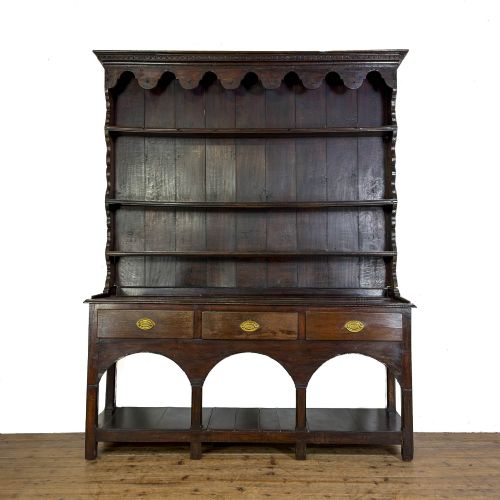


Rustic Oak Kitchen Hutch
A rustic oak kitchen hutch brings honest country character and sturdy storage into daily family life.
Rustic Oak Kitchen Hutch
When searching for a rustic oak kitchen hutch, buyers encounter traditional Welsh dressers, cottage dressers, and regional country cupboards designed for domestic utility. These pieces combine lower storage cabinets or drawers with upper plate racks or open shelving intended for everyday kitchen service.
The selections span centuries of country craftsmanship, with examples stretching from the seventeenth century through Georgian, Victorian, and Edwardian periods. Pieces emerge from regional British traditions like Welsh country workshops, alongside French provincial variations.
Most variations seen here rely on solid timber construction, featuring open plate racks tailored for displaying pottery and ceramics. Buyers will find both single-piece forms and two-part cupboards that separate the upper shelving from the base.
Construction and Materials
Makers built these pieces primarily using solid oak, complemented by occasional secondary timbers such as pine, elm, and mahogany. Carpenters employed traditional joinery methods to ensure durability for heavy domestic service.
Hardware details incorporate brass and iron handles or hinges, while select items feature delicate inlay wood or burr walnut accents. Surfaces often display the natural grain and warm patination accumulated through decades of use.
Some nineteenth-century drawers bear the subtle, ink-stained thumbprints of forgotten cooks who reached in too hurriedly for the flour scoop.
Evaluating Quality
Quality rests upon the integrity of the timber selection and the retention of original structural elements like plate racks and brass hardware. Earlier pieces from the eighteenth century often display hand-carved details and pegged joints that denote regional workshop traditions.
Proportion and scale distinguish finer country examples from utilitarian pieces, with well-balanced cornices and harmonious drawer arrangements commanding attention. The depth of the patination and the honest wear on working surfaces reflect the authenticity of each item.
The Rustic Oak Kitchen Hutch Glossary
- Plate rack
- An open shelving structure mounted to the top of a dresser designed specifically to display plates and platters upright. These racks form an integral part of many traditional country dressers.
- Welsh dresser
- A traditional kitchen storage unit originating in Wales, featuring base cupboards or drawers surmounted by open plate shelves. They served as the central storage and display hub in rural homes.
- Cottage dresser
- A smaller, simpler version of the standard kitchen dresser made for modest rural dwellings. These pieces typically exhibit straightforward lines and practical regional construction.
- Breakfront
- A cabinet design where the central section projects forward past the flanking sections. This configuration adds architectural depth and visual variety to the piece.
- Joined oak
- Furniture constructed using mortise and tenon joints secured with wooden pegs rather than metal nails. This technique provides exceptional structural strength.
Rustic Oak Kitchen Hutch: Frequently Asked Questions
What is a rustic oak kitchen hutch used for?
These pieces served historically in country kitchens to store heavy crockery, utensils, and daily provisions while displaying decorative ceramics on the upper shelves.
Today, they function as practical dining room or kitchen storage units that bring traditional warmth and open display space into modern homes.
How do I date an antique oak dresser?
Dating relies upon examining the construction methods, such as hand-cut dovetails, pegged joinery, and the style of the mouldings or brass hardware.
Earlier examples from the seventeenth and eighteenth centuries often display heavier proportions and distinct regional characteristics compared to Edwardian or later pieces.
Are these hutches made from solid wood?
Traditional country furniture utilised solid native timbers like oak, pine, and elm for both the structural frame and the internal shelving.
Secondary woods may appear in less visible areas like drawer linings, but the primary exterior surfaces consist of heavy natural timber.
How do I care for antique oak furniture?
Protect the timber by keeping pieces away from direct heat sources and sudden temperature fluctuations that can cause the wood to split.
Apply natural beeswax periodically to nourish the surface and maintain the historic patination without stripping away the character.