




Oak Hall Wardrobe
An oak hall wardrobe provides sturdy hanging space and panelled presence in an entranceway, keeping coats and cloaks out of sight.
Oak Hall Wardrobe
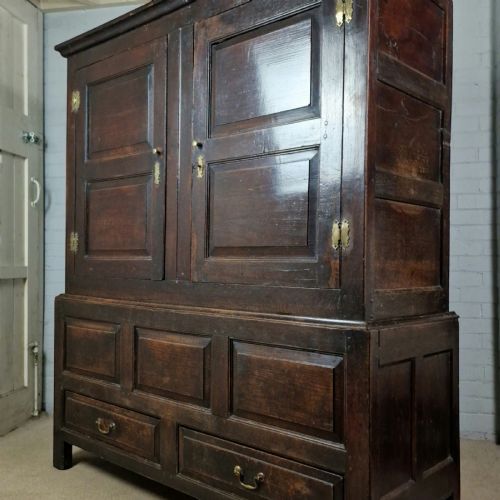
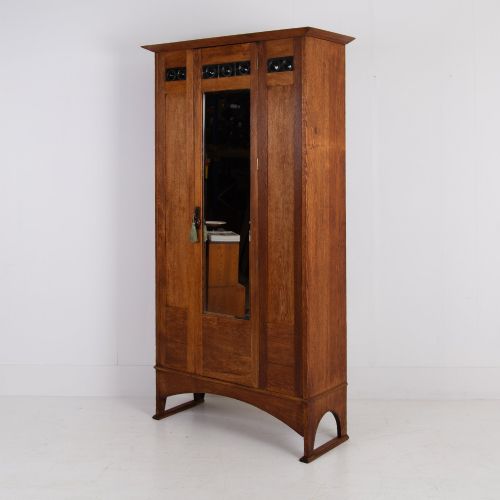
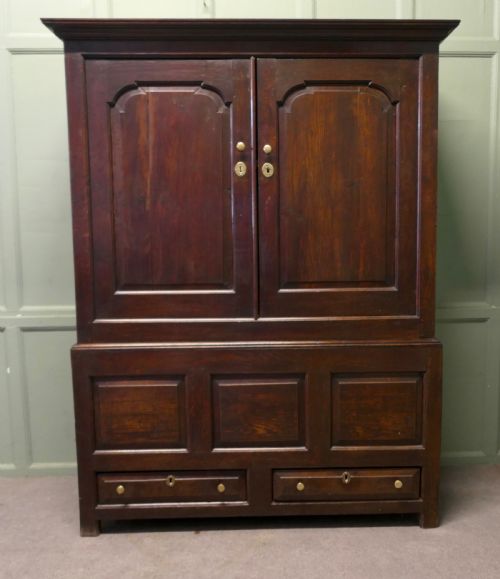
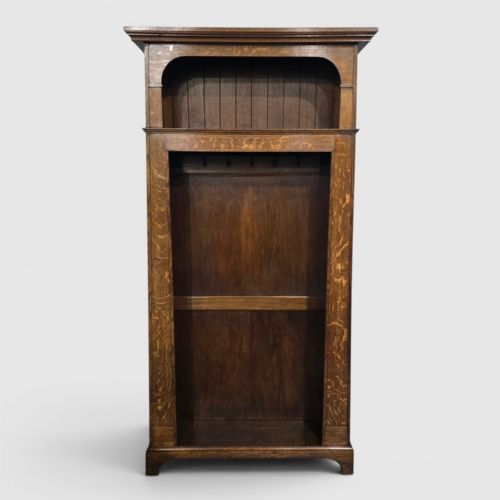
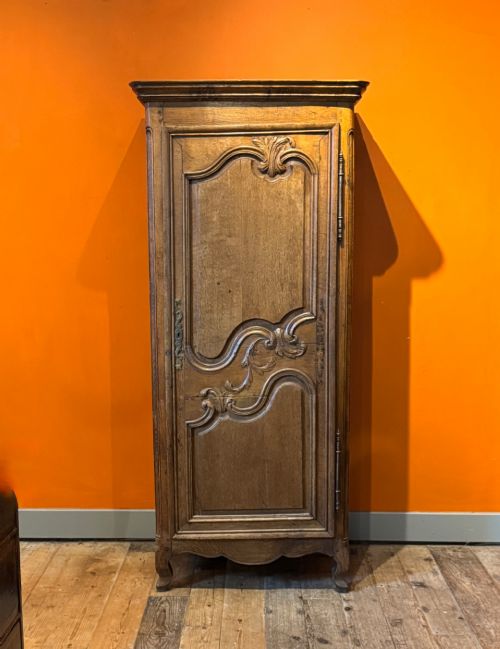
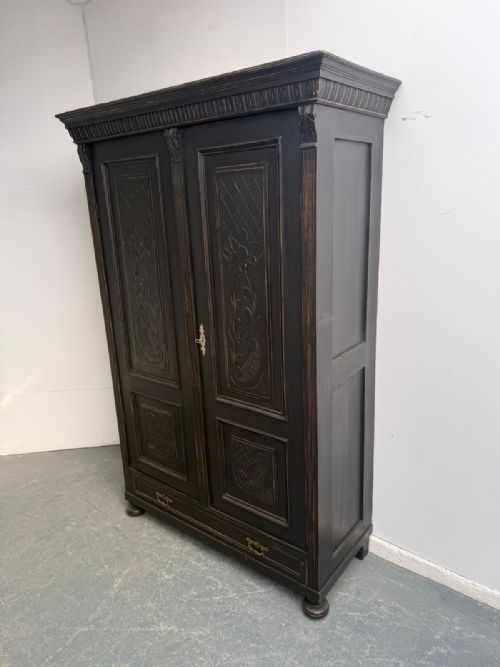
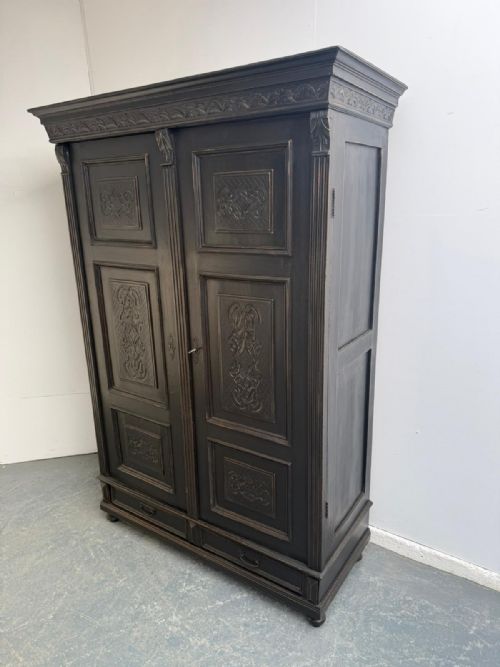
An oak hall wardrobe is a substantial piece of furniture designed for entranceways and reception rooms to store everyday garments. These pieces range from compact early twentieth century examples to Georgian livery cupboards and nineteenth century armoires.
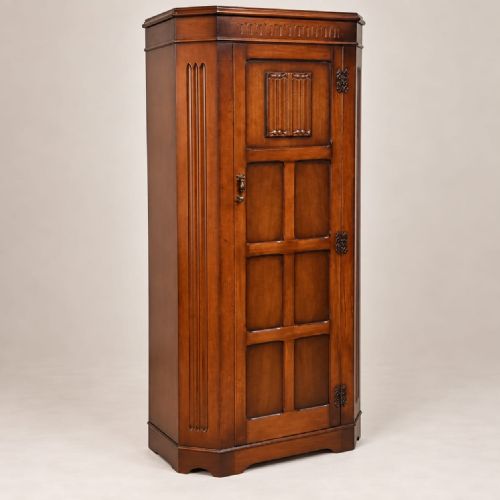
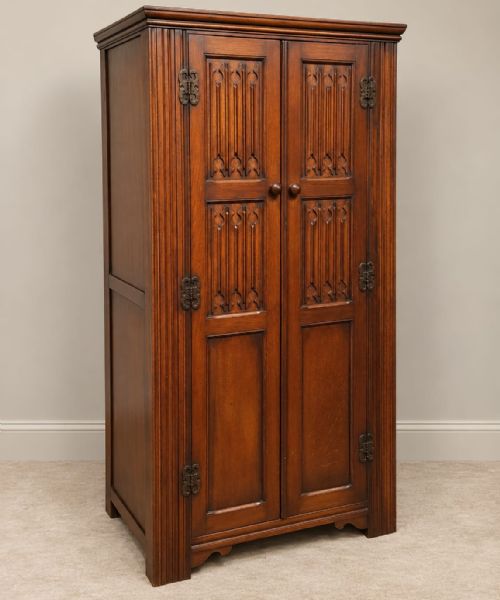
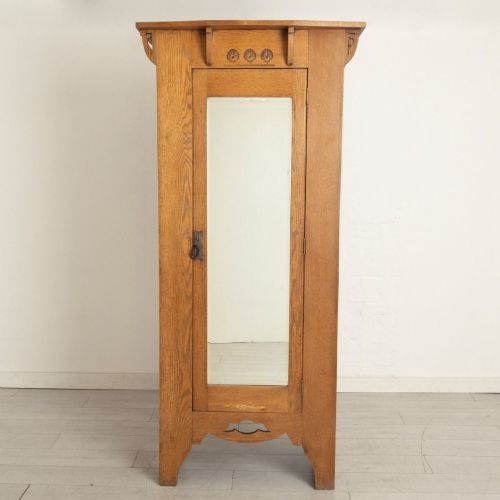
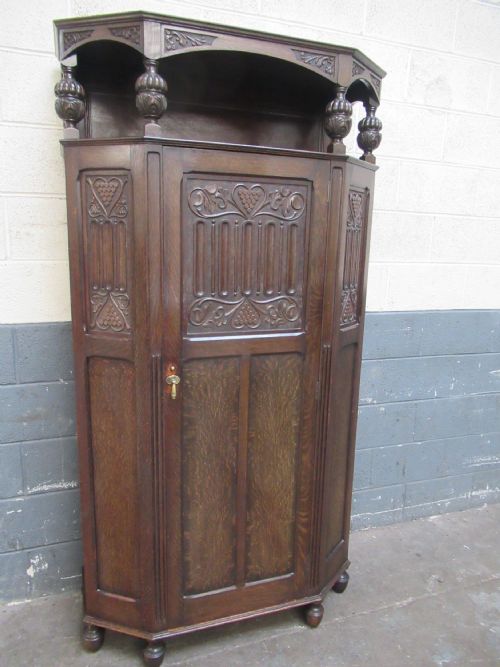
The most common version met on this page is the compact oak hall wardrobe dating from around nineteen twenty, often featuring carved panels or linen fold details. Buyers also encounter Arts and Crafts interpretations and earlier eighteenth century cupboards adapted for hanging clothes.
How They Were Made
Solid oak and panelled construction form the backbone of these pieces, providing the structural stability needed for daily hallway use. Joinery techniques rely on traditional mortise and tenon frames, sometimes complemented by applied carving or linen fold motifs.
Hardware typically includes brass or iron hinges, handles, and hanging hooks that anchor the timber doors and internal rails. Certain continental examples combine oak with painted pine, while others incorporate mirrored glass or glass panels.
Form variations include single door armoires, compact hall robes, linen fold cupboards, and expansive Georgian housekeepers cupboards.
What Varies in Quality
The integrity of the timber and the crispness of the joinery set finer examples apart from simpler utilitarian pieces. Superior wardrobes display carefully selected solid oak boards with balanced grain patterns and tightly fitted panel work.
Proportion and scale dictate the success of a piece within a hallway, where depth and height must balance the room. Original brass or iron hardware and intact internal fittings elevate the standing of an individual wardrobe.
Arthur Simpson Of Kendal·Wylie & Lochhead·Maple & Co.
The Oak Hall Wardrobe Glossary
- Linen fold
- A carved wooden panel motif that imitates folded fabric, frequently seen on twentieth century oak furniture. This decorative technique adds texture to flat doors.
- Livery cupboard
- An early term for a storage cabinet or small wardrobe used for food or clothing. These pre-date modern wardrobe forms and often originate in the eighteenth century.
- Armoire
- A tall cupboard or wardrobe, usually of continental European origin. The term often describes French pieces executed in styles such as Louis XV.
- Panelled
- A method of construction where a central wooden board is set within a surrounding frame to allow for natural timber movement. This technique prevents warping in large doors.
- Arts and Crafts
- A design movement prioritising traditional craftsmanship and simple forms over mass production. Pieces from this tradition often feature honest joinery and minimal ornamentation.
Oak Hall Wardrobe: Frequently Asked Questions
What is an oak hall wardrobe used for?
These pieces provide dedicated storage for coats, hats, and outdoor wear within an entranceway or reception room. They keep hallways tidy by enclosing garments behind solid timber doors.
Many examples include internal hooks or hanging rails specifically designed for outerwear. Their compact footprint allows them to fit narrow spaces where standard bedroom wardrobes prove too deep.
How do I date an oak hall wardrobe?
Dating relies on observing construction methods, timber preparation, and decorative styles. Pieces from the eighteenth century show hand-planed surfaces and pegged joinery, whereas nineteen twenty examples often exhibit machine-cut panels and standardised brass hardware.
Stylistic cues such as linen fold carving point to specific revival periods or the early twentieth century. Comparing the hinges and interior layout to documented pieces in the archive helps narrow the decade of manufacture.
Will a hall wardrobe fit coats easily?
Most hall wardrobes are built with a shallower depth than bedroom wardrobes to conserve hallway space. This means bulky winter coats may require front-to-back hanging hooks rather than standard shoulder rails.
Buyers should check the internal depth and height before purchase to ensure bulky garments fit comfortably inside. Many period pieces were adapted over time to accommodate modern hangers.
How do I care for antique oak?
Solid oak benefits from consistent indoor humidity and placement away from direct heat sources. Regular dusting with a dry cloth keeps the polished surface clean without stripping the finish.
Occasional application of traditional beeswax nourishes the dry timber and maintains the natural lustre of the grain. Avoid chemical cleaners that can damage vintage waxed or polished surfaces.