


Narrow Oak Wardrobe
These narrow oak wardrobe examples offer compact hanging space for smaller rooms, combining solid timber construction with period character.
What a narrow oak wardrobe is
A narrow oak wardrobe provides fitted storage for garments while occupying minimal floor space in a bedroom or hallway. Buyers seeking a narrow oak wardrobe encounter single door configurations designed for compact interiors.
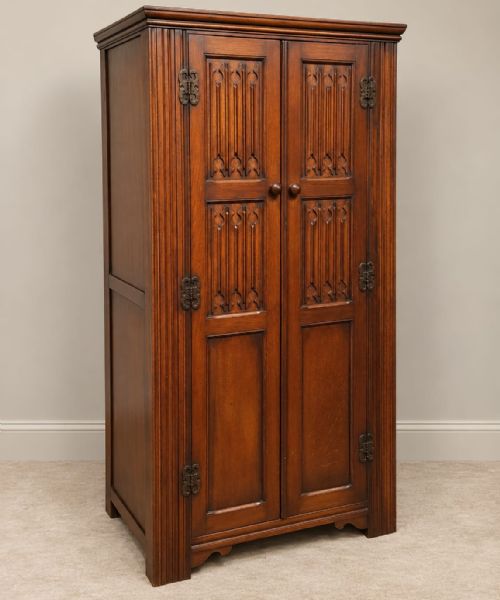
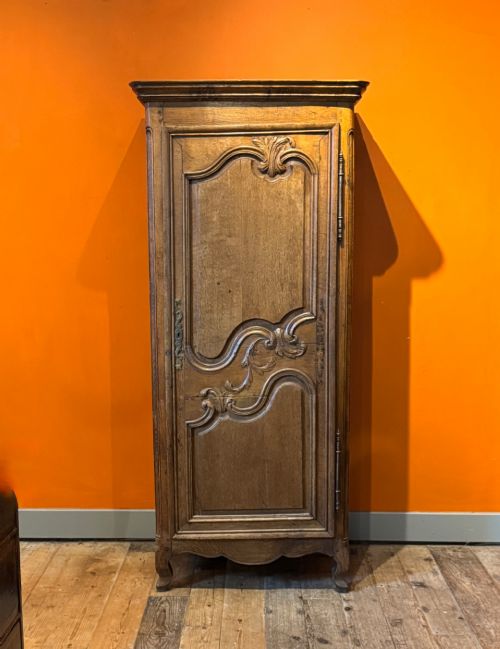
The selection includes Arts and Crafts pieces alongside 19th Century French armoires and standing cupboards. These items originate from various decades including nineteen hundred, nineteen ten, nineteen twenty, and the wider nineteenth century.
Forms range from traditional hall wardrobes to single door bonnetieres and polished standing cupboards. Each variation serves the fundamental purpose of garment storage within a slender footprint.
How they were made
Construction relies primarily on solid timber, specifically oak, shaped into upright carcases for daily utility. Metal fittings and iron components provide structural reinforcement and functional hanging or door mechanisms.
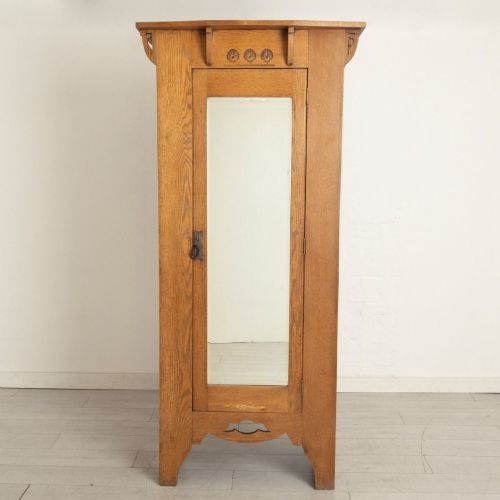
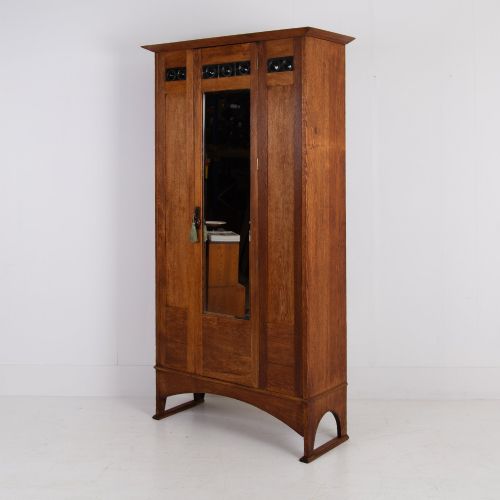
Many examples incorporate glass or mirror panels set into the single door fronts to reflect light and add practicality. Polished finishes highlight the natural grain and texture of the wood.
Retail Price Guide 2026
Typical UK retail prices for narrow oak wardrobe, calculated from the Sellingantiques database of over a million retail prices indexed since 2003. This retail price guide relies exclusively on Sellingantiques data; no external sources or auction records are used, so the figures do not describe the wider market.
Some bonnetieres were originally built strictly for hats, meaning today they hold your coats instead of your millinery.
What varies in quality
The standard of timber selection and joinery separates basic utilitarian pieces from finer artistic examples. Finer items display considered stylistic details characteristic of specific movements like Arts and Crafts or Louis XV taste.
The integration of original hardware, mirrors, and glass elements influences the overall integrity of each piece. Superior execution appears in the balance between slender proportions and robust construction.
The Narrow Oak Wardrobe Glossary
- Armoire
- A tall cupboard or wardrobe used for storing clothes, typically featuring a single large door in these narrower formats. French examples often reflect specific decorative tastes.
- Bonnetiere
- A tall, single door cabinet originally designed for storing bonnets and headwear, now utilised for general narrow garment storage. These share proportions with single door wardrobes.
- Hall Wardrobe
- A compact wardrobe intended for entrance halls to store coats and outdoor wear. They often feature narrow depths suited to transitional spaces.
- Arts and Crafts
- A design movement valuing traditional craftsmanship and simple forms, frequently seen in oak furniture from the early twentieth century. This style prioritises honest construction over heavy ornamentation.
Frequently Asked Questions
Where should I put a narrow oak wardrobe?
These compact pieces suit smaller bedrooms, guest rooms, or hallways where standard double wardrobes take up too much floor space.
Their slender proportions allow them to fit into alcoves or tight corners while still offering practical hanging storage.
How do I identify an Arts and Crafts wardrobe?
Arts and Crafts pieces typically feature simple, unadorned oak surfaces that showcase the natural grain of the timber.
They often include distinctive metal hardware or iron hinges that reflect the movement's focus on handcrafted quality.
What is the difference between an armoire and a wardrobe?
While both terms describe tall storage cupboards, armoire often refers to continental European pieces, such as French designs in the Louis XV taste.
English pieces of similar narrow proportions are more commonly catalogued as single door wardrobes or standing cupboards.
Do these wardrobes dismantle for transport?
Construction methods vary by period and maker, with some single door pieces built as solid un-dismantling carcases.
Because they are already narrow, many were designed to pass easily through standard doorways without requiring full disassembly.