
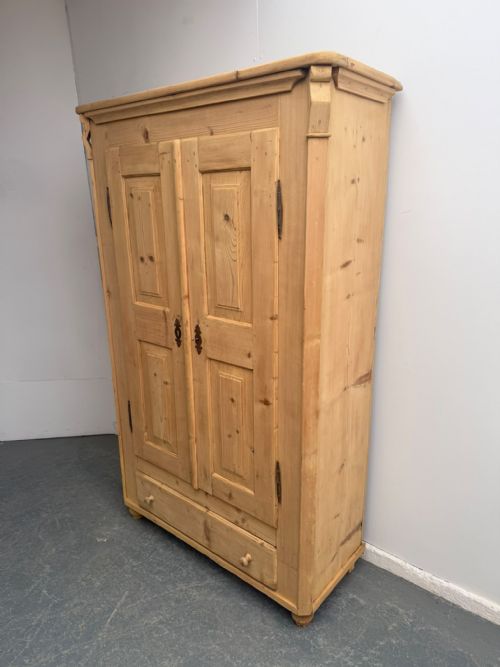

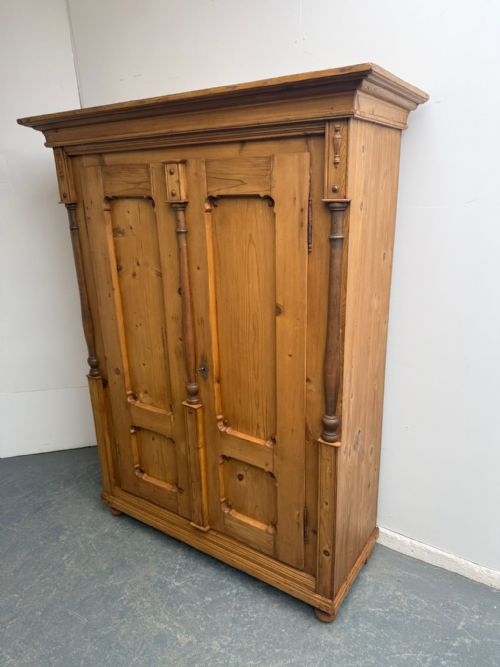
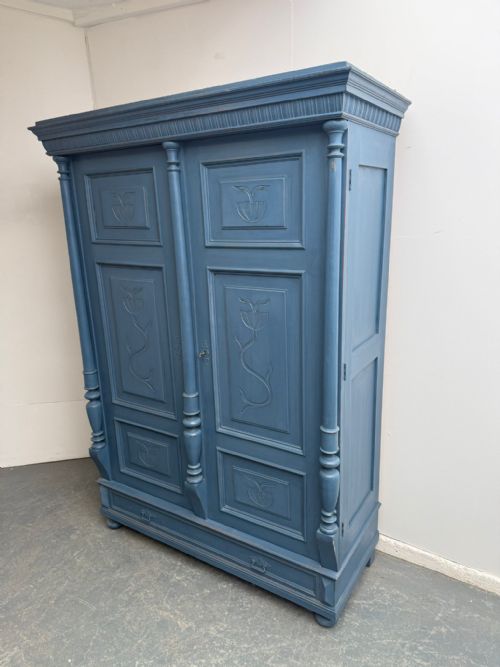

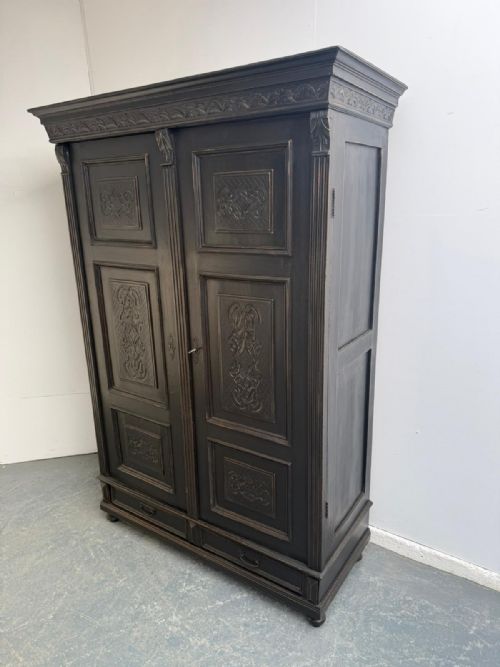

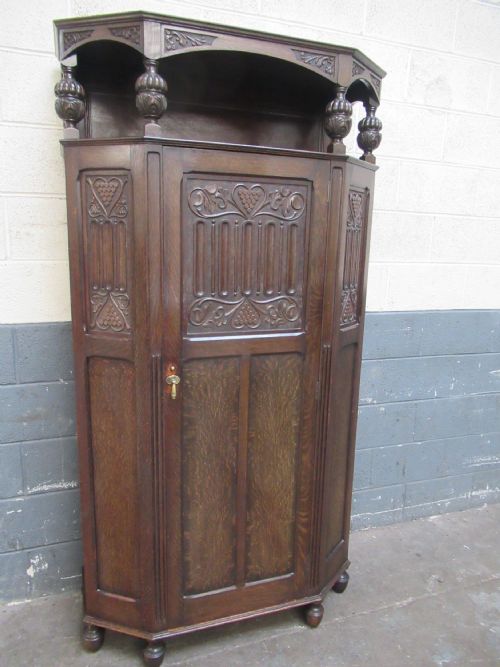


Vintage Hall Robe
A vintage hall robe is a slender wardrobe built to hold coats and outdoor wear in a narrow passage.
Vintage Hall Robe
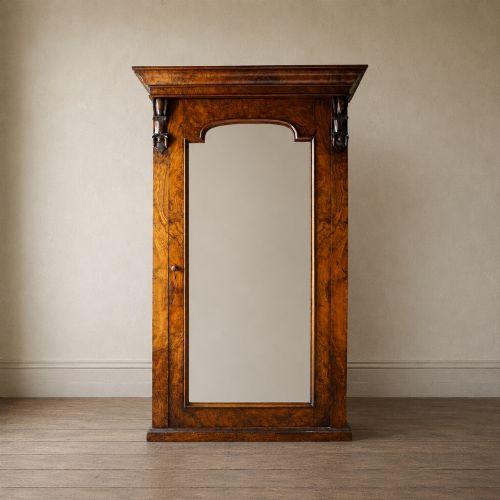
A vintage hall robe provides compact hanging space designed specifically for entryways and narrow corridors where standard wardrobes prove too deep. These pieces arrive in forms ranging from single mirrored doors to double doors and narrow cupboards.
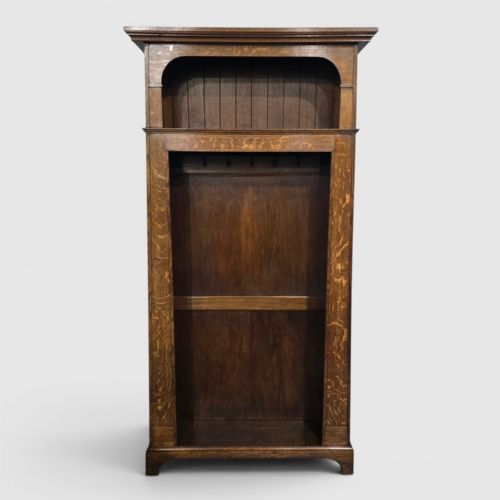
The selections span multiple periods, featuring Georgian country examples alongside Victorian pine pieces, Edwardian mahogany models, and sturdy oak builds from nineteen-twenty. Makers constructed these wardrobes to fit compact footprints while maintaining functional depth for coats and hats.
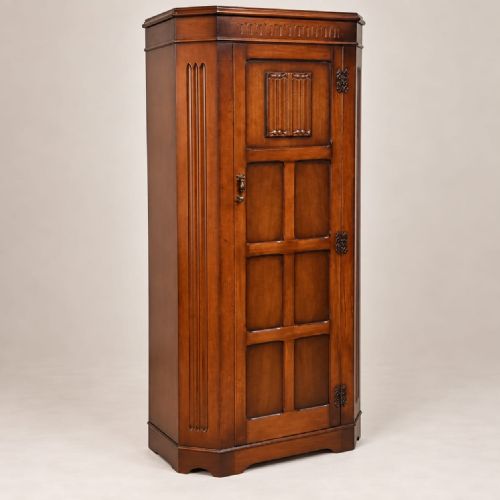
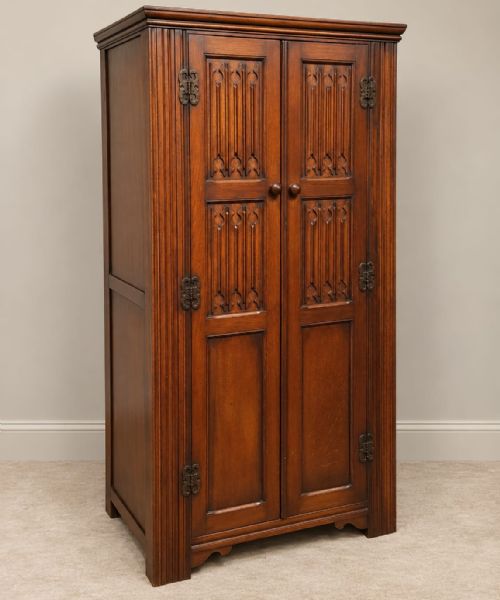
Styles vary widely across the inventory, encompassing plain waxed finishes, carved oak with linenfold panels, painted surfaces in blue, white, and black, and Arts and Crafts influences. Hungarian folk pieces also appear, bringing distinctive regional character to the category.
How they were made
Makers relied primarily on solid timbers such as pine, oak, mahogany, and walnut to build these wardrobes, often combining pine and oak within a single piece. Surfaces were finished with clear wax to highlight the grain or painted in black, white, or blue.
Construction techniques include carved ornamentation, as seen in linenfold panels and decorative woodwork on Jacobean revival and Gothic revival pieces. Iron and brass hardware, including hinges and handles, complete the assembly alongside mirrored glass panels.
Periods represented span from Georgian and Victorian eras through nineteen-twenty oak builds.
What varies in quality
The grade of timber and the complexity of joinery define the standard of execution, with solid hardwoods commanding greater attention than secondary softwoods. Finer examples display meticulous carving, such as linenfold details or figured walnut veneers, rather than plain structural boards.
Original surface treatments, whether clear wax or historic paint, influence the character of the piece compared to later refinishing. The integrity of integrated mirrors and the durability of original brass or iron hardware also separate standard utility items from more ambitious workshops.
The Vintage Hall Robe Glossary
- Hall robe
- A compact wardrobe intended for entryways to store coats and outdoor garments without obstructing the passage.
- Linenfold
- A style of carved wooden panelling that resembles folded fabric, frequently found on oak doors from the revival periods.
- Figured walnut
- Timber cut to reveal an ornamental grain pattern with natural swirls and waves, prized for its decorative appearance.
- Arts and Crafts
- A design movement prioritising traditional craftsmanship and simple forms over mass-produced ornamentation.
- Hungarian folk
- Regional furniture traditions characterised by specific decorative painted schemes and local construction methods.
Vintage Hall Robe: Frequently Asked Questions
What is a vintage hall robe?
A vintage hall robe is a narrow wardrobe specifically scaled for entryways, hallways, or small dressing areas. It provides hanging space for coats and outdoor wear without occupying the floor area of a full-sized bedroom wardrobe.
These pieces typically measure shallower than standard wardrobes and often feature single or double doors, sometimes incorporating mirrors or integrated hooks.
How do I date a hall robe?
Dating a hall robe involves examining the timber, construction methods, and stylistic details such as hardware and decorative carving. Pieces from the Georgian era display different proportions and joinery compared to Victorian, Edwardian, or nineteen-twenty oak models.
Looking at the backboards, interior fixings, and type of hinges helps determine whether a piece belongs to the nineteenth or early twentieth century.
Are hall robes suitable for small bedrooms?
Hall robes work well in small bedrooms, guest rooms, or tight alcoves due to their reduced depth and compact footprint. They offer adequate hanging capacity for daily garments while leaving floor space free.
Their slender proportions allow them to fit into awkward spaces where standard furniture fails to clear doorways or walking paths.
What materials were used?
Makers constructed these wardrobes using solid timbers including oak, pine, mahogany, walnut, and regional softwoods. Many examples feature waxed surfaces to protect the natural grain, while others carry original painted finishes in white, blue, or black.
Hardware typically consists of brass or iron hinges and handles, and certain Victorian examples incorporate mirrored door glass.