

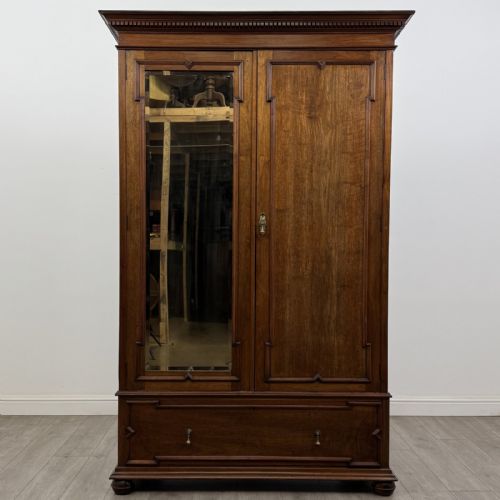
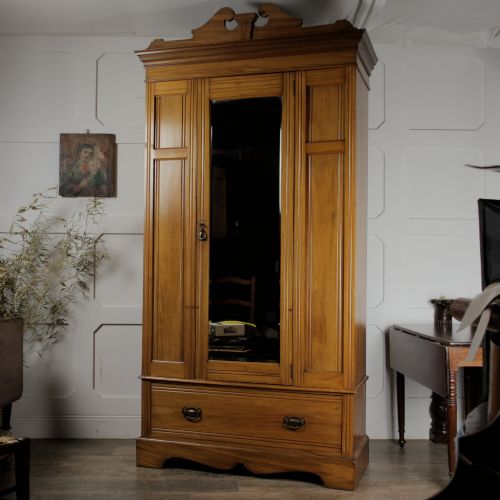
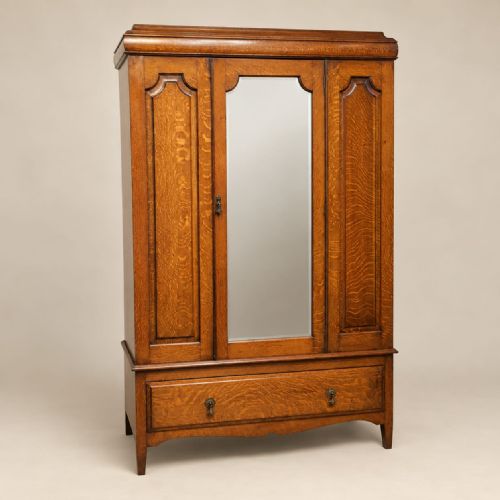
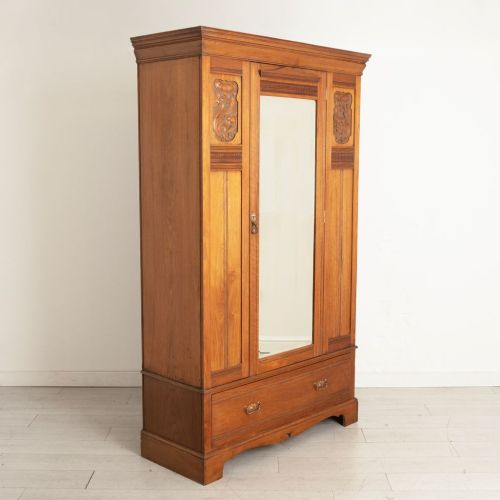
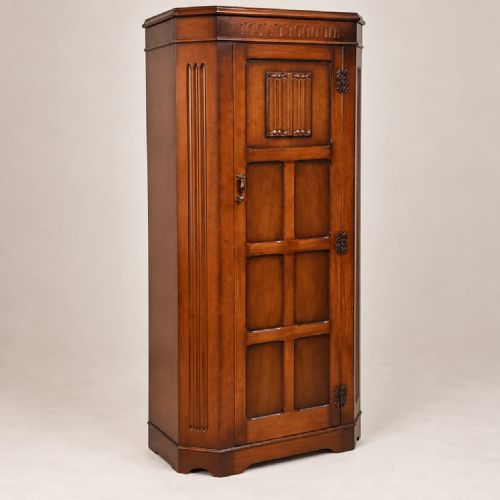
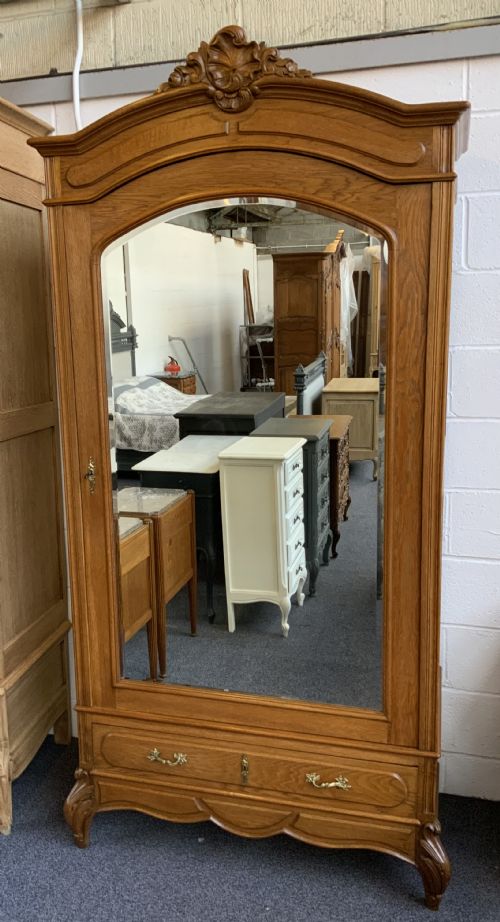
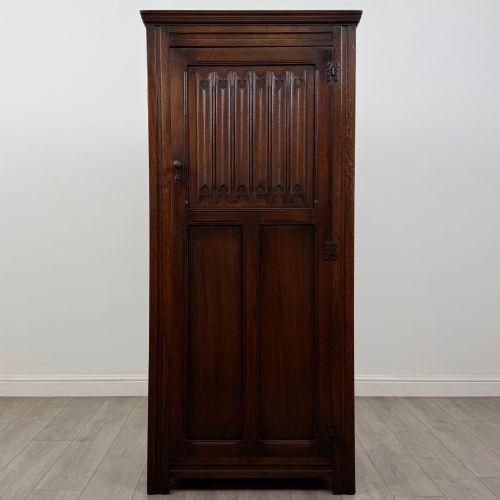
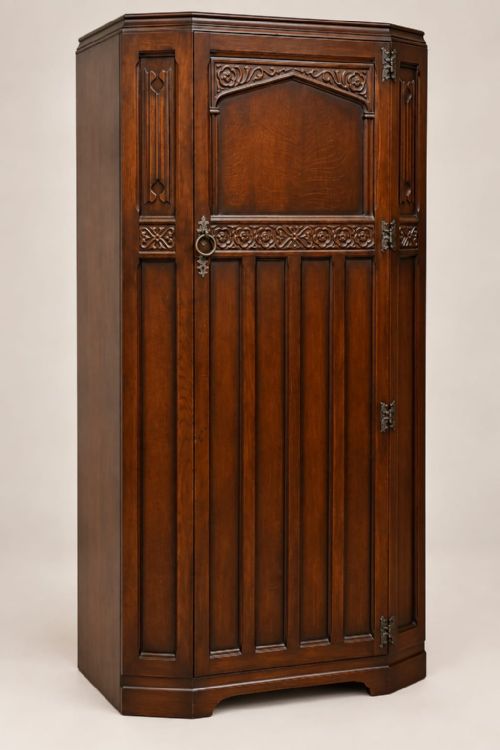
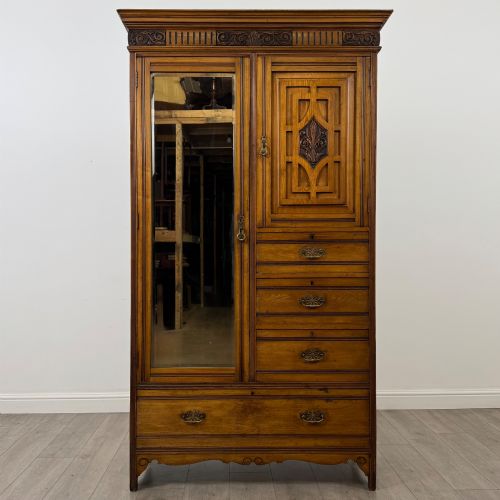
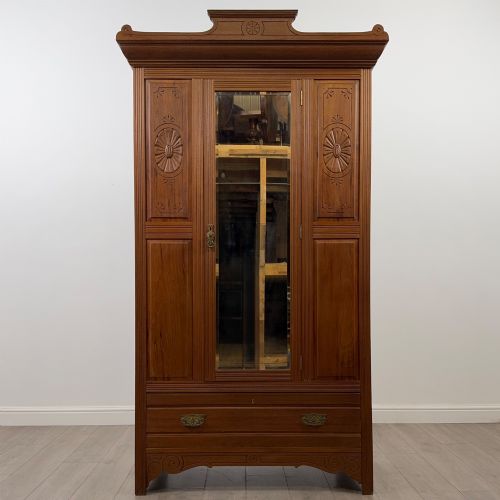
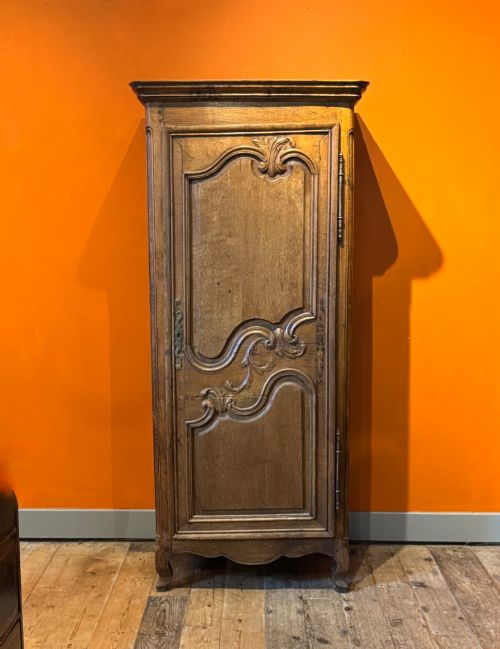
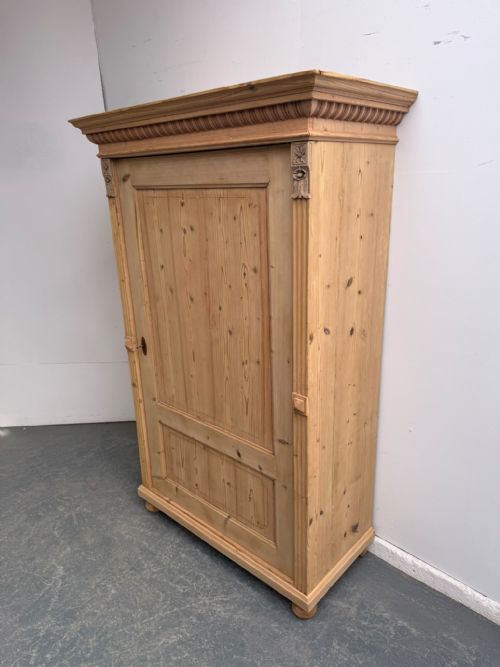
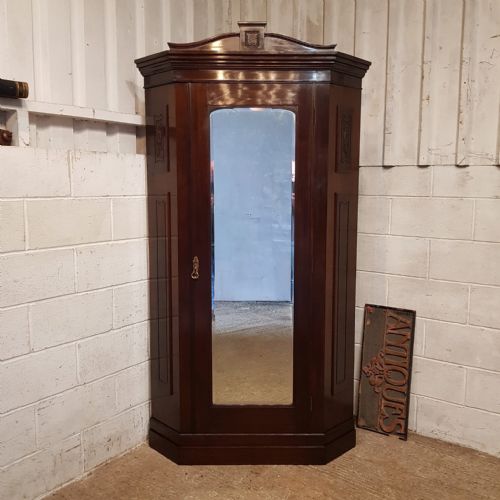
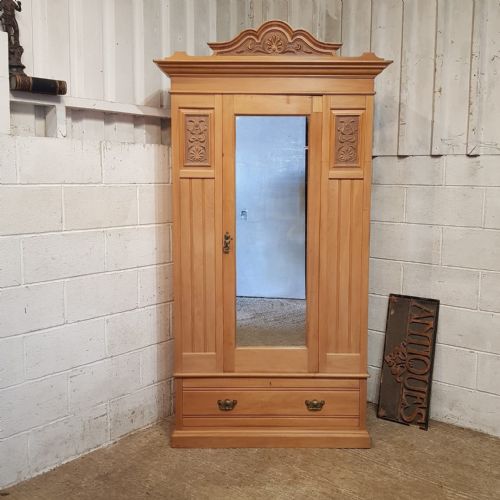

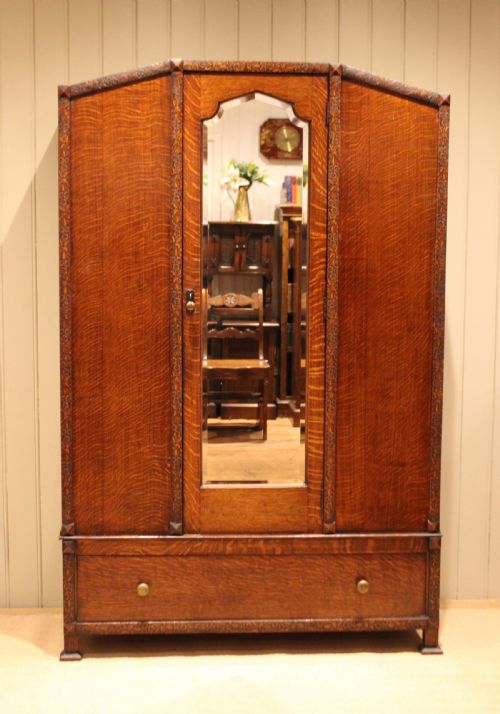
Carved Single Wardrobe
A carved single wardrobe solves the narrow bedroom problem with singular presence, offering tall hanging space without dominating the room.
Carved Single Wardrobe
A carved single wardrobe provides upright storage in a compact footprint, designed specifically for rooms where double doors would overwhelm the floor plan. When searching for a carved single wardrobe, buyers encounter single-door pieces primarily from the Victorian and Edwardian eras, alongside pieces dated around nineteen-twenty and nineteen-thirty.
The format appears across several regional traditions and stylistic revivals, including Jacobean Revival, Arts and Crafts, Gothic Revival, and French Provincial. Formats range from hall robes and compactums to traditional single-door armoires and bonnetieres.
Oak and pine dominate the selection, supplemented by mahogany, walnut, and ash. Many examples feature panelled or mirrored doors, occasionally incorporating carved linenfold motifs or decorative floral details.
How they were made
Cabinet makers built these wardrobes using solid hardwoods and softwoods such as oak, mahogany, walnut, and pine, often joined with pegged mortise and tenon construction for structural rigidity. Carved elements were worked directly into the timber or applied as separate decorative mouldings.
Hardware played a functional and decorative role, with brass and iron used for hinges, handles, and hanging hooks inside fitted interiors. Glass plates were inset into doors to create mirrored wardrobe fronts, backed by wooden panels to protect the silvering.
Carved Single Wardrobe Retail Price Guide 2026
Typical asking prices for carved single wardrobe among the pieces listed under this phrase on Sellingantiques today, from the lower quarter to the upper quarter. They describe what is for sale here now, not the wider market.
Listings feature single wardrobes spanning the nineteenth century through the nineteen-thirties, constructed in oak, pine, mahogany, and walnut.
What varies in quality
Quality rests upon the selection of timber and the execution of the carving, distinguishing mass-produced workshop pieces from finer cabinet work. Crispness in the carved details and the stability of the door frames indicate superior initial construction.
The integrity of the internal fittings, such as original hooks, sliding rails, and fitted drawers, affects the practical utility of the piece. Superior examples retain original glass, backboards, and working brass or iron hardware without excessive replacement.
Gillows of Lancaster
The Carved Single Wardrobe Glossary
- Linenfold
- A style of wood carving that imitates folded linen, frequently seen on panelled doors of the period. This motif appears often on oak hall robes and revival furniture.
- Compactum
- A multi-functional wardrobe containing a combination of hanging space, drawers, and shelves within a single unit. These pieces offer varied internal storage for smaller rooms.
- Bonnetiere
- A tall, narrow single-door cabinet originally designed for storing headwear. French examples of this form often feature carved panelling in regional taste.
- Hall robe
- A shallow wardrobe intended for entrance halls to hold coats and outdoor wear. These pieces are typically narrower than bedroom wardrobes.
- Marquetry
- The art of applying pieces of veneer to a structure to form decorative patterns. This technique decorates the surfaces of select nineteenth-century pieces.
Carved Single Wardrobe: Frequently Asked Questions
How do I fit hangers inside a narrow wardrobe?
Many single wardrobes feature front-to-back pull-out metal or wooden hanging rails rather than traditional sideways rails, accommodating standard coat hangers within the restricted width.
Alternatively, some interiors utilise fixed side hooks for hanging garments directly or utilise shorter rails positioned across diagonal corners.
Are mirrored doors original to these wardrobes?
Mirrored doors became widespread during the Victorian and Edwardian periods as glass production advanced and silvering techniques improved. Many surviving pieces retain their original bevelled mirror plates.
Replacement glass often lacks the subtle foxing, slight distortions, or heavy backing boards characteristic of nineteenth-century and early twentieth-century manufacturing.
What is the difference between an armoire and a wardrobe?
An armoire is a traditional continental European cupboard, whereas the term wardrobe specifically describes British clothes-hanging furniture developed later. In practice, the two terms often overlap in marketplace listings.
French armoires frequently display distinct regional carvings and proportions compared to contemporaneous British Victorian or Edwardian equivalents.