
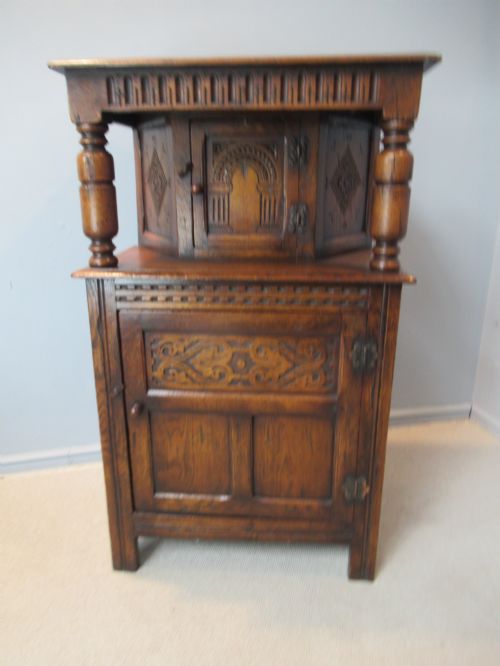


Compact Oak Cupboard
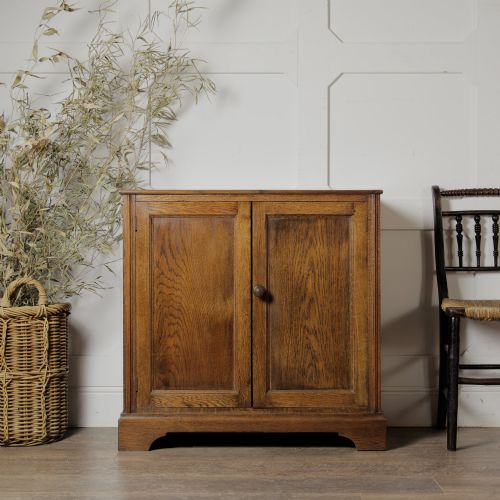
A compact oak cupboard offers neat storage for modest rooms, combining sturdy timber with sensible proportions.
Compact Oak Cupboard
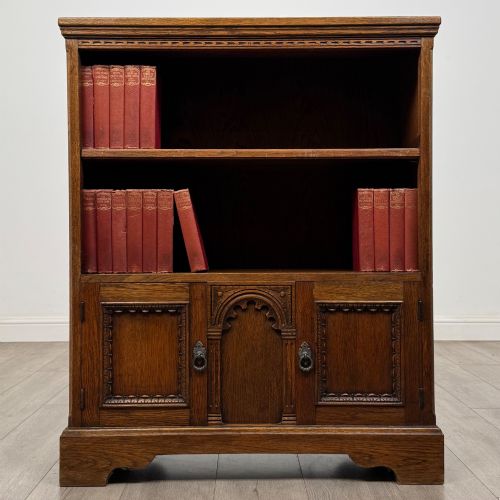
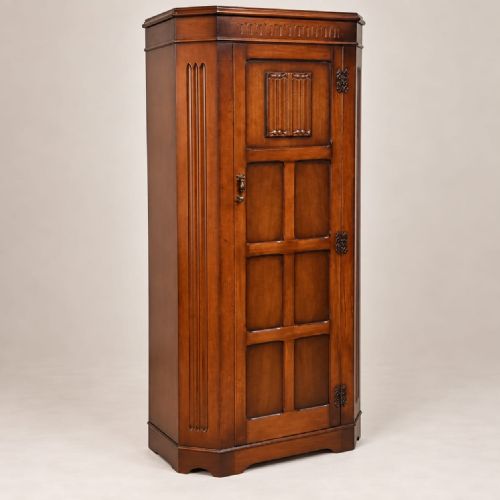
Buyers seeking a compact oak cupboard often encounter smaller storage pieces including low cupboards, hall robes, and small sideboards. These items serve rooms where floor space remains at a premium.
The selection ranges from Edwardian and 1920s examples to earlier 18th-century forms, utilising various styles such as Jacobean Revival, Arts and Crafts, and Tudor Revival. Most pieces on this page lean towards early twentieth-century production.
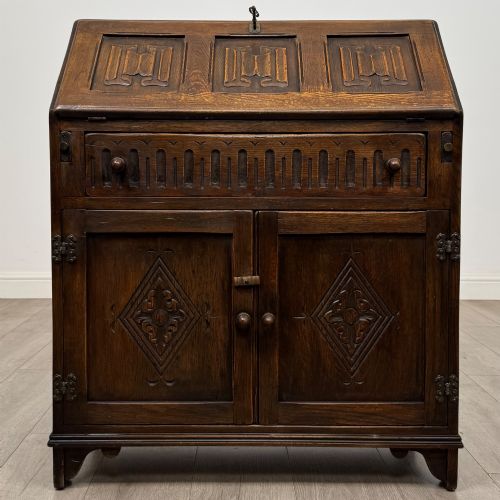
Forms extend beyond simple doors to encompass small court cupboards, diminutive wardrobes, and specialised writing bureaus with integrated storage.
Materials and construction
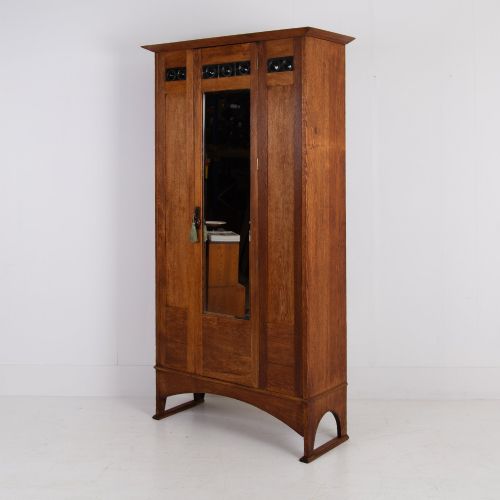
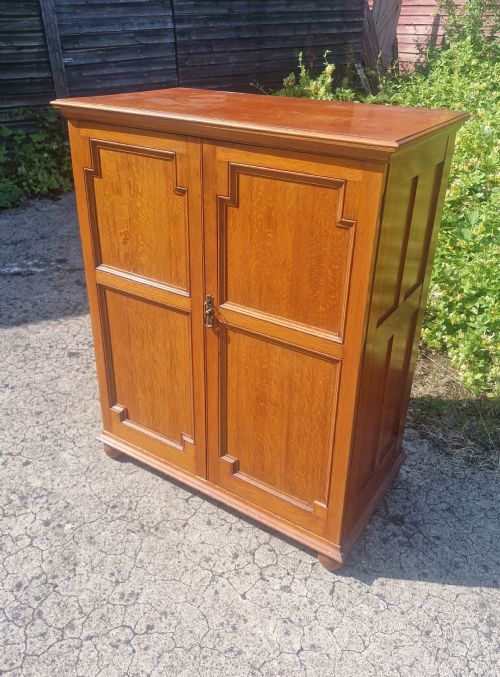
Makers relied primarily on solid oak, frequently paired with limed finishes or enhanced by iron and brass hardware for hinges and handles. Some examples incorporate glass, mirror panels, or oak veneers.
Construction techniques emphasise utility, joining solid timbers to withstand daily domestic use while maintaining manageable dimensions for hallways and smaller reception rooms.
Listings span periods from the 18th century through the Edwardian era up to the 1930s, utilising solid oak, limed oak, brass, and iron.
Judging quality in oak storage
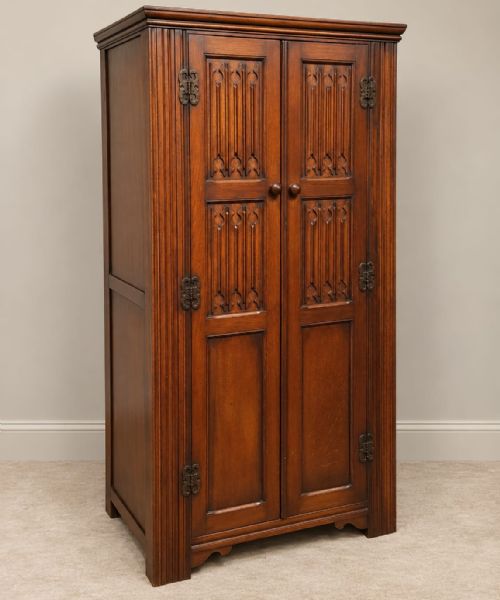
Quality rests in the handling of the timber and the integrity of the joinery, distinguishing straightforward utilitarian pieces from those bearing refined linenfold carving or panel detailing. Heavier stylistic revivals demand crisper execution in the woodwork.
Proportions and original hardware, such as brass pulls and working keys, further separate standard examples from superior items.
Heals of London·Bryn Mawr
The Compact Oak Cupboard Glossary
- Linenfold
- A style of wood carving that mimics folded fabric, frequently seen on panels of Edwardian and revival cupboards. It gives a textured surface to flat wooden doors.
- Court cupboard
- A traditional short sideboard or display cabinet, often featuring carved upper sections. These provide reduced footprints while maintaining historical character.
- Hall robe
- A narrow wardrobe designed for entrance halls to hold outerwear. They suit smaller hallways where standard wardrobes prove too deep.
- Limed oak
- A wood treatment involving a white or pale pigment rubbed into the grain. This finish lightened the timber appearance during the twentieth century.
- Bureau
- A desk fitted with a sloping fall-front that covers internal pigeonholes and small drawers. They combine writing surfaces with enclosed storage.
Compact Oak Cupboard: Frequently Asked Questions
What rooms suit a compact oak cupboard?
These smaller storage items fit well in hallways, bedrooms, and studies where floor space is limited. Their modest footprints allow them to hold belongings without dominating the room.
They provide practical organisation for books, linens, and everyday items while maintaining a solid wooden presence.
How do I identify Edwardian oak furniture?
Edwardian pieces often display lighter construction and revival styles like Jacobean or Arts and Crafts influence. They tend to use solid oak or oak veneers with simpler lines than heavy Victorian predecessors.
Hardware and interior fittings from this period frequently feature clean brass or iron details characteristic of early twentieth-century workshops.
What is a limed oak finish?
Limed oak involves treating the timber with a white or pale compound that settles into the open grain of the wood. This technique creates a lighter, bleached appearance.
Makers utilised this finish during the early twentieth century to give oak furniture a fresh, modern aesthetic.
Are these cupboards suitable for daily use?
Solid oak construction makes these pieces durable and well-equipped for regular domestic routines. Their sturdy hinges and frames handle frequent opening and closing.
Maintenance involves basic dusting and occasional conditioning to keep the timber surface healthy over years of service.