



Fitted Oak Wardrobe
A fitted oak wardrobe offers serious storage built in solid timber, spanning periods from the nineteenth century through the 1920s.
Fitted Oak Wardrobe
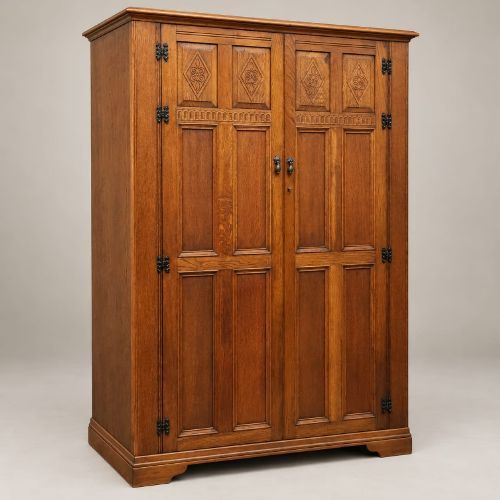
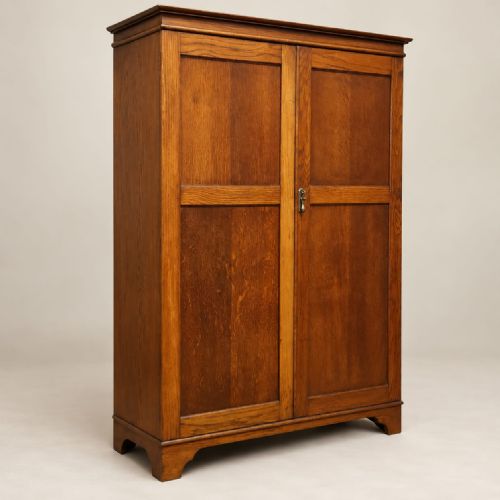
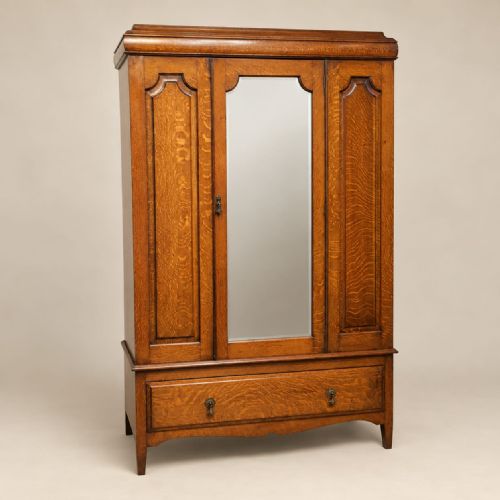
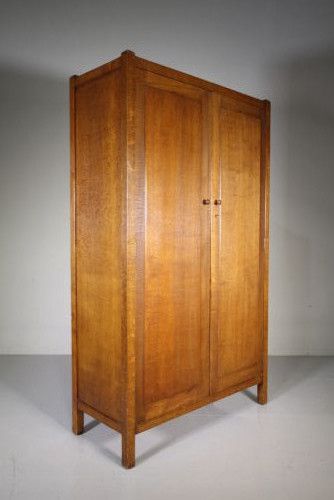
When you search for a fitted oak wardrobe, you encounter large storage furniture designed to hold garments, linen and personal items. The pieces on this page range from Victorian and Edwardian examples to compactum styles and 1920s designs.
You meet double and triple wardrobes, alongside gentleman's wardrobes and smaller fitted cupboards. Many examples incorporate internal hanging space, shelves and drawers tailored for efficient organisation.
The materials span solid oak, pollard oak and brass hardware, occasionally augmented with glass or mother of pearl. Styles move between Jacobean Revival, Arts and Crafts, Gothic Revival, Art Deco and industrial travel eras.
How they were made
Cabinet makers utilised solid oak and pollard oak for the structural carcases and panelled doors. Brass fittings, glass panels and mother of pearl inlay frequently provide functional and decorative details.
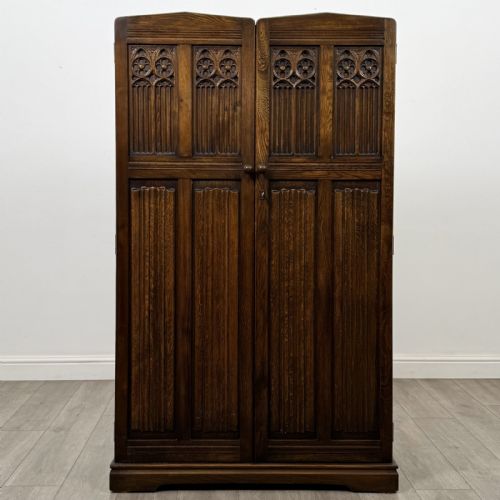
Construction techniques include carved linen fold motifs, marquetry inlay, and scumbled faux oak finishes on architectural cupboard doors. Labelled pieces from notable firms demonstrate workshop precision and structured internal fitting.
Fitted Oak Wardrobe Retail Price Guide 2026
Typical asking prices for fitted oak wardrobe among the pieces listed under this phrase on Sellingantiques today, from the lower quarter to the upper quarter. They describe what is for sale here now, not the wider market.
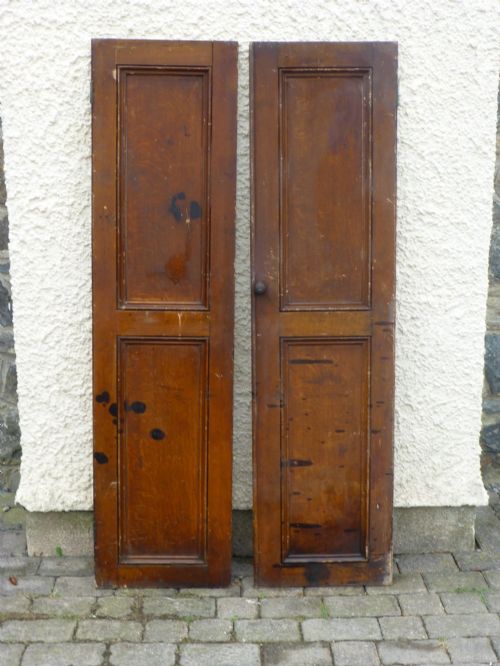
Scumbled pantry doors masquerade in faux oak, proving that nineteenth century carpenters loved a clever paint job just as much as solid timber.
What varies in quality
The standard of timber selection and complexity of internal configuration set examples apart. Simpler dual door pieces contrast with large triple wardrobes and fitted compactums offering sophisticated internal partitioning.
Detailing such as marquetry inlay, carved panels, pollard oak veneers, and labelled maker provenance elevate specific pieces above standard utility furniture.
Maple and Co·Heals of London·Gillows of Lancaster
The Fitted Oak Wardrobe Glossary
- Compactum
- A fitted wardrobe combining hanging space with internal drawers, shelves and shoe compartments. This form maximises storage efficiency within a single footprint.
- Gentleman's wardrobe
- A specialised storage piece typically featuring a combination of short hanging space, linen slides and internal drawers. These wardrobes suit folded garments alongside suits and coats.
- Pollard oak
- Timber taken from trees that have been pollarded, producing a richly figured, bobbly grain pattern. Cabinet makers used this decorative wood on drawer fronts and feature panels.
- Linen fold
- A carved wood panel motif imitating folded vertical linen drapery. This ornamentation appears frequently on revival and period oak furniture.
- Marquetry
- Decorative inlay work using various tinted woods to form pictorial or geometric patterns. Gillows and other makers applied this technique to cabinet doors.
Fitted Oak Wardrobe: Frequently Asked Questions
What is a compactum wardrobe?
A compactum is a specialised wardrobe designed to contain maximum storage in a single unit by combining hanging space, shelves and internal drawers.
These pieces appeared frequently during the early twentieth century to serve bedrooms lacking extensive fitted closets.
What periods do these wardrobes cover?
The pieces span from the mid nineteenth century through the Edwardian era and into the 1920s.
Styles range from Victorian and Gothic Revival to Arts and Crafts and Art Deco designs.
What materials are used?
Oak forms the primary material, frequently accompanied by pollard oak veneers for decorative contrast.
Hardware typically includes brass handles and hinges, with occasional glass panels or mother of pearl inlay.