


1920s Decorative Glass
1920s decorative glass brings bold form and tactile surface into a room, offering the unmistakable geometry of the period through luminous material.
1920s Decorative Glass
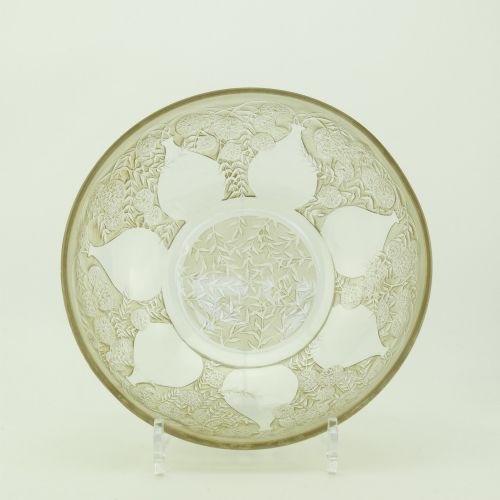
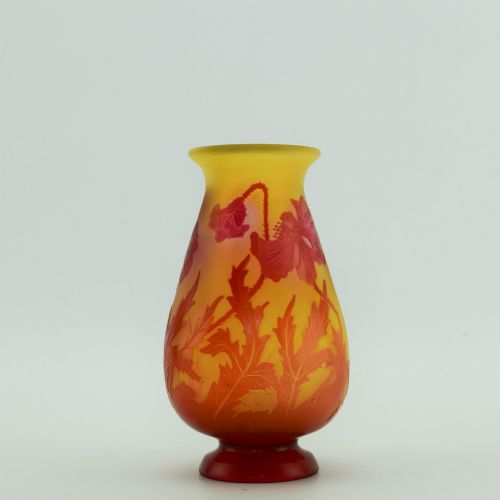
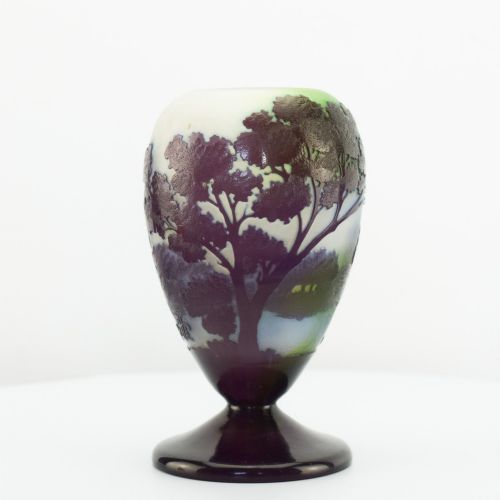
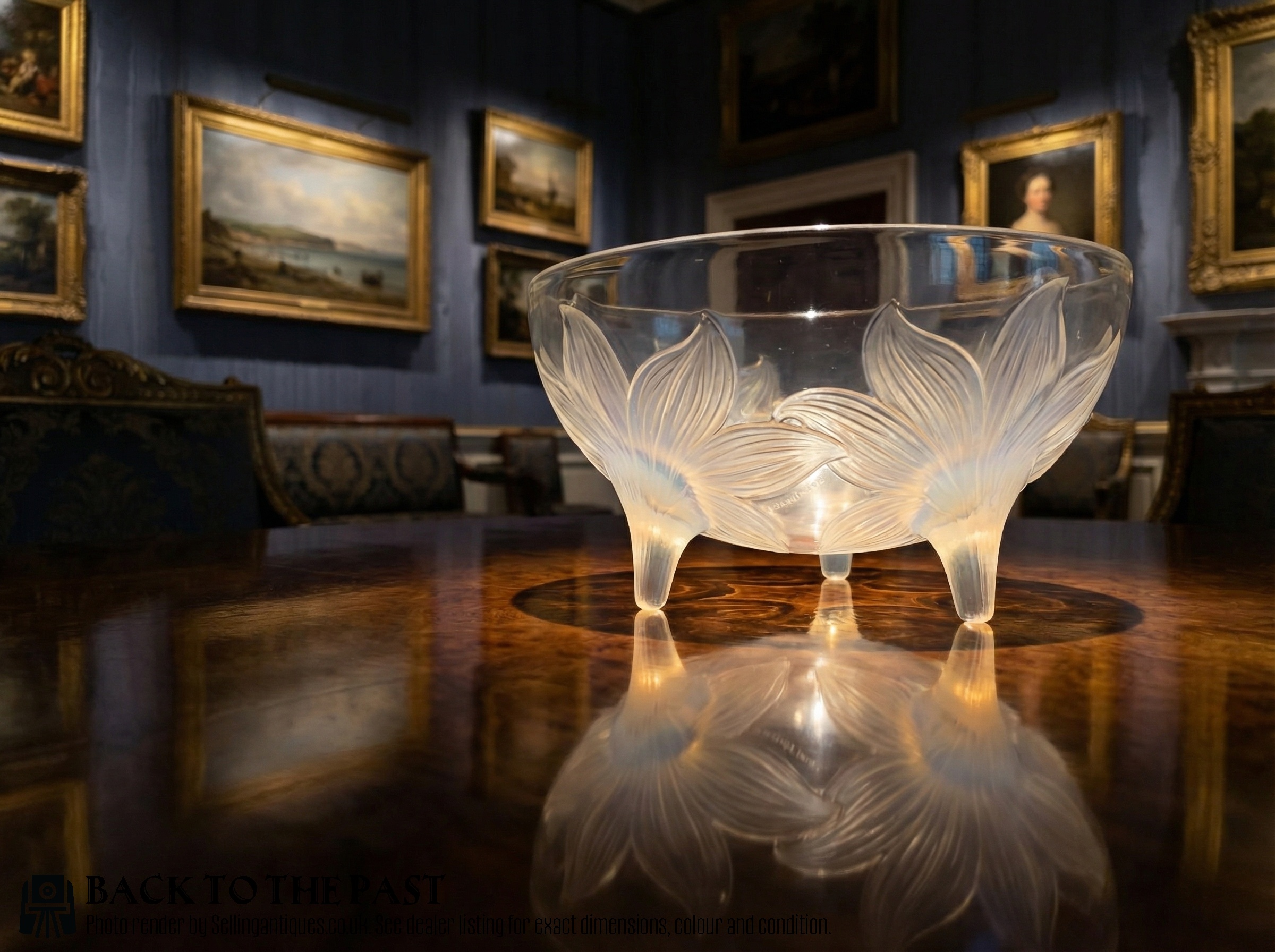
When someone searches for 1920s decorative glass, they want objects that capture the transition from organic curves to structured geometric forms. The selection here leans heavily towards French production from the early decades of the twentieth century, anchored by moulded and opalescent vessels. Vases, bowls, and plates dominate the forms, alongside desk accessories and wall mirrors.
The dominant aesthetic draws on Art Deco principles, though echoes of Art Nouveau persist in floral motifs and natural themes. Pieces vary from translucent moulded bowls featuring high-relief flora to cameo vessels etched with botanical and landscape scenes. Collectors meet both stark modernist lines and rich, tactile surfaces designed to catch domestic light.
Materials and methods
Makers utilised specialised techniques to achieve depth and texture, notably through the manipulation of opalescent, frosted, and clear glass. Moulded glass production allowed for intricate relief patterns, where deep plunger presses forced molten material into detailed metal matrices. Acid-etched and cameo methods involved layering different coloured glass and cutting or dissolving the surface to reveal contrasting designs.
Opalescent glass required precise temperature control during cooling to create the characteristic milky, blue-white shimmer at the edges. Frosted surfaces were frequently achieved through sandblasting or acid treatment, subduing the glare of the material to emphasise sculptural form. These physical treatments dictated how light moved across a vase or bowl.
The object types recorded range from monumental vases and wall mirrors down to desk blotters and wall lanterns.
Judging quality in glassware
The distinction between standard commercial output and the finest studio work rests on the crispness of the moulded relief and the depth of the surface treatment. Superior pieces display sharp definition in intricate motifs like fish, foliage, or figures, without blurring at the edges of the design. The handling of opalescence - how evenly the milky quality catches the light - separates exceptional vessels from flat examples.
Weight and balance also indicate standard, as heavier lead and high-grade soda-lime metal provide a more substantial feel in the hand. The precision of signature marks, whether moulded or engraved into the base, confirms the authority of the maker and adds to the integrity of the piece.
Rene Lalique·Emile Galle·Thomas Webb and Sons·Paul Nicholas for D'Argental
The 1920s Decorative Glass Glossary
- Opalescent Glass
- Glass that diffuses light and displays a milky or bluish glow at the edges. This effect occurs through specific chemical additives and controlled cooling.
- Cameo Glass
- Vessels constructed with two or more distinct layers of coloured glass. The outer layer is carved or acid-etched away to leave a raised design against a contrasting background.
- Moulded Glass
- Glass formed by pressing molten metal into a rigid mould. This technique allowed makers to produce consistent decorative patterns and high-relief figures on a commercial scale.
- Acid-Etched Glass
- Glass treated with hydrofluoric acid to eat away exposed surfaces. The process creates frosted textures or layered patterns without manual cutting.
- Frosted Glass
- Glass with a textured, matte surface that diffuses light rather than reflecting it clearly. It is commonly produced via sandblasting or chemical treatment.
1920s Decorative Glass: Frequently Asked Questions
How do I display 1920s decorative glass?
Position vessels near natural light sources such as windowsills or open shelving to let opalescent and frosted surfaces catch the illumination. Placing bowls and plates on dark wood surfaces creates high visual contrast that accentuates their relief patterns.
Avoid overcrowding shelves so that each piece retains its distinct silhouette. Desk accessories and smaller dishes work effectively as functional display items on side tables or mantels.
Were these items used daily or displayed?
Many objects served dual purposes as both ornamental centerpieces and functional vessels for flowers, fruit, or stationery. Bowls and plates were manufactured for domestic dining and interior display alike.
Desk accessories like blotters saw active use in studies and offices. Over time, their decorative qualities shifted them primarily into collections and showcase settings.
How do I identify a Lalique piece?
Look for crisp, high-relief moulding depicting flora, fauna, or human figures with characteristic frosted finishes. Signatures are typically etched, moulded, or engraved directly into the base of the glass.
Weight and tactile surface quality offer further clues, as authentic items utilise dense metal with deliberate contrast between clear and opalescent areas.