

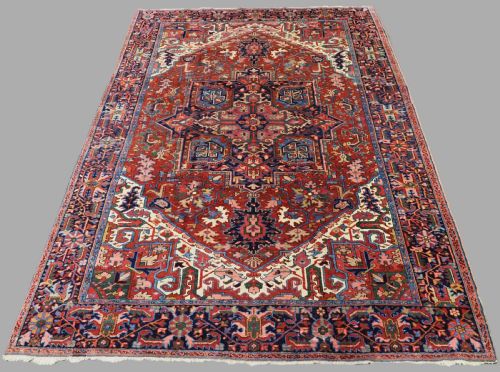


1900s Oriental Rug
A 1900s oriental rug brings centuries of village and tribal weaving traditions directly into modern rooms through rich natural colour palettes and durable wool construction.
1900s Oriental Rug
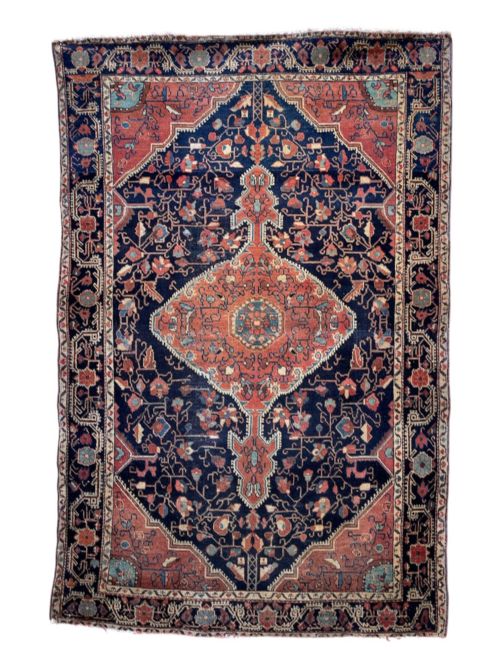
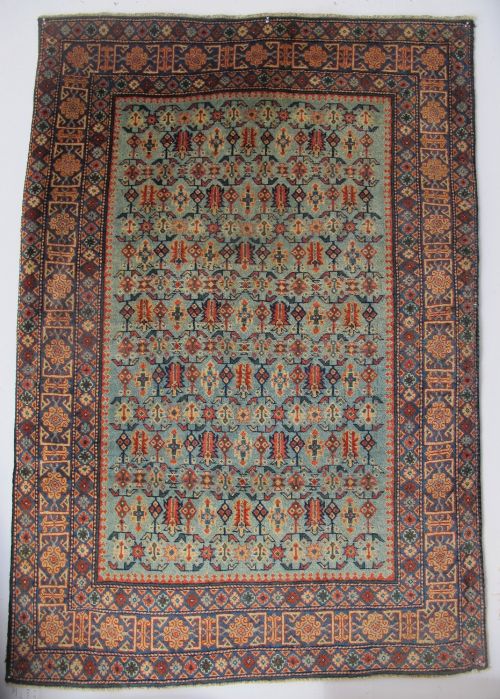
When searching for a 1900s oriental rug, collectors encounter a diverse range of hand-knotted village, nomadic, and workshop textiles originating from Persia, the Caucasus, Anatolia, and Central Asia. The selection spans distinct regional forms, including elongated runners, square room-size carpets, compact saddle bag faces, and intimate prayer rugs.
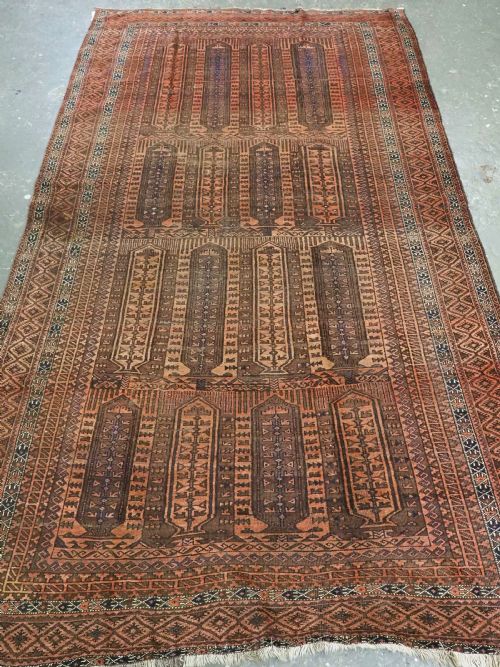
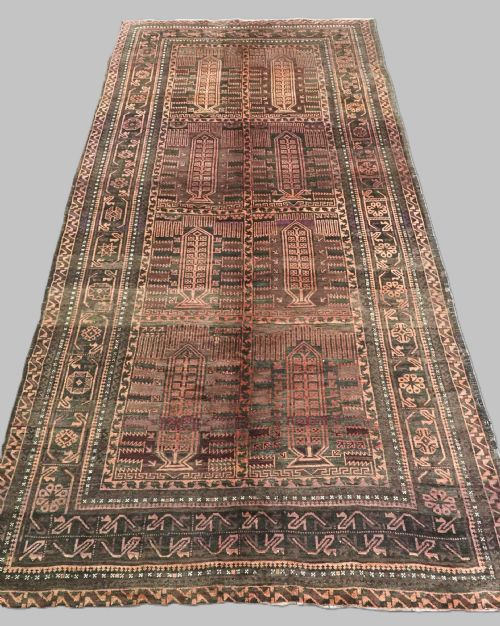
Baluch and Turkmen pieces dominate the available inventory, alongside workshop carpets from centres such as Tabriz, Heriz, and Isfahan. Tribal pieces from Qashqai and Kurdish weavers frequently appear, bringing spontaneous geometric layouts and repeating medallions to the surface.
Format varies from small portable mats to grand country house carpets. Each piece reflects the specific tribal heritage or regional weaving techniques of its maker, dating predominantly from the opening decades of the twentieth century.
Materials and Construction
Weavers constructed these carpets using sturdy wool foundations, frequently combining wool with cotton for warp and weft threads, and occasionally incorporating goat hair or camel hair for durability in tribal pieces. Natural dyes provided the foundational palette, yielding deep reds, warm aubergine grounds, and soft faded tones that mellow gracefully over time.
The density of the pile and the tension of the knotting depend heavily on whether the piece originated in a settled urban workshop or a nomadic camp. Artisans secured the structural integrity through tightly wrapped selvedges and finished ends, ensuring the textiles survived decades of daily use.
Current listings demonstrate a strong presence of Baluch, Turkmen, and Caucasian tribal weaving styles dating from the early decades of the twentieth century.
Elements of Distinction
Quality in these textiles rests upon the precision of the knotting, the handling of the wool, and the depth achieved through natural dye recipes. Finer urban workshops executed intricate curved lines with high knot counts, while robust tribal pieces relied on bold, graphic impact and heavy wool handles.
The integrity of the original wool pile, the crispness of motifs like the boteh or gul, and the harmonious balance of secondary borders separate standard examples from superior specimens. Preservation of original end finishes and untouched selvedges further elevates the standing of an individual carpet.
The 1900s Oriental Rug Glossary
- Mihrab
- A niche design symbolising a prayer arch, commonly found oriented towards Mecca on devotional rugs. This architectural motif often includes repeating columns or hanging lamps.
- Gul
- An octagonal medallion or tribal crest repeated across Turkmen carpets and related nomadic weavings. Each design often identifies a specific clan or subtribe.
- Boteh
- A stylised almond or pear-shaped motif representing a floral shoot or cypress tree. It appears across Persian and Caucasian weaving traditions in various sizes.
- Runner
- A long, narrow carpet format traditionally utilised in hallways, corridors, or alongside larger furniture groupings. These pieces often employ repeating medallion or all-over shrub designs.
- Kelleh
- A large format rectangular rug, traditionally longer than a standard carpet but wider than a corridor runner. Karabagh and Kazak weaving regions frequently produced this format.
1900s Oriental Rug: Frequently Asked Questions
How do I identify a Baluch rug?
Baluch rugs typically display rich, deep wool colour palettes including dark aubergine, indigo, and warm red grounds. They frequently incorporate geometric tile designs, prayer mihrabs, and camel hair details in the outer borders.
The handle is usually pliable and sturdy, reflecting the nomadic traditions of weavers from the Khorasan region and surrounding Afghan territories. Look for characteristic box medallions and traditional prayer formats.
Where were Caucasian rugs woven?
Caucasian rugs originate from the mountainous region bridging Europe and Asia, encompassing historic weaving centres such as Shirvan, Karabagh, Kuba, and Gendje. These pieces are celebrated for their bold, graphic geometry and distinctive compartmentalised layouts.
Weavers in these areas utilised saturated primary colours alongside softer faded tones. The resulting carpets often feature cloud band designs, star motifs, and strict rectilinear structures.
What is a Turkmen Ensi?
A Turkmen Ensi is a specialised tent door hanging produced by nomadic tribes such as the Tekke. Rather than serving as floor coverings, these textiles functioned as decorative flaps placed over the entrance of a yurt.
They are distinguished by a quartered field design separated by a central candelabra motif. The fine wool pile and deep red tones mark them out as sophisticated examples of tribal weaving.
How should I care for an antique rug?
Protect your antique carpet by placing it in a low-traffic area or utilising a breathable underlay to prevent sliding and friction. Regular gentle vacuuming without a rotating power brush helps remove embedded dust from the wool pile.
Rotate the rug periodically to ensure even exposure to foot traffic and sunlight. Professional cleaning by a specialist in antique textiles is recommended when deep maintenance becomes necessary.