


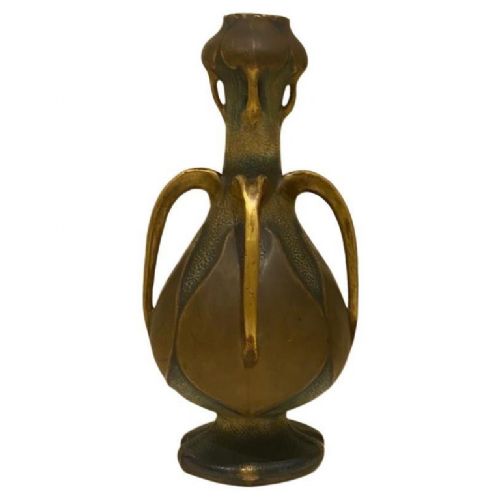
1900 Decorative Ceramics
These 1900 decorative ceramics bring fluent Art Nouveau curves, intricate Satsuma moriage and vibrant Imari palettes directly into modern interiors.
1900 Decorative Ceramics
When you search for 1900 decorative ceramics, you encounter an eclectic mix of European earthenware, Japanese porcelain and Austrian terracotta created around the turn of the twentieth century. These items span late Victorian, Edwardian and Meiji periods, reflecting a vibrant international exchange of artistic styles and glazing techniques.
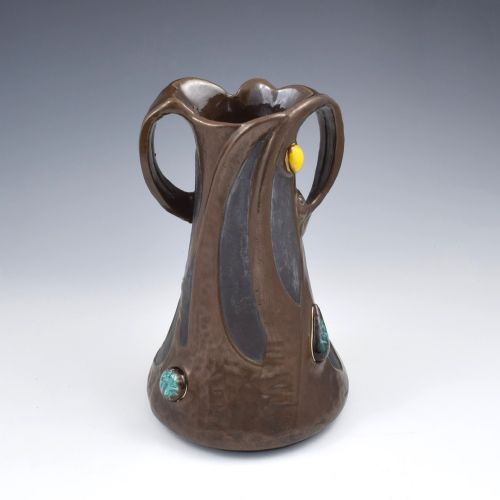
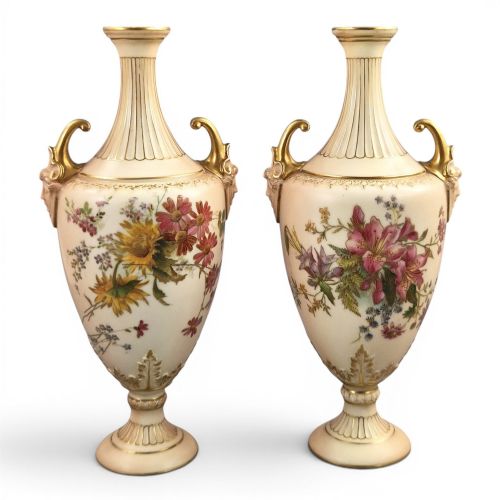
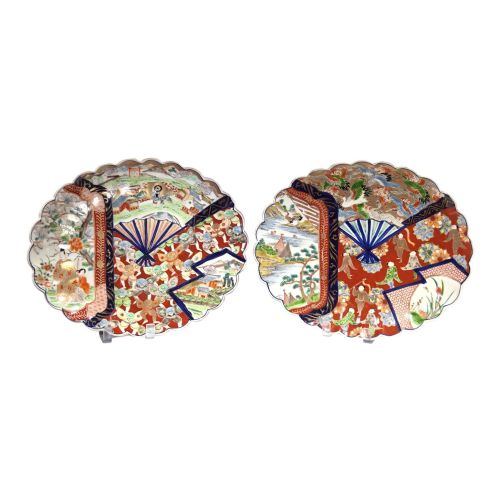
Vases, chargers, wall plaques and decorative bowls dominate this category, often executed in distinct regional aesthetics such as Art Nouveau or Renaissance Revival. You are most likely to meet large Japanese Imari charger plates, Austrian earthenware vases with copper effects, and blush ivory floral porcelain pieces.
The objects serve primarily as decorative accents rather than utilitarian vessels, showcasing the sculptural and pictorial ambitions of period makers. Whether through the bold relief of a satirical wall plaque or the delicate gilding of Kyoto Satsuma vases, these ceramics capture a definitive moment of stylistic transition.
How they were made
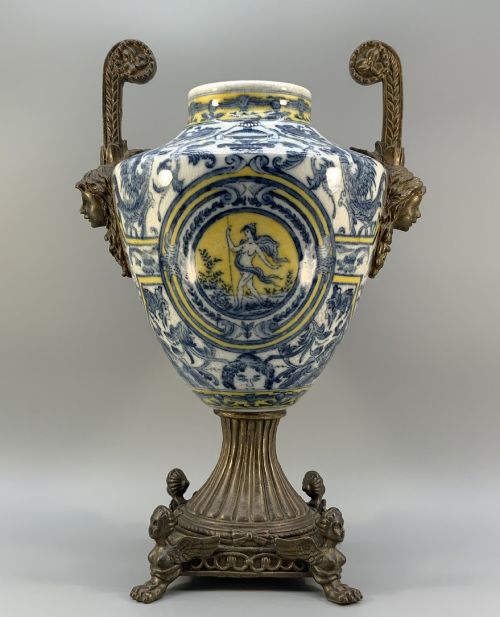
Makers utilised porcelain, earthenware, terracotta and ceramic bodies, often enhancing them with elaborate glazes, enamel and gold leaf or gilt. Techniques varied from the intricate moriage raised slip work on Japanese vases to the application of bronze mounts on European faience.
Surface decoration frequently combined hand-painted floral or figural panels with specialised finishes like copper effect coatings, jewelled cabochons and fluted shaping. Kiln firing methods allowed for rich polychromatic palettes, seen clearly in Cantonese Famille Rose and Japanese Arita Imari wares.
Materials documented across the pieces include porcelain, terracotta, enamel, earthenware and gold leaf.
What varies in quality
The distinction between standard production and top-tier work rests on the crispness of modelling and the complexity of surface ornamentation. Finely executed pieces display precise gilding, intricate raised relief details and well-balanced proportions that mark out accomplished studio and factory output.
Artistic ambition also drives quality differences, separating simple decorative items from museum-quality examples with elaborate religious or landscape panels. The integration of mixed media, such as patinated bronze mounts or carefully applied enamel, further elevates the sophistication of the piece.
Bretby Pottery·Ernst Wahliss·Kinkozan·Longwy·Paul Dachsel Amphora·Royal Crown Derby·Royal Worcester
The 1900 Decorative Ceramics Glossary
- Moriage
- A Japanese decorating technique using piped clay slip to create raised, textured patterns on pottery and porcelain. This method gives surfaces a tactile, three-dimensional quality.
- Imari
- A traditional style of Japanese porcelain featuring a distinctive palette of cobalt blue, iron red, and gold. These wares were widely exported to Europe during the Meiji period.
- Faience
- European tin-glazed earthenware decorated with opaque colourful glazes. It often mimics the appearance of porcelain while utilising a softer ceramic body.
- Blush ivory
- A soft, creamy porcelain body with subtle tinted shading, popularised by British potteries around the turn of the twentieth century. It provides a muted backdrop for hand-painted floral motifs.
- Cloisonné
- A metalwork technique adapted to ceramics where thin wires create compartments filled with enamel paste. This produces intricate linear designs across the object.
1900 Decorative Ceramics: Frequently Asked Questions
How do I identify Art Nouveau ceramics?
Art Nouveau ceramics are characterised by flowing organic lines, stylised plant motifs and iridescent or copper effect glazes. Look for sculptural forms that mimic water lilies, stems and natural asymmetry.
Peculiar surface details such as jewelled cabochons or flowing drapery often accompany these designs, reflecting the aesthetic movements operating around nineteen hundred.
Where were Japanese chargers displayed?
Large charger plates were produced primarily for export to Western markets, where homeowners displayed them on walls or decorative stands. Their scale and bold patterns made them effective focal points in Victorian and Edwardian interiors.
Today, these pieces continue to function well as wall art or centrepieces on sturdy wooden tables.
How should I care for antique pottery?
Display these ceramics away from direct sunlight to preserve the stability of applied enamels, gilding and bronze mounts. Dust them gently with a dry, soft cloth rather than using liquid cleaners.
Because many turn-of-the-century pieces incorporate delicate elements like raised slip or metal mounts, handle them firmly by the body rather than by protruding handles or rims.