
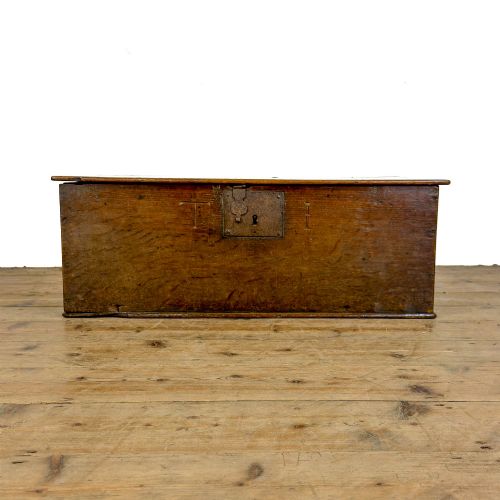


18th Century Writing Box
An 18th century writing box is a portable desk or document repository designed for correspondence and safekeeping, prized for its craftsmanship and historical utility.
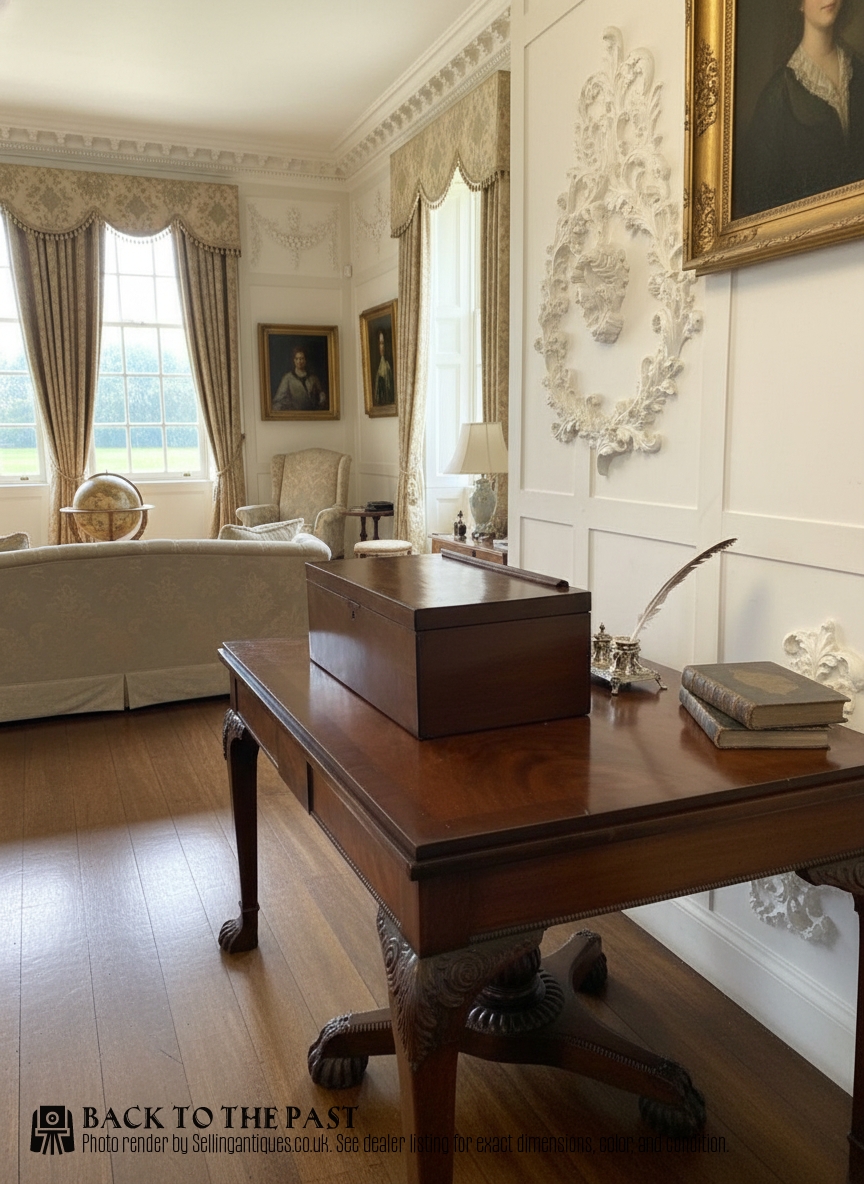
18th Century Writing Box
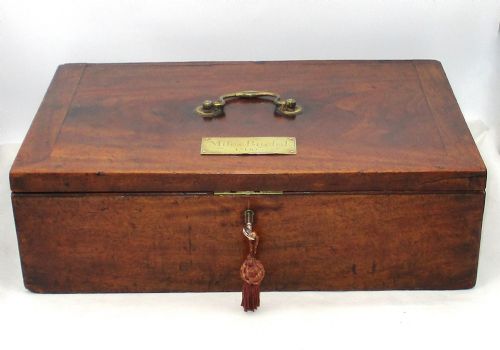
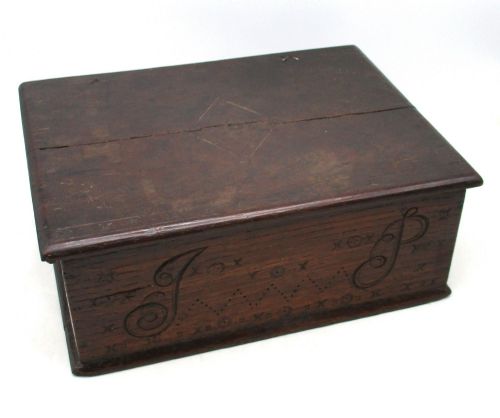
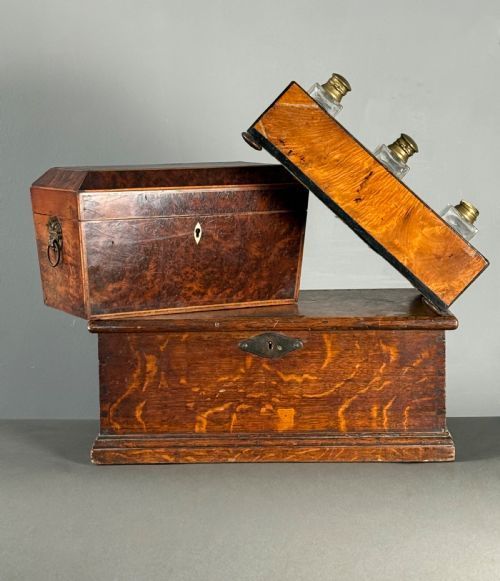
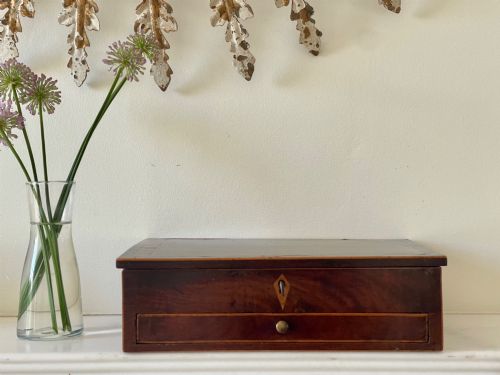
An 18th century writing box encompasses various functional forms used for correspondence and document storage across the Georgian period and earlier decades. Buyers frequently encounter oak Bible boxes, mahogany writing slopes, satinwood stationery boxes, and elm table-top bureaux.
The material palette of these pieces ranges from solid native timbers to more decorative veneers. Oak and mahogany appear most often, alongside walnut, elm, satinwood, and iron or brass hardware.
Origins span English country workshops as well as more refined metropolitan centres. Pieces manifest in styles from early carved vernacular designs to Sheraton period satinwood items.
Materials and Construction
Joinery relied heavily on solid native timbers such as oak, elm, and mahogany, shaped into portable desk boxes and document chests. Master cabinetmakers selected figured mahogany and satinwood for finer presentation pieces.
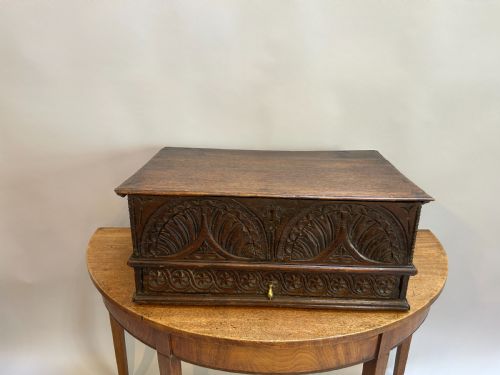
Surface ornamentation involved carving, holly and bog oak inlay, shell marquetry, and mother-of-pearl or bone details. Iron and brass fittings, including hinges, locks, and carrying handles, secured the lids and drawers.
Internal arrangements featured compartments, small drawers, and slanted surfaces for writing or holding paper.
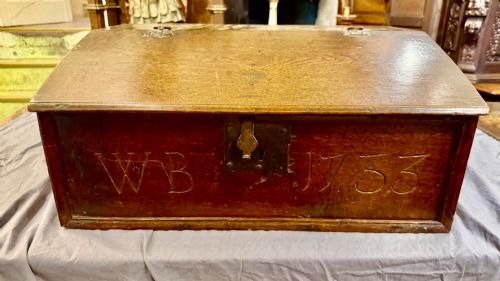
Several boxes preserve their original owner's initials and dates carved directly into the oak timber.
Assessing Quality
The calibre of an 18th century writing box depends on the selection of timber and the precision of the construction. Figured mahogany veneers and intricate inlay work indicate a higher grade of manufacture than plain vernacular pieces.
Hardware integrity and the retention of original interior fittings influence the desirability of a box. Fine craftsmanship is evident in the crispness of carved friezes, dovetail joinery, and well-fitted internal drawers.
The 18th Century Writing Box Glossary
- Writing slope
- A portable box with a slanted lid designed to provide an angled surface for writing letters. These often open to reveal compartments for inkwells and paper.
- Bible box
- A sturdy wooden box traditionally used to store family Bibles and important documents. They frequently feature carved fronts and sloping lids.
- Cheveret
- A small freestanding writing table with a set of small drawers or shelves on top, popular during the late 18th century.
- Inlay
- A technique where pieces of contrasting materials, such as holly or bog oak, are embedded into the wood surface to form decorative patterns.
- Japanned
- A style of European decorative finish that imitates East Asian lacquerwork, created using layers of varnish.
18th Century Writing Box: Frequently Asked Questions
What is an 18th century writing box?
An 18th century writing box is a portable chest or desk designed to hold writing materials, paper, and personal documents. These pieces reflect the writing habits and interior fittings of the Georgian era.
They range from utilitarian oak Bible boxes to refined mahogany slopes and satinwood stationery holders.
How were these boxes used?
Owners used these boxes to store correspondence, ink, quills, and valuable papers securely while travelling or at home. The sloping lids provided a stable writing surface when placed on a table.
Many examples include internal compartments and small drawers to organise stationery and personal items.
What woods were used in construction?
Cabinetmakers utilised a variety of native and imported timbers depending on the style and region. Oak and elm appear frequently in early vernacular pieces.
Mahogany, walnut, and satinwood were chosen for finer Georgian items, often enhanced with brass hardware and inlay.
How do I identify the period?
Dating relies on construction methods, timber choices, and stylistic markers such as carved friezes or inlay motifs. Early pieces typically employ solid oak with simple joinery.
Later items from the Sheraton period feature lighter satinwood veneers, shell inlay, and sophisticated brass fittings.