


18th Century Wooden Cupboards
These 18th century wooden cupboards bring honest period craftsmanship and practical storage into modern rooms.
18th Century Wooden Cupboards
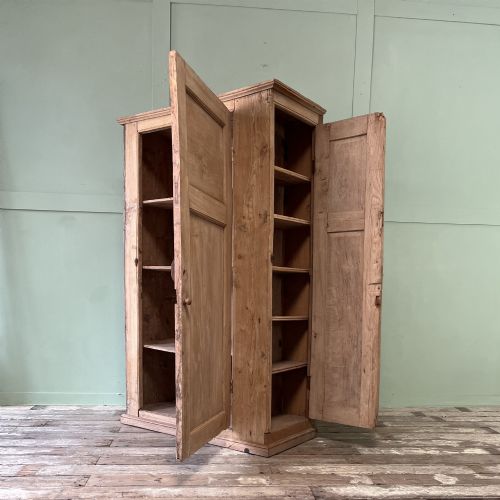
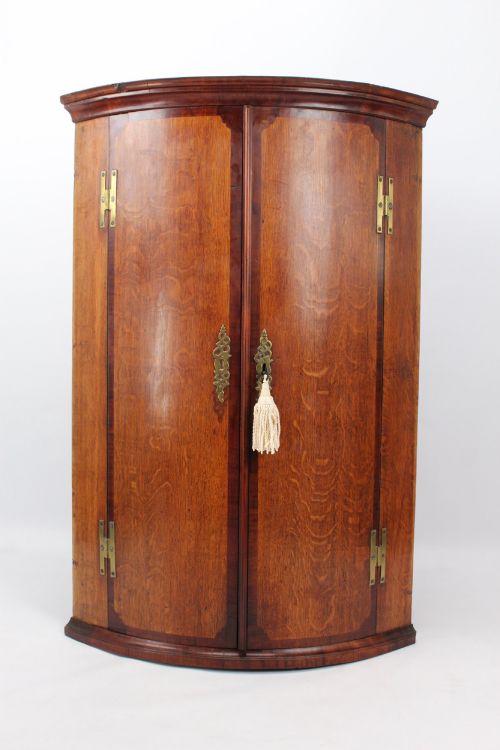
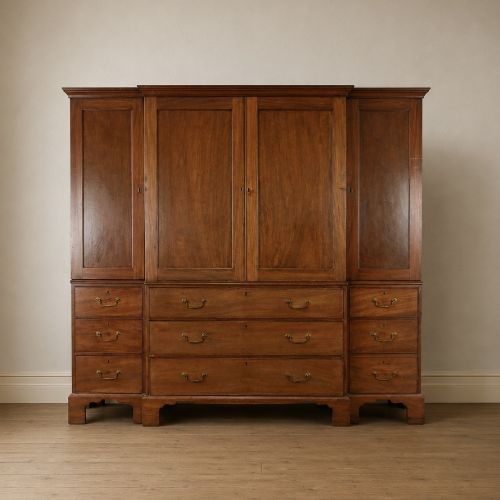
When searching for 18th century wooden cupboards, buyers encounter a diverse range of functional storage furniture spanning from spice cupboards and food larders to larger wardrobes, linen presses, and corner cabinets. These pieces served essential household storage needs in Georgian homes, country cottages, and provincial European interiors.
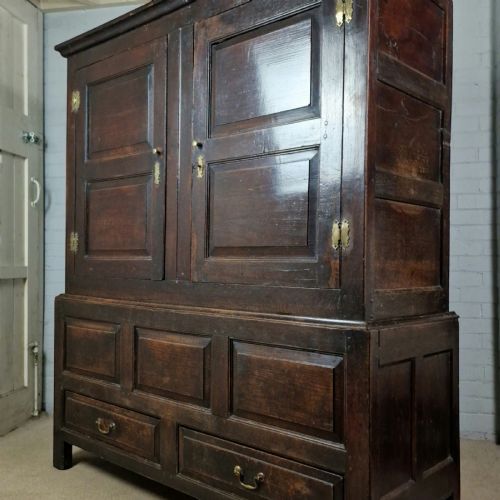
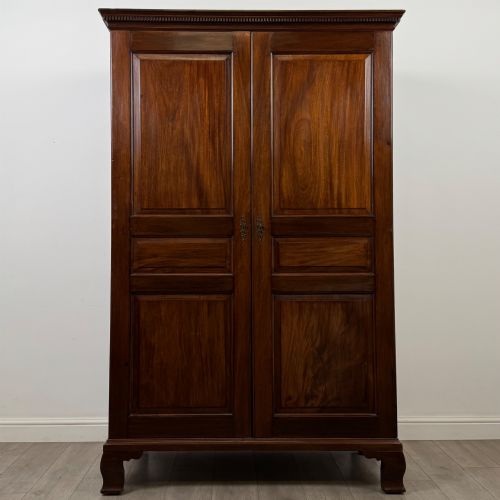
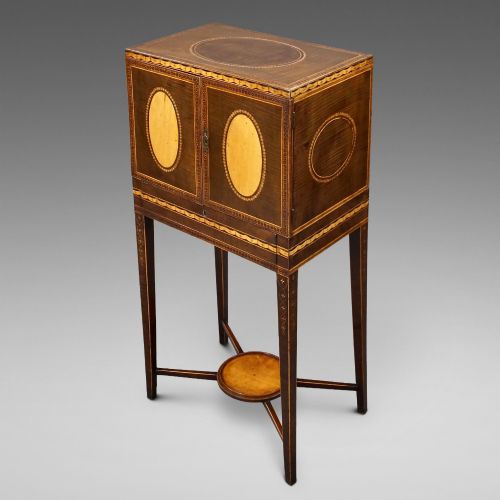
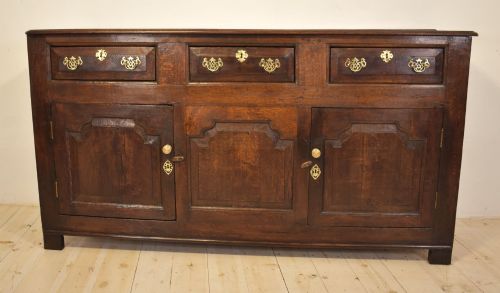
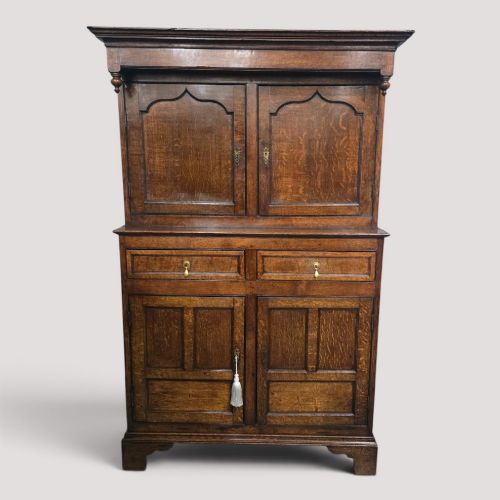
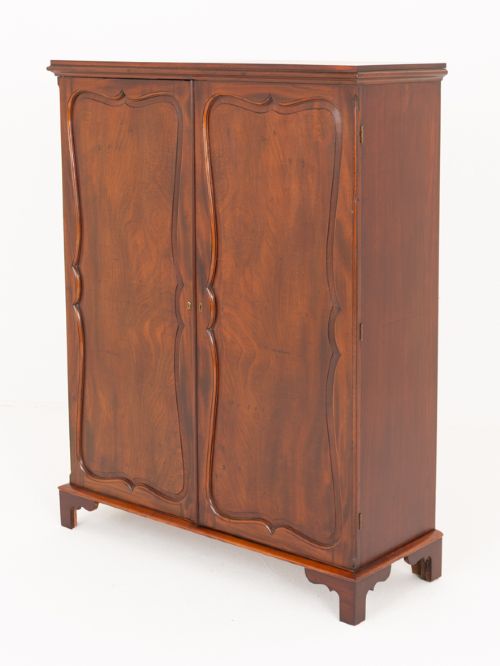
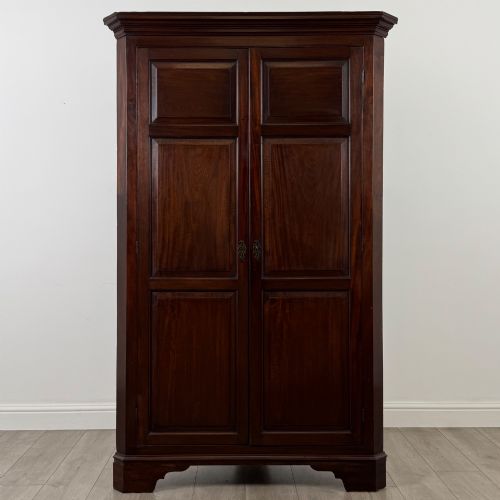
The selection on this page leans heavily towards oak and mahogany examples from the Georgian period, alongside regional elm, cherry wood, and painted items. Buyers frequently find corner cupboards designed to fit domestic spaces, wall-mounted hanging cabinets, and substantial standing presses created for domestic organisation.
How they were made
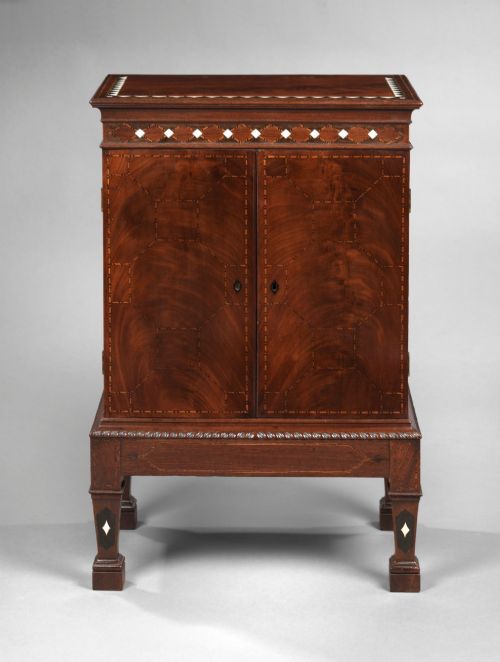
Joiners and cabinetmakers relied primarily on solid timbers such as oak, mahogany, elm, and walnut, often enhanced with brass hardware, painted finishes, or delicate marquetry inlay. Construction methods depended on the intended function, utilising sturdy panel-and-frame joints for utilitarian country pieces and finer dovetails for urban mahogany furniture.
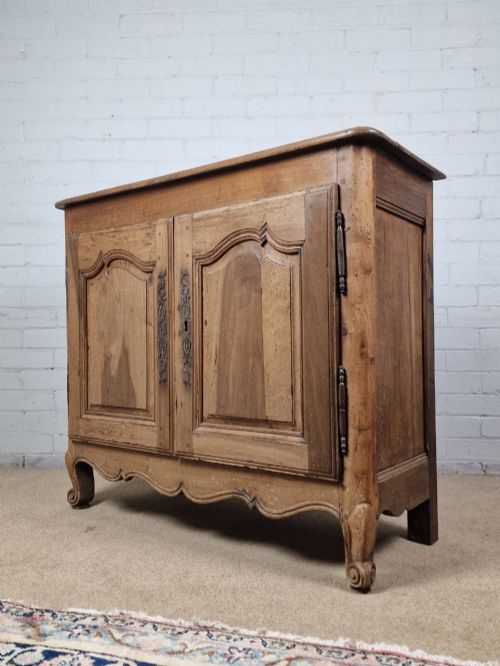
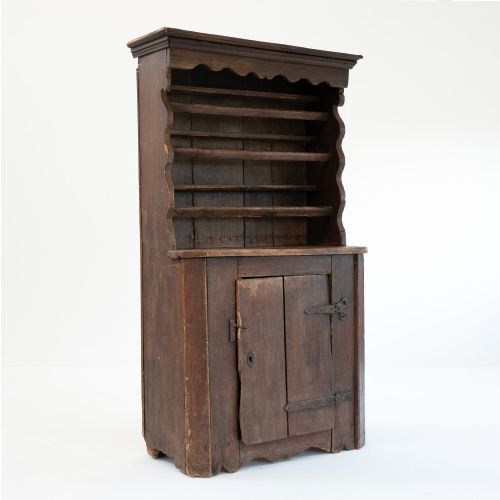
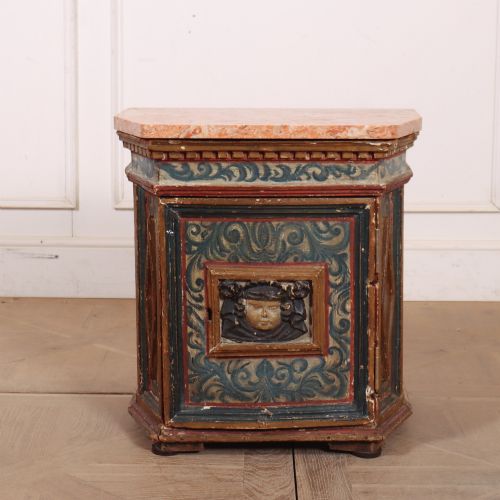
Regional vernacular makers worked with locally available woods like elm and cherry, while metropolitan workshops utilised imported mahogany and harewood for refined bookcases and side cabinets. Surfaces were frequently left with natural waxed finishes or decorated with hand-applied paint.
Listings feature oak, mahogany, walnut, pine, elm, and cherry wood across Georgian and 18th century periods.
What varies in quality
Quality in these cupboards rests on the selection of timber, the crispness of architectural details such as cornices and mouldings, and the integrity of the original construction. Superior examples retain their original brasses, uncompromised timber patination, and well-balanced proportions.
Lesser pieces often show heavy later alterations, replaced hardware, or unsympathetic surface stripping that removes the historic patina accumulated over centuries of domestic use.
The 18th Century Wooden Cupboards Glossary
- Linen press
- A tall piece of furniture designed for storing folded textiles and garments, typically featuring sliding trays enclosed by upper doors above a chest of drawers.
- Corner cupboard
- A space-saving cabinet specifically constructed with angled sides to fit neatly into the corner of a room, made in both standing and hanging variants.
- Spice cupboard
- A small wall-mounted or table-standing cabinet fitted with a series of tiny internal drawers intended for storing valuable culinary spices and medicines.
- Marquetry
- The decorative craft of applying thin pieces of wood veneer to a structure to form intricate patterns, often seen on refined Georgian pieces.
- Vernacular
- Furniture built by local rural craftsmen using regional timber traditions rather than following formal metropolitan design books.
18th Century Wooden Cupboards: Frequently Asked Questions
How do I use a corner cupboard today?
These cabinets fit neatly into unused room angles, providing practical display or concealed storage for glassware and tableware.
Their compact footprint makes them particularly useful in smaller dining rooms or hallways where floor space is limited.
Where were spice cupboards placed?
Original spice cupboards were typically mounted securely to kitchen or parlour walls to keep valuable provisions safe and dry.
Today they function well in kitchens or living areas as distinctive wall cabinets for small collections.
Are painted finishes period correct?
Many regional pieces, particularly from French provincial workshops or Irish country makers, were originally decorated with paint rather than polished wood.
Examining the underlying layers helps distinguish genuine historic paint from later decorative applications.
How do I distinguish oak from mahogany pieces?
Oak furniture typically dates earlier in the century and exhibits prominent grain patterns suited to vernacular and provincial country pieces.
Mahogany became the dominant fashionable timber later in the period, allowing for sharper carved details and smoother surfaces.