

18th Century Wooden Bureau
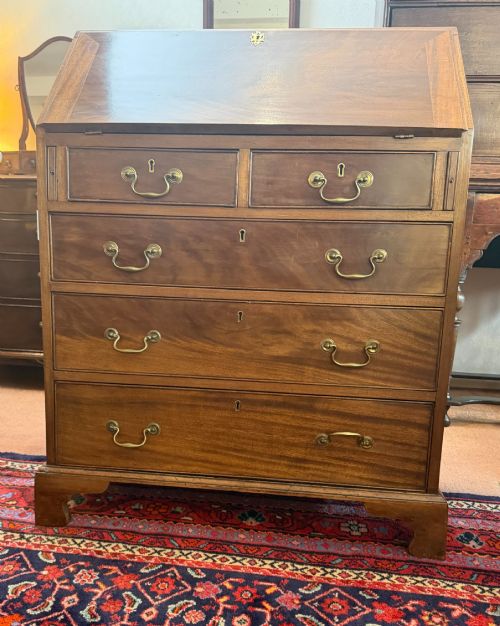
An 18th century wooden bureau provides a sloping writing flap above drawers, offering practical storage and a dedicated workspace.
18th Century Wooden Bureau
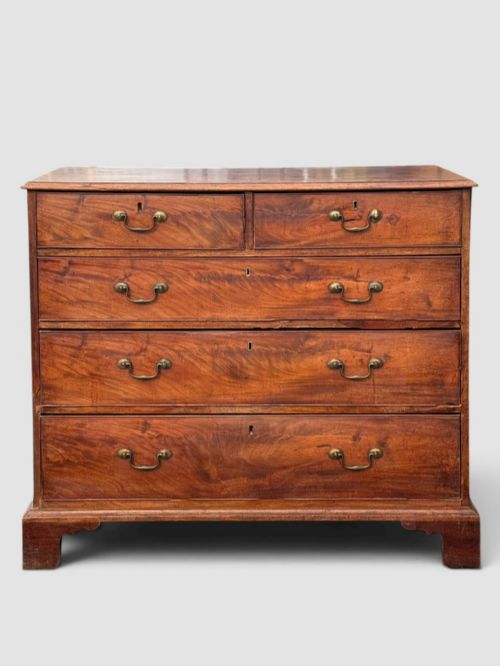
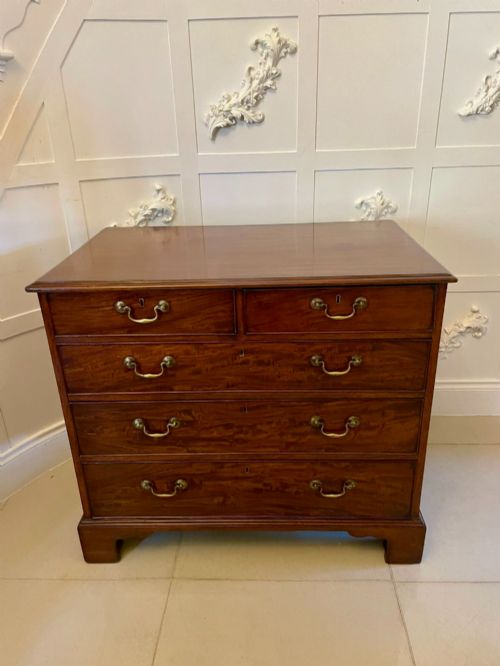
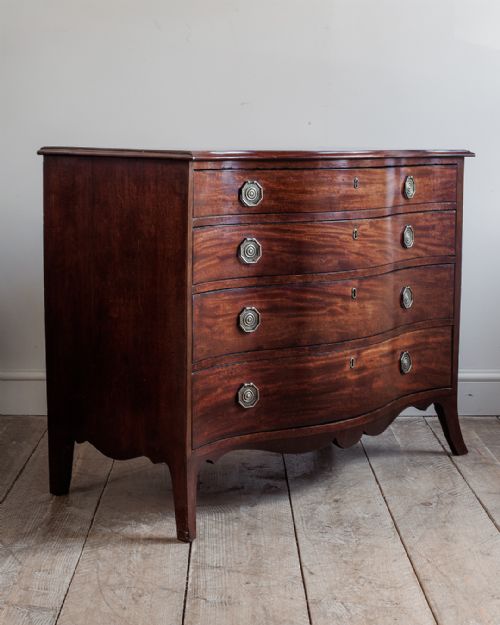
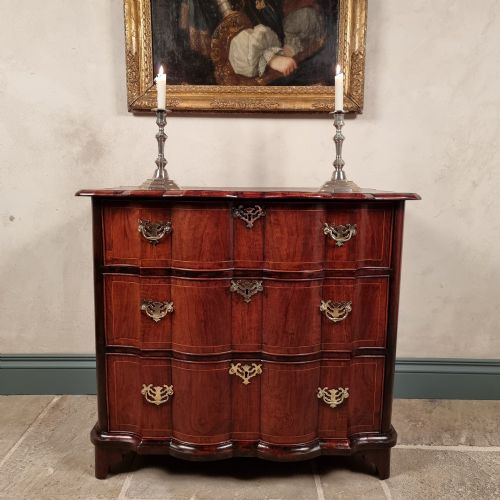
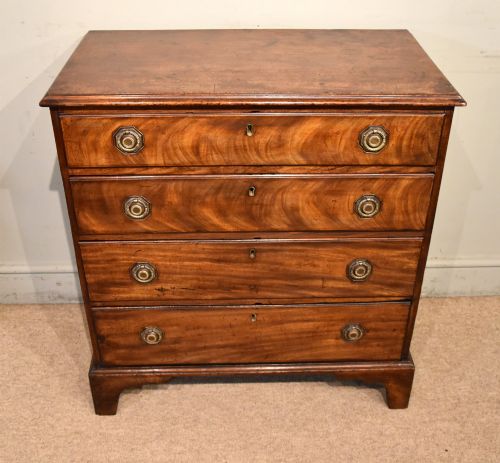
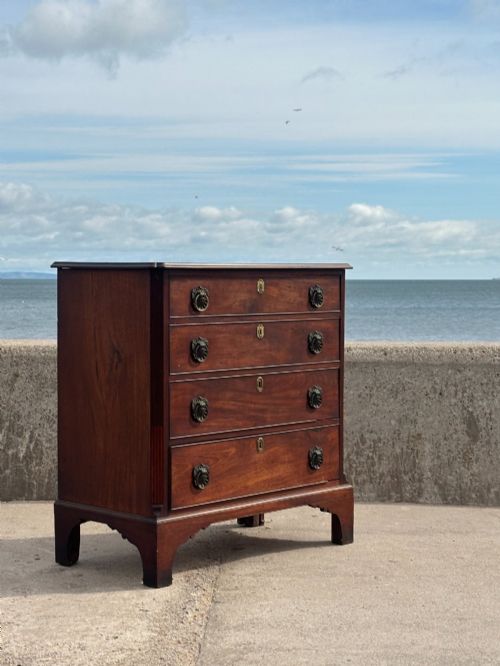
When you search for an 18th century wooden bureau, you encounter functional writing furniture designed for domestic administration and correspondence. These pieces combine a fall-front desk section with multiple drawers for storage. Alongside dedicated bureaux, the selection frequently includes related forms such as chests of drawers, clerks desks, and bureau bookcases.
The pieces on this page span the 18th century and the Georgian period, with some examples dating to the 19th century or reflecting earlier Queen Anne, George I, and George II styles. Originating mostly from English workshops, the selection also includes regional pieces like Channel Islands examples and continental items such as Swedish Gustavian commodes.
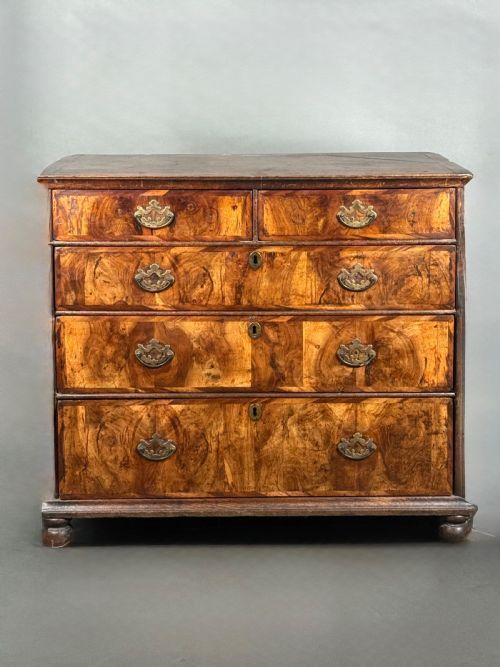
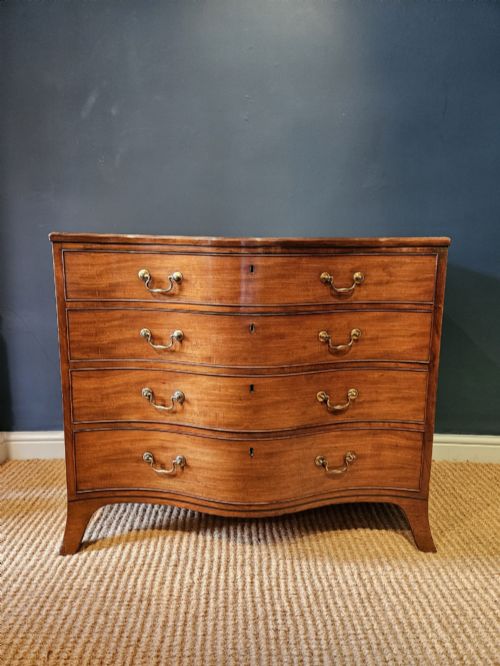
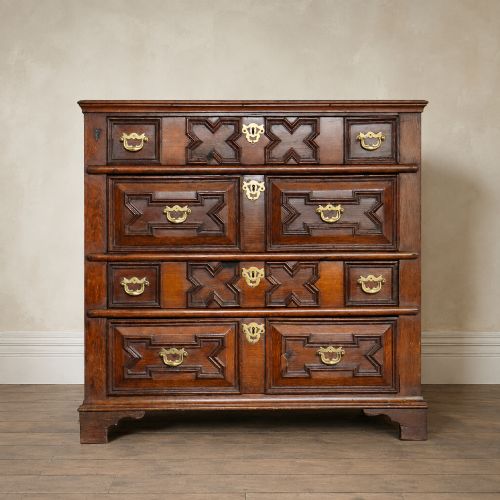
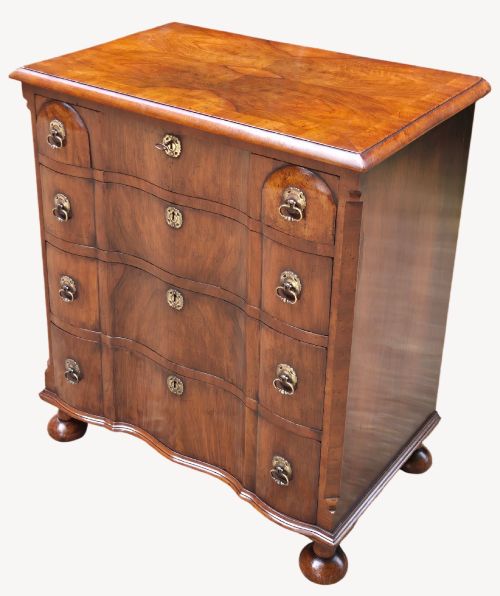
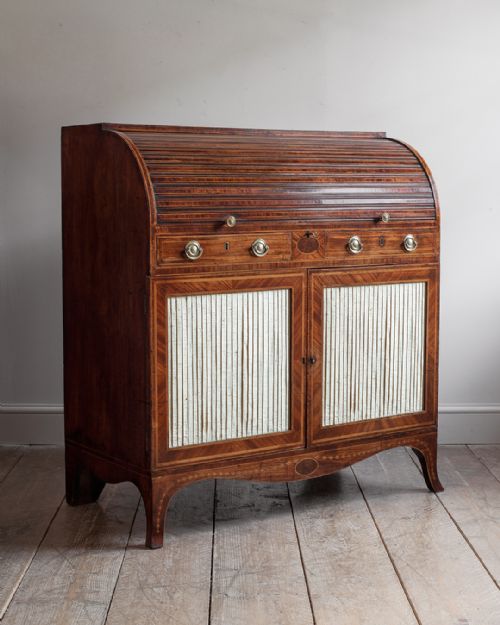
Mahogany and walnut dominate the offerings, often utilised in figured, burr, or curl varieties, alongside oak, elm, and satinwood. Forms vary from straight-front designs to serpentine and bow-front layouts, occasionally incorporating cylinder tambour mechanisms or fitted writing compartments.
How they were made
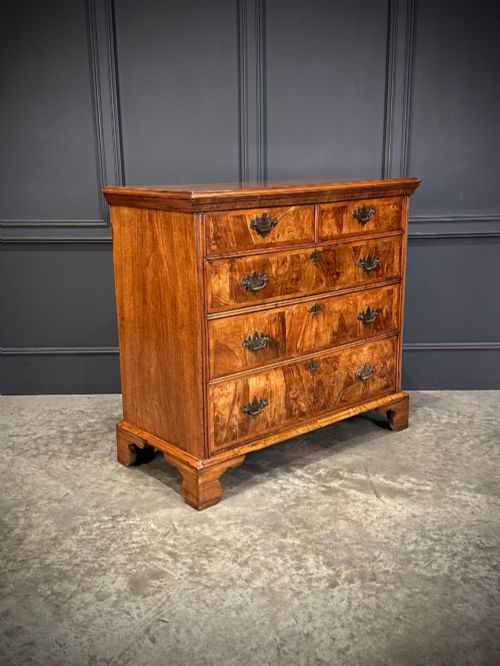
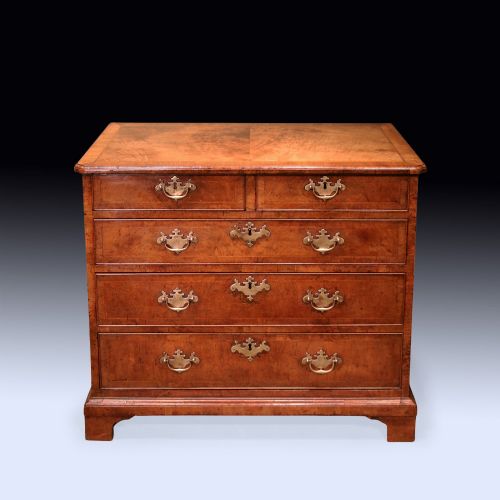
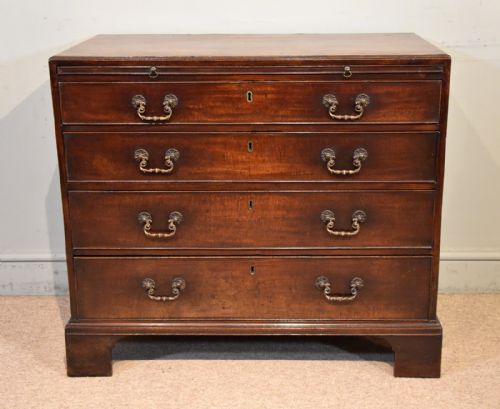
Cabinet makers constructed these pieces primarily from solid timbers and fine veneers of mahogany, walnut, and oak, supported by secondary woods for drawer linings. Timber selection dictated the visual character, utilising figured grains, curl mahogany, and feather-banded borders to create patterned surfaces on drawer fronts and writing flaps.
Construction relied on traditional joinery methods, secured with brass handles, key escutcheons, and occasionally original ironwork. Surface detailing involved geometric mouldings, inlay, and polished finishes that highlighted the natural grain and colour of the wood.
Some early desks still retain their original ironwork from around seventeen-twenty, having survived three centuries of letter-writing.
What varies in quality
The calibre of a piece rests on the selection of timber and the crispness of its construction. Higher-grade examples display carefully matched veneers, such as burr walnut or curl mahogany, and subtle decorative additions like feather-banding.
Proportion and untouched surfaces separate standard utilitarian items from finer productions. Original brass hardware, clean interior configurations, and well-executed geometric mouldings indicate superior workshop origins.
The 18th Century Wooden Bureau Glossary
- Bureau
- A writing desk with a sloping fall-front that opens to reveal internal pigeonholes and small drawers.
- Serpentine
- A front profile curving outward in the centre and inward at the sides, creating a wave-like shape.
- Feather-banding
- An inlay technique using thin strips of veneer arranged in a herringbone pattern to frame drawer borders.
- Tambour
- A sliding shutter made from narrow strips of wood glued to a fabric backing, used to enclose desk compartments.
- Brushing slide
- A pull-out shelf positioned above the top drawers, historically used for dusting clothes or temporary writing.
18th Century Wooden Bureau: Frequently Asked Questions
What is an 18th century wooden bureau?
An 18th century wooden bureau is a compact writing desk featuring a hinged sloping flap that drops down to form a writing surface. Inside, it typically contains small drawers and pigeonholes for stationery.
Beneath the writing section, these pieces incorporate multiple full-width drawers for general storage. They were essential household items for managing correspondence and household accounts.
How do I identify a Georgian bureau?
Georgian bureaux are identified by their characteristic proportions and timber choices, spanning the reigns of the Georges from the early to late 18th century. They frequently utilise mahogany or oak, displaying stylistic shifts from walnut-heavy early pieces to more refined inlaid mahogany later on.
Examining the drawer construction, handle styles, and internal pigeonhole arrangement helps narrow down the specific decades of production within the Georgian era.
Where were these bureaux made?
The majority of these bureaux originated in English cabinet-making workshops, though regional variations exist. Examples come from specific areas such as Lancashire and the Channel Islands, showing local preferences in timber and decorative moulding.
Continental pieces, such as Swedish Gustavian painted furniture, also appear alongside domestic British production, reflecting broader European neoclassical tastes of the period.
How do I care for an antique wooden bureau?
Caring for an antique wooden bureau involves placing it away from direct sunlight and sudden temperature changes to protect the timber and veneers. Maintaining stable indoor humidity prevents the wood from drying out or cracking.
Regular dusting with a dry, soft cloth is sufficient for maintenance, avoiding silicone-based polishes that can damage the historic surface finish.