


18th Century Toilet Glass
An 18th century toilet glass is a tabletop mirror designed for personal grooming, offering the functional elegance of the Georgian period.
18th Century Toilet Glass
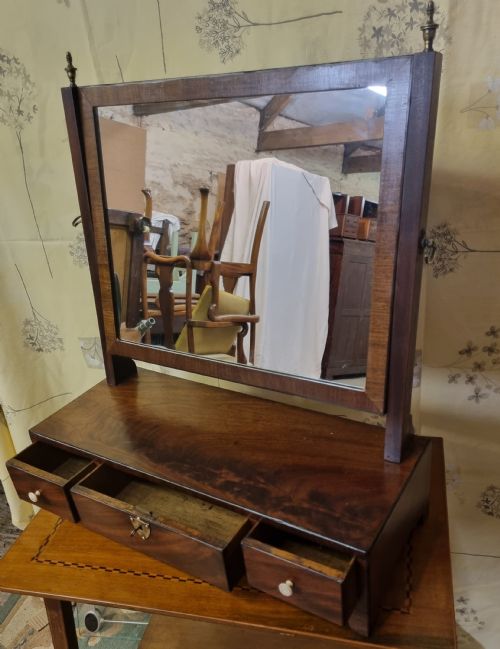
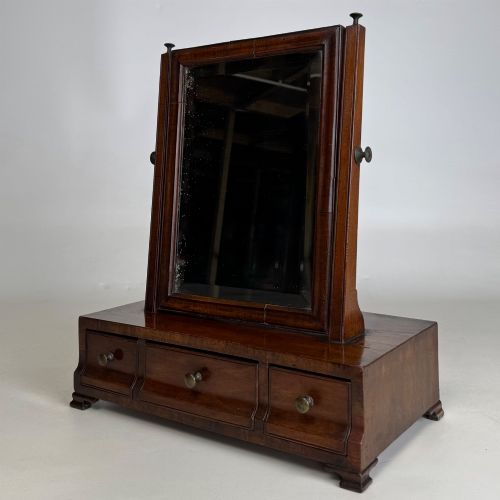
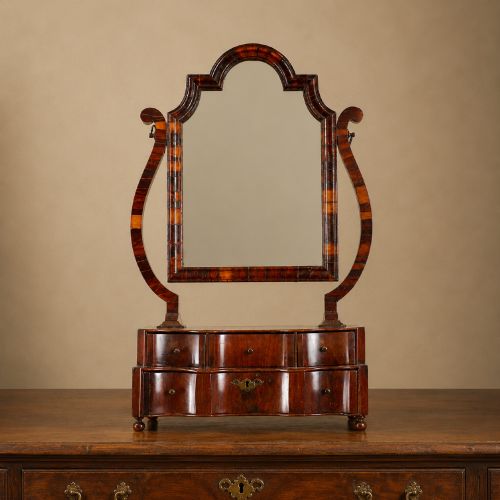
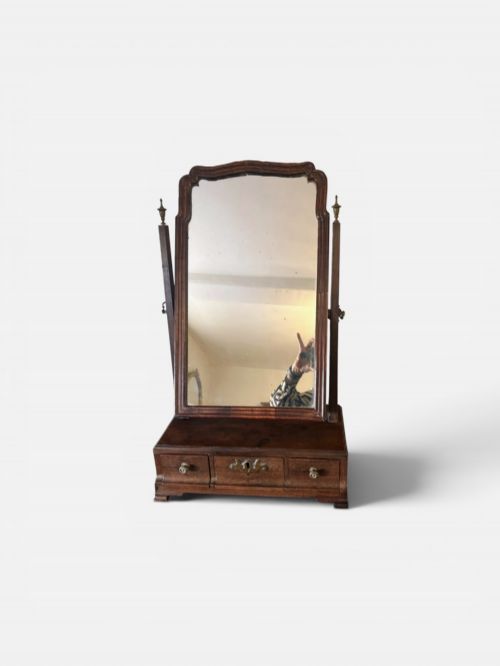
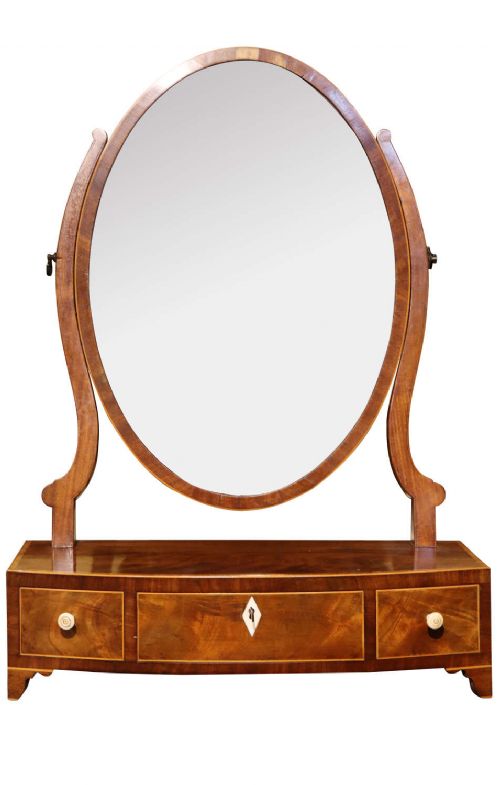
An 18th century toilet glass sits upon a dressing table or chest, providing a moveable mirror plate supported by a wooden frame and a small base. These pieces appear frequently in Georgian mahogany, walnut, and occasional lacquer, reflecting the domestic habits of the period.
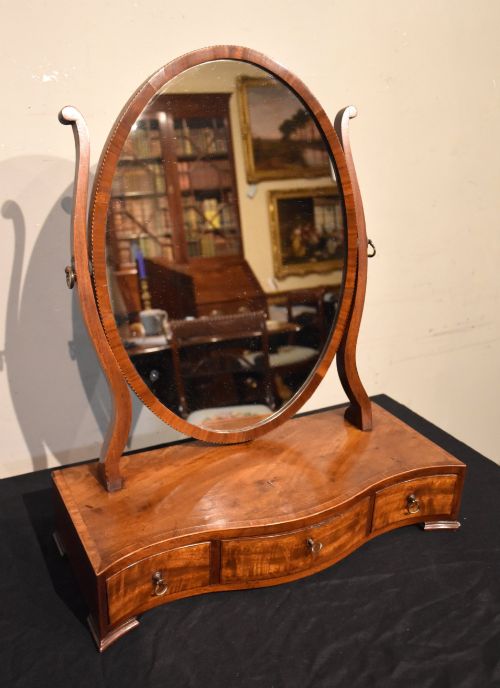
The surviving examples include simple swing mirrors alongside more elaborate formats featuring serpentine drawer bases or miniature bureau compartments. Makers constructed these mirrors to pivot between upright supports, allowing the user to adjust the angle during grooming.
Most pieces date from the reigns of Queen Anne through to George III, spanning the eighteenth century and into the opening years of the nineteenth century. Walnut predominates in the earlier decades, whilst mahogany and its variants take precedence as the period progresses.
Materials and construction
Cabinet makers utilised dense hardwoods such as mahogany and walnut, frequently applying crossbanding, burr veneers, or parcel-gilt details to enrich the surface. Structural elements often incorporate secondary woods, whilst bone escutcheons and brass fittings provide functional contrast.
The mirror plates themselves consist of silvered glass housed within rebated wooden frames, suspended between upright arms by means of threaded screw pins or wooden pivot knobs. Bases take the form of simple box compartments or stepped drawers constructed with traditional dovetailed joints.
Listings demonstrate that walnut predominates in early eighteenth-century examples, whilst mahogany and serpentine outlines define the later Georgian period.
Distinctions in quality
The calibre of an 18th century toilet glass rests on the selection of timber veneers, such as figured mahogany or burr maple, and the crispness of internal joinery like hand-cut dovetails on the drawer boxes. Superior examples display balanced proportions between the mirror frame and the supporting base.
Refinement in secondary details, including original brass hardware, finely turned support pillars, and well-executed serpentine fronts, elevates a piece above standard domestic utility. The survival of the original mirror plate and consistent patination across the wood surfaces further distinguish the finest specimens.
The 18th Century Toilet Glass Glossary
- Toilet glass
- A portable mirror intended for a dressing table or washstand. The term derives from the French toilette, meaning the process of dressing.
- Swing mirror
- A mirror plate mounted on pivots between two upright posts. This allows the glass to tilt back and forth to suit the viewer.
- Serpentine
- A curved shape featuring a convex centre flanked by two concave curves. Cabinet makers applied this outline to the front of mirror box bases.
- Crossbanding
- A narrow strip of veneer laid around the border of a surface so that the grain runs at right angles to the central panel. This technique frames the primary wood.
- Parcel-gilt
- Partially gilded with gold leaf applied to specific carved details or mouldings. It highlights decorative elements against a dark wood background.
18th Century Toilet Glass: Frequently Asked Questions
What is an 18th century toilet glass?
An 18th century toilet glass is a small, movable mirror designed to sit on top of a table or chest for personal grooming. These pieces combine a pivoting mirror frame with a supportive base that often contains small drawers.
Craftsmen built these mirrors using woods such as mahogany, walnut, and lacquer, matching the prevailing furniture styles of the Georgian era.
Where were these mirrors placed?
Owners placed these mirrors upon dedicated dressing tables, chests of drawers, or side tables within bedrooms and dressing rooms. Their portable nature allowed users to position them near windows to catch optimal natural light.
The compact base provided storage for small personal items, cosmetics, or jewellery close to hand.
How do I care for antique glass?
Living with these pieces involves keeping them away from direct sunlight and maintaining stable room humidity to protect the wood and veneer. Dusting requires a soft, dry cloth without the use of modern liquid polishes.
Careful handling of the pivot screws prevents undue stress on the upright arms when adjusting the angle of the glass.
How do I identify a George III mirror?
George III examples often feature mahogany, lighter harewood, or burr maple, frequently displaying Sheraton or Chippendale stylistic influences. Straight lines gave way to serpentine fronts and oval mirror plates as the eighteenth century progressed.
Construction details like hand-cut dovetails and original brass hardware help separate these pieces from later nineteenth-century reproductions.