
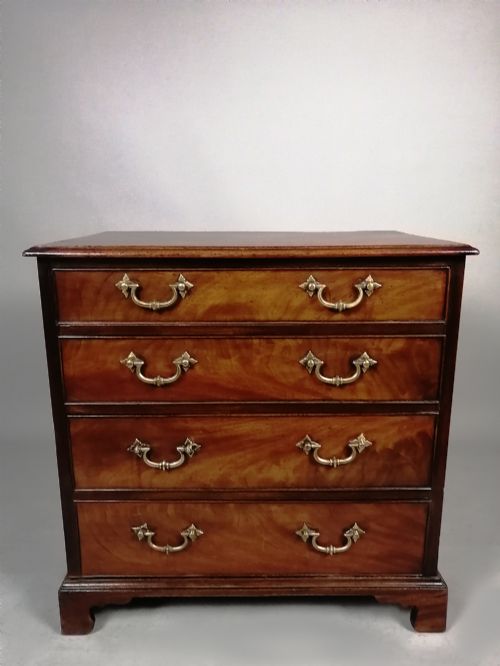
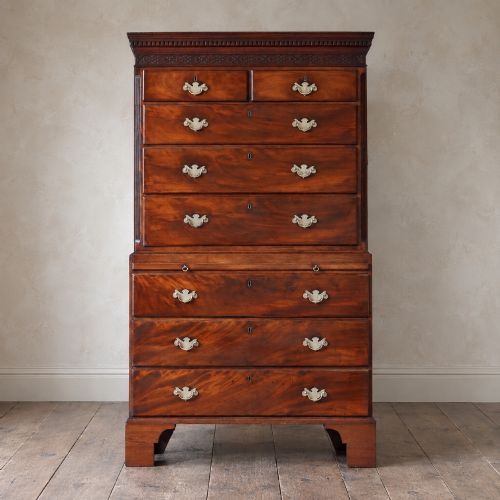
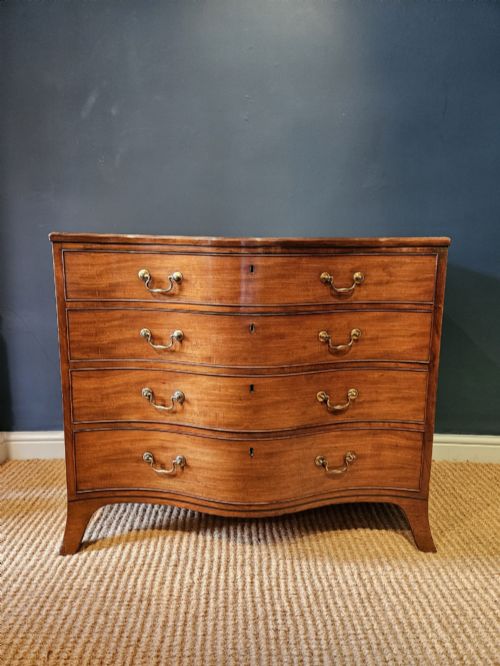
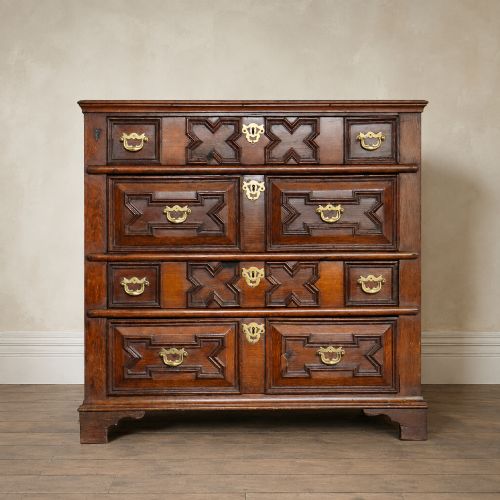




18th Century Style Tallboy
An 18th century style tallboy is a stacked vertical chest offering generous storage without taking up excessive floor space.
18th Century Style Tallboy
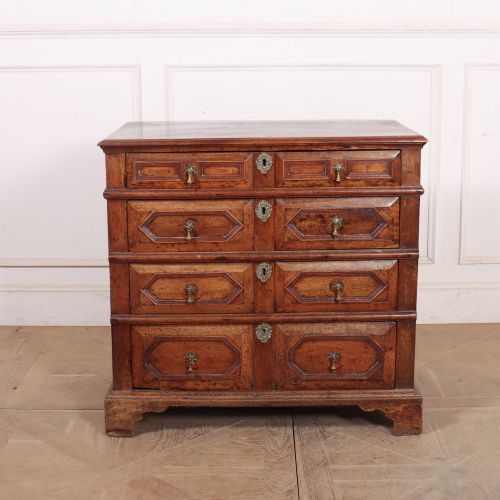
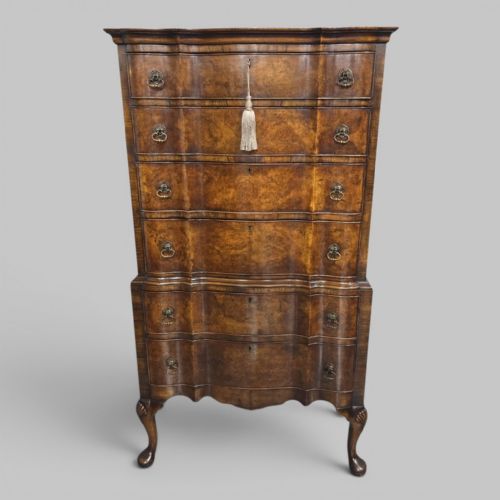
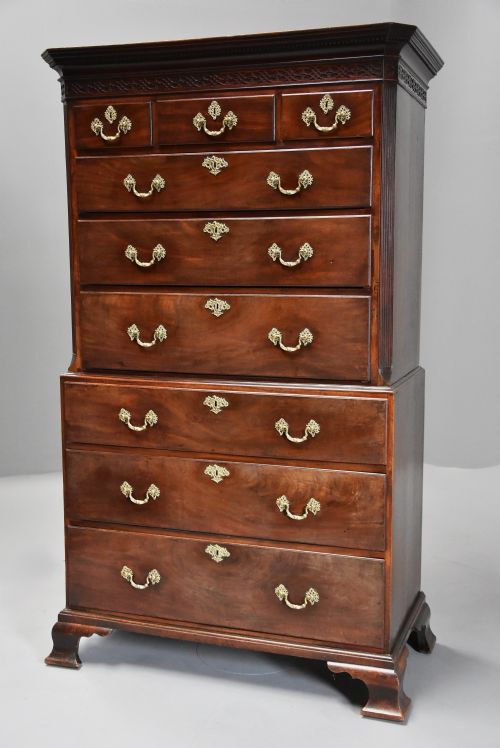
The 18th century style tallboy unites vertical storage with refined proportions, appearing predominantly as a chest on chest or a chest on stand. Buyers encountering these pieces will find Georgian, George III, and later revival examples constructed for domestic utility.
Forms range from straightforward oak drawer configurations to figured mahogany tallboys featuring brushing slides and secretaire drawers. These tiered units divide into a smaller upper section resting upon a deeper base chest.
How they were made
Cabinetmakers constructed these pieces primarily using solid oak and mahogany, often incorporating burr walnut or Cuban mahogany veneers for decorative effect. Brass hardware, including drop handles and escutcheons, secures the drawer fronts.
Joinery techniques relied on dovetailed drawer construction and framed panels, allowing timber to move naturally with atmospheric changes while maintaining structural integrity.
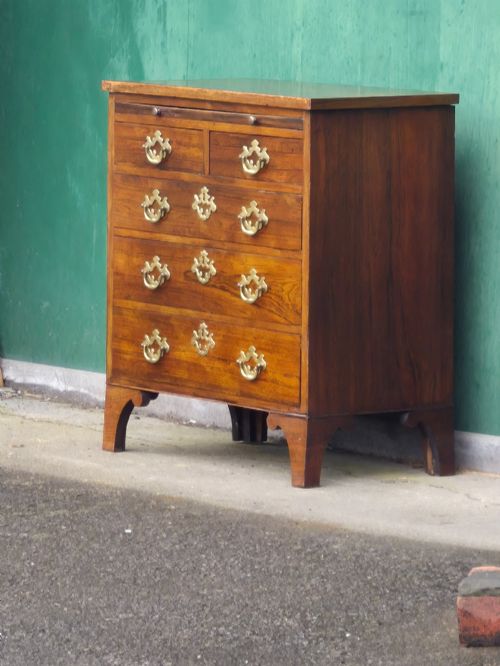
Several tallboys hide small pull-out brushing slides meant for folding shirts before pocket watches were invented.
What varies in quality
Quality rests upon the selection of timber figures, such as highly figured mahogany or burr walnut, and the crispness of applied mouldings. Subtle distinctions in proportion and the retention of original surface patination elevate certain pieces.
The refinement of internal drawer construction, including secondary timbers and hand-cut dovetails, separates standard utility pieces from higher workshops.
William Gomm·Giles Grendey
The 18th Century Style Tallboy Glossary
- Tallboy
- A tall chest of drawers formed by stacking one cabinet on top of another. This configuration maximises vertical capacity.
- Chest on chest
- An alternative term for a tallboy, denoting two distinct carcases joined vertically. The upper section is traditionally narrower than the base.
- Brushing slide
- A pull-out shelf integrated into the waist of a tallboy. It provided a temporary surface for sorting linens.
- Secretaire
- A drawer fitted with a drop-front writing surface and small compartments. It conceals pigeonholes and small storage drawers inside.
- Caddy-top
- A moulded furniture top with a stepped profile resembling a tea caddy lid. This detail frequently caps mid-Georgian case pieces.
18th Century Style Tallboy: Frequently Asked Questions
What is a tallboy?
A tallboy is a multi-tier storage unit combining two separate chests stacked vertically. This design provides significant drawer space within a narrow footprint.
Cabinetmakers built them to hold clothing and linens in domestic chambers. The upper chest sits securely upon the lower portion.
How do I use a tallboy?
Tallboys suit bedrooms and dressing rooms for storing folded garments and household textiles. Their vertical build preserves valuable floor area.
Keep them away from direct heat sources to protect timber and veneer. Utilise the brushing slide for temporary placement of items.
How do I date a tallboy?
Dating relies on observing timber choices, hardware styles, and construction methods. Oak and walnut predominate in earlier pieces, while mahogany marks the mid to late Georgian eras.
Inspect the drawer linings and secondary woods for hand-worked tool marks. Revival pieces from later periods display machine assistance and different internal construction.
What is a chest on stand?
A chest on stand elevates a drawer carcase upon a raised base with legs. These forms often date from earlier periods or revival eras.
They offer a lighter visual appearance compared to full double-carcase tallboys. The base frame provides structural support off the floor.