



Queen Anne Walnut Highboy
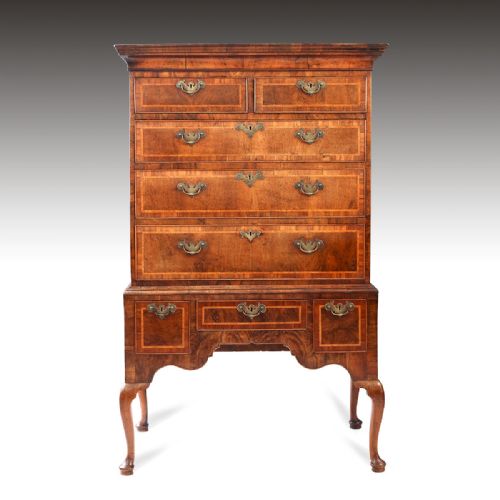
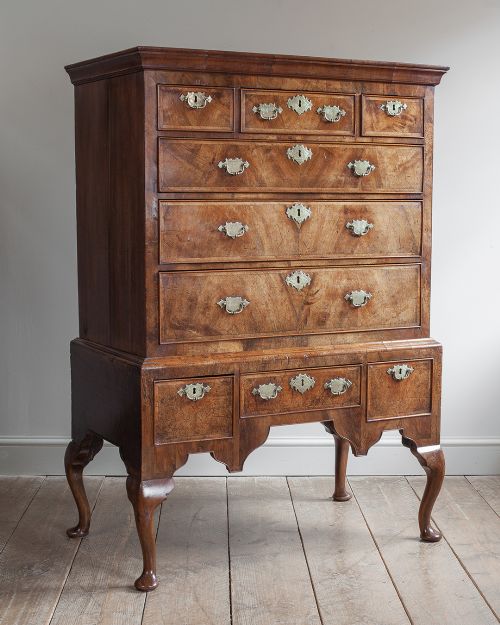
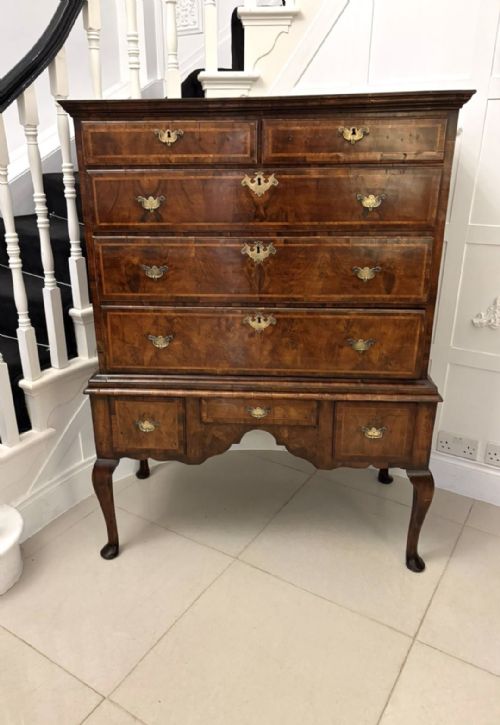
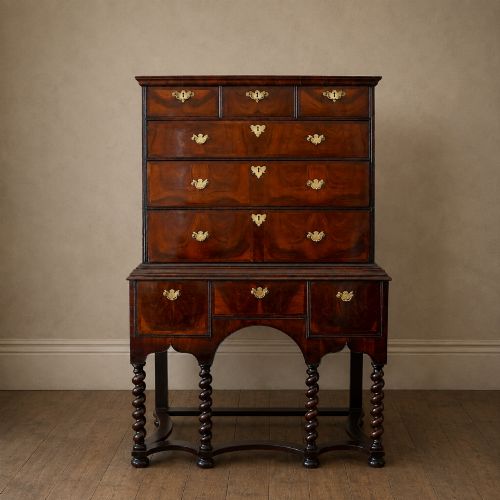
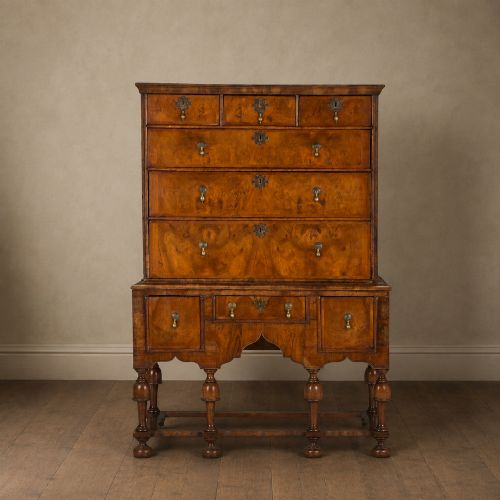
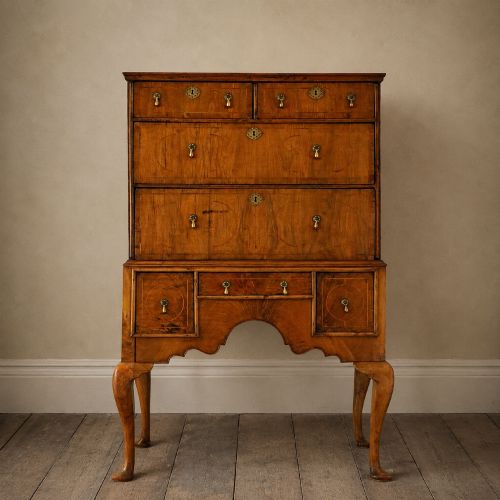
A queen anne walnut highboy brings rich burr grain and towering presence to a room, combining lower stands with deep banks of drawers.
Queen Anne Walnut Highboy
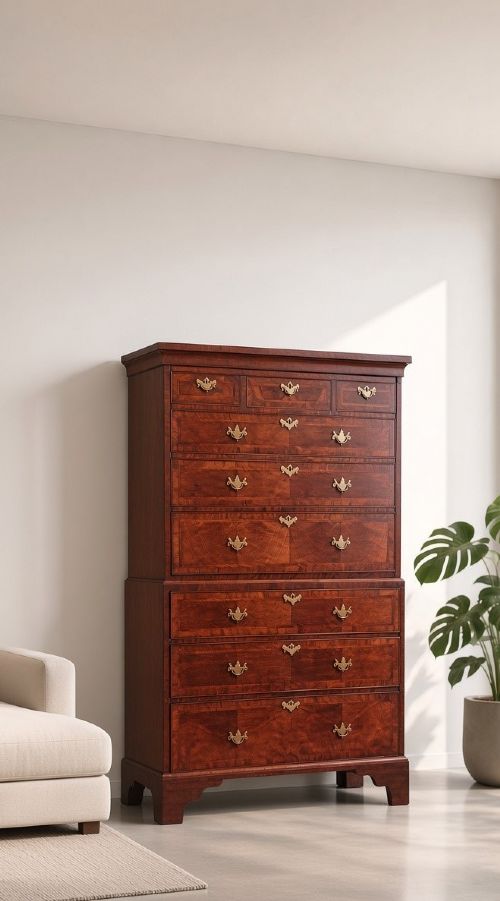
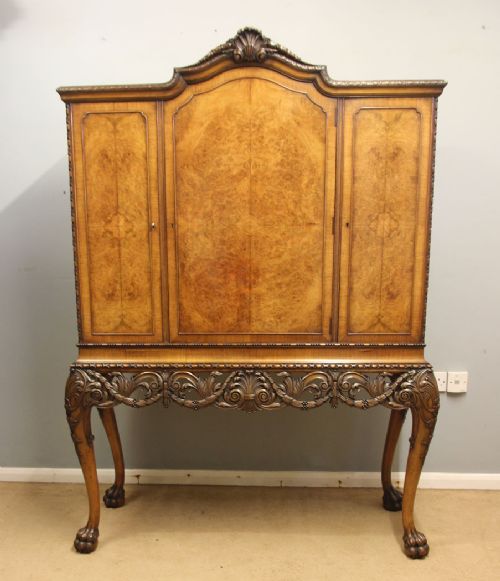
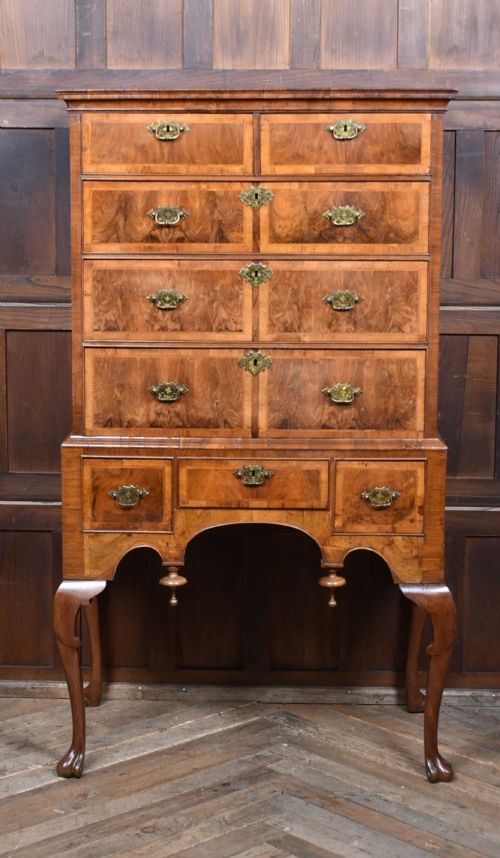
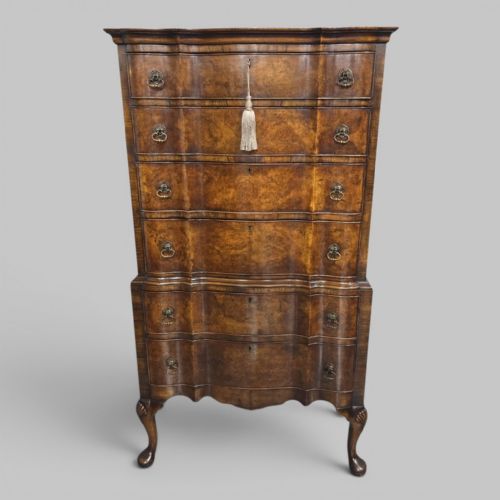
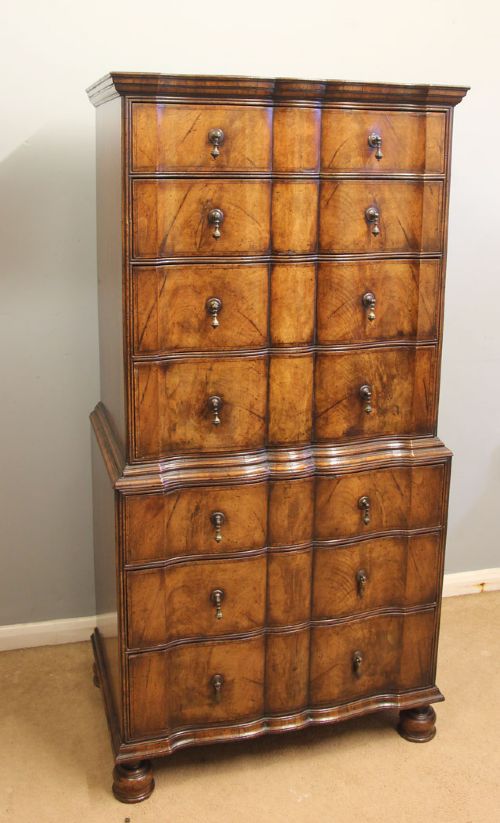
A queen anne walnut highboy search brings up pieces functioning as chests on stands, chests on chests, and tallboys. These examples span the eighteenth century alongside revival pieces from the early twentieth century.
Most entries divide into an upper section of multiple drawers resting upon a lower stand, frequently raised on cabriole legs. Originating in periods from the seventeenth century through to the georgian era, these tall forms provide substantial vertical storage while maintaining compact floor footprints.
Revival iterations from nineteen-ten to nineteen-thirty join authentic eighteenth-century examples on the market. Buyers will encounter both period originals and later interpretations sharing the distinctive double-body silhouette.
Materials and Construction
Cabinetmakers constructed these pieces primarily using oak and softwoods for internal carcases while applying decorative walnut veneers to the exterior faces. Burr walnut, figured walnut, and oyster veneers create intricate patterns across drawer fronts and top surfaces.
Craftsmen utilised crossbanding in boxwood and walnut to frame drawer perimeters and panel edges. Brass drop handles and escutcheons secure the drawer faces, while stands often incorporate cabriole legs supporting the upper chests.
Some tallboys hide secret drawers tucked deep beneath the top moulding, waiting to swallow love letters.
Quality Variations
The sophistication of the veneer selection largely dictates the standing of an individual piece, with highly figured burr walnut and matched oyster patterns sitting at the upper end. Grain continuity across drawer fronts and harmonious proportions between the upper chest and the lower stand separate finer examples from simpler workshops.
The integration of stands also influences the piece, as original stands matched to their upper chests command greater interest than associated or later bases. Surface patination, crispness in crossbanding details, and the survival of original brass hardware elevate the standing of surviving furniture.
The Queen Anne Walnut Highboy Glossary
- Chest on stand
- A two-part form consisting of a drawer chest sitting upon a low frame with legs. This configuration predates the taller unified tallboy and allows for easier movement.
- Cabriole leg
- A furniture leg featuring a double curve, bulging outward at the knee and tapering inward at the ankle. It frequently terminates in a pad or hoof foot on these pieces.
- Veneer
- A thin layer of figured wood applied over a secondary timber carcase to display decorative grain patterns. Burr walnut and oyster cuts were favourite choices for this technique.
- Crossbanding
- A border band of veneer laid with the grain running perpendicular to the surrounding wood. This technique frames drawer fronts and top panels.
- Tallboy
- A tall chest of drawers made in two stacked sections, providing generous vertical storage. The form evolved during the eighteenth century and saw revivals in the twentieth.
Queen Anne Walnut Highboy: Frequently Asked Questions
What is a highboy?
A highboy is a tall chest of drawers built in two sections, typically featuring an upper chest resting on a separate leg-stand or a lower cabinet.
These pieces provide extensive vertical storage while occupying minimal floor space in a bedroom or hallway.
How do I date a walnut highboy?
Dating relies on examining construction methods, timber choices, hardware fixings, and overall stylistic markers like leg shape and veneer types.
Eighteenth-century examples display period-specific joinery and patination, whereas early twentieth-century revival pieces show twentieth-century structural techniques.
Where should I place a tallboy?
A tallboy suits bedrooms, dressing rooms, or hallways where vertical storage is required without blocking floor circulation.
Keep them away from direct sunlight and heat sources to protect the delicate walnut veneers from drying and splitting.
Are stands original?
Many surviving chests on stands have lower sections that were associated with the upper chest at a later date rather than made together originally.
Comparing timber ageing, grain continuity, and construction details between top and bottom sections helps determine if the stand matches the upper chest.