
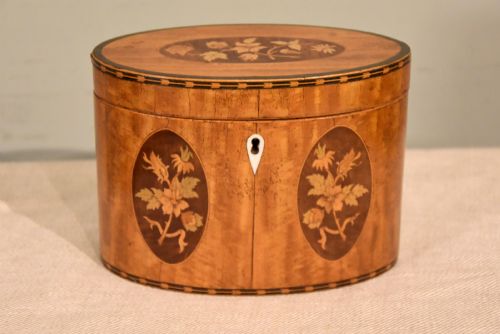
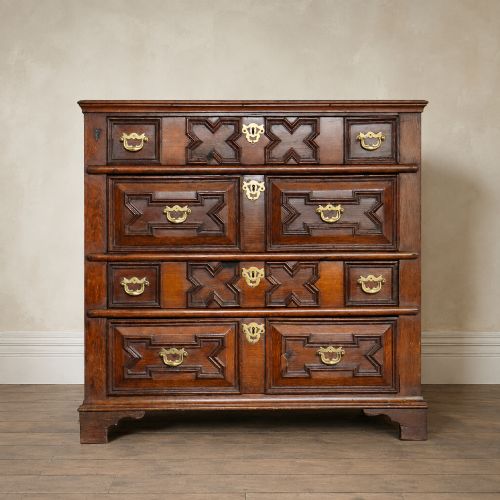
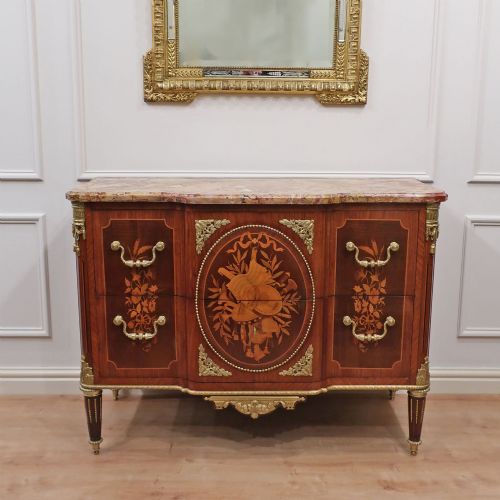
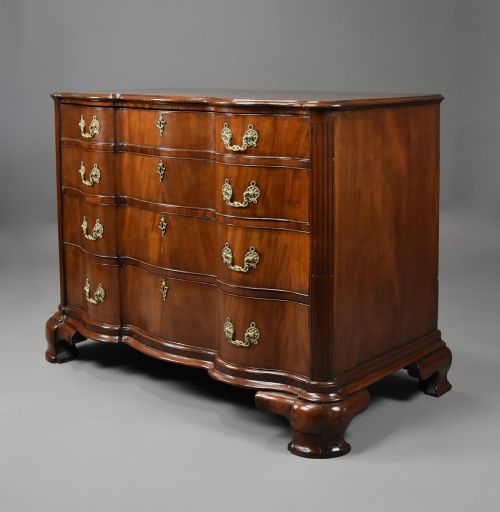
18th Century Style Chest
An 18th century style chest brings classical proportions and rich timber grain to a room.
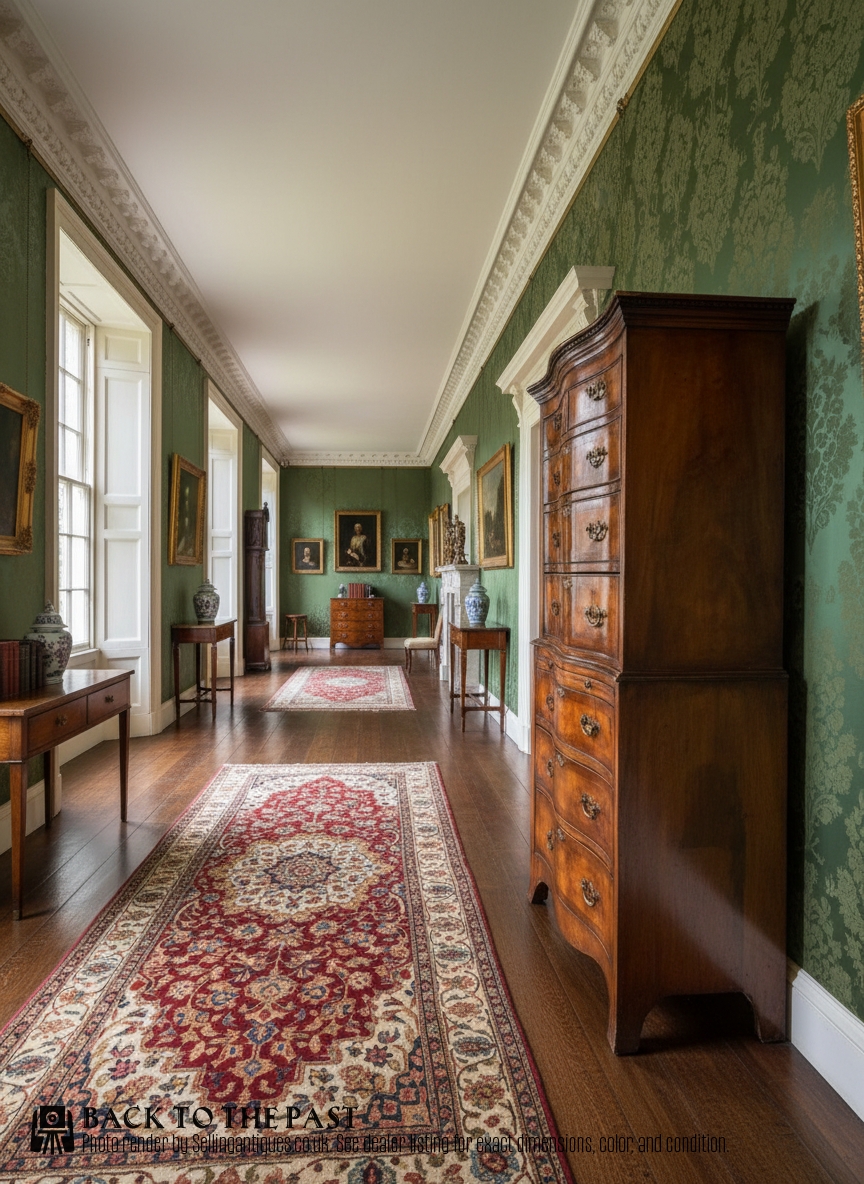
What these pieces are
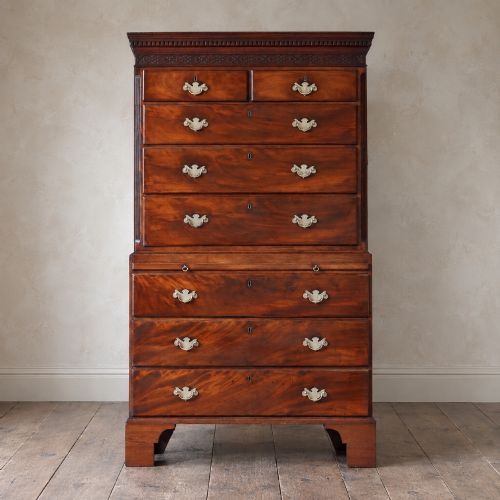
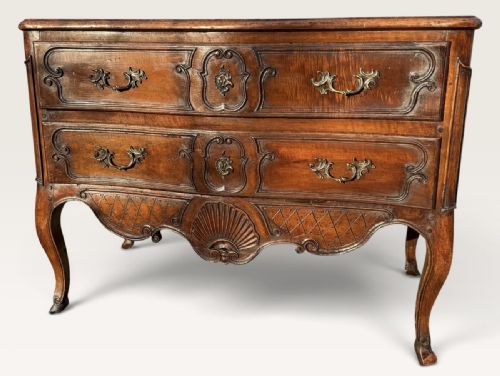
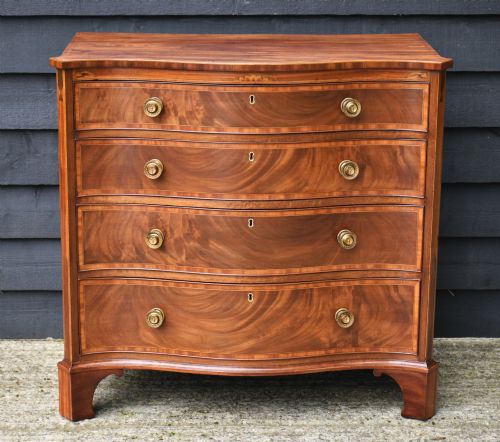
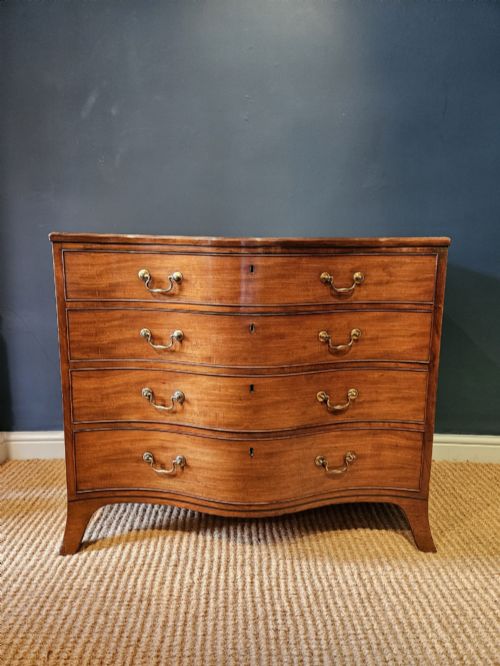
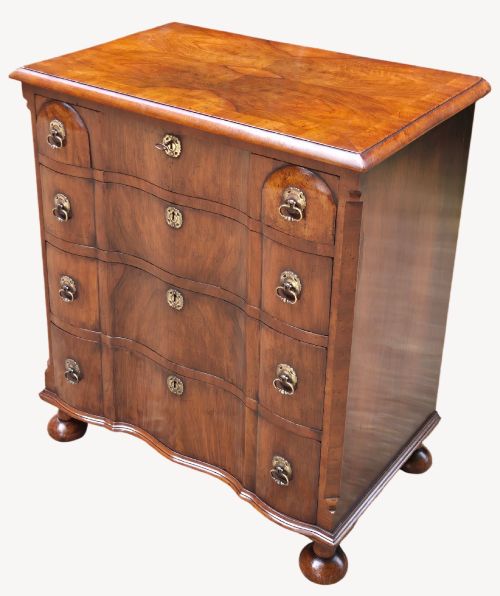
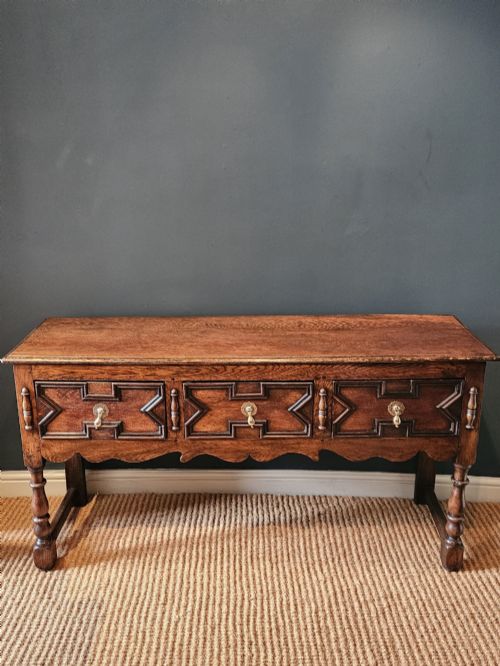
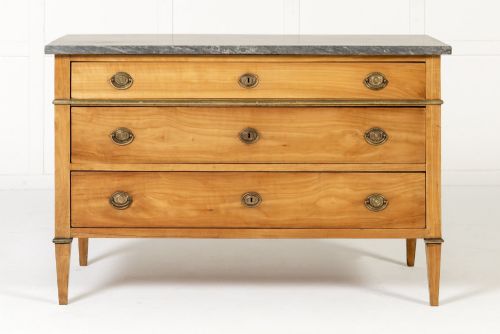
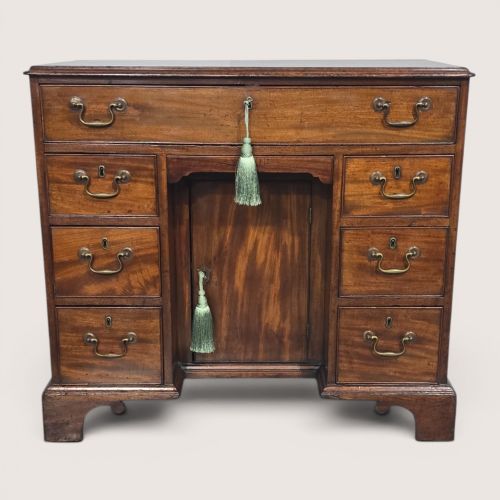
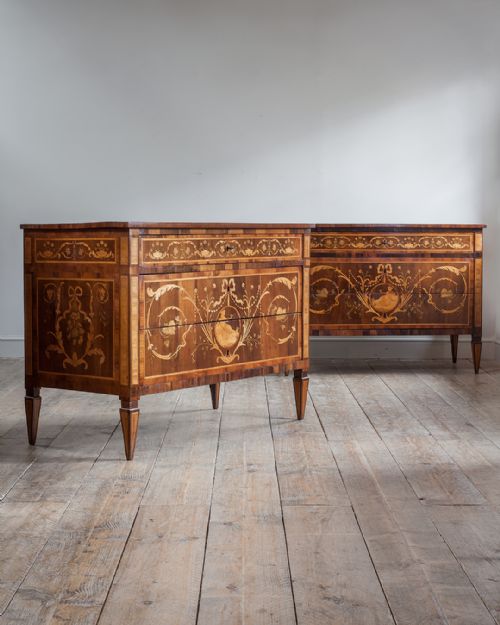
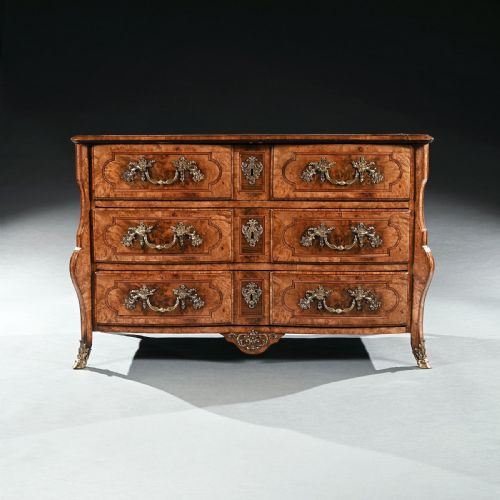
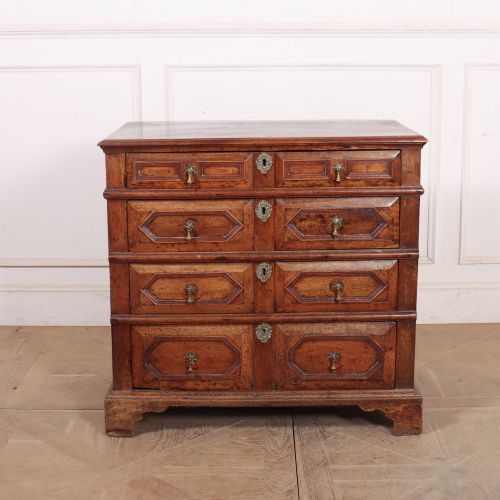
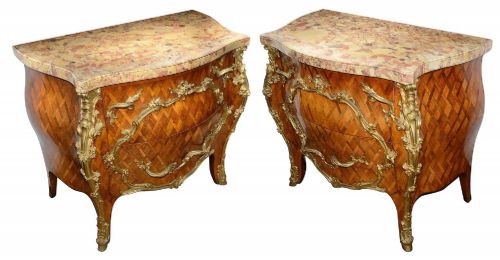
An 18th century style chest encompasses storage furniture built to emulate the classic forms of the Georgian, Queen Anne, and Chippendale periods. These pieces include chests of drawers, tallboys, chests on stands, commodes, and bombe chests.
The versions met most often on this page date from the nineteenth century, the Georgian Revival era of 1920, and the eighteenth century itself. Makers worked in walnut, mahogany, oak, rosewood, burr walnut, and chestnut.
Origins span British workshops alongside continental European centres, including French and Dutch interpretations. Each form provides deep drawer storage while displaying the characteristic silhouettes of eighteenth century design.
How they were made
Joiners constructed these pieces using solid timbers alongside decorative veneers such as burr walnut and mahogany. Carcasses frequently employ secondary woods like oak, shaped and joined with traditional cabinetmaking techniques.
Hardware consists of cast brass handles, drop pulls, and escutcheons secured to drawer fronts. Surfaces receive polish or wax finishes to protect the grain of the walnut, rosewood, or chestnut.
Retail Price Guide 2026
Typical UK retail prices for 18th century style chest, calculated from the Sellingantiques database of over a million retail prices indexed since 2003. This retail price guide relies exclusively on Sellingantiques data; no external sources or auction records are used, so the figures do not describe the wider market.
The listings here feature walnut, mahogany, oak, rosewood, and chestnut across periods from 1800 through the Victorian era and the 1920 Georgian Revival.
What varies in quality
The distinction between standard production and superior craftsmanship rests in the selection of timber veneers and the crispness of carved details. Finer examples display symmetrical grain patterns across drawer fronts and precise dovetail joints in the drawer construction.
Proportion and scale dictate the visual success of the piece, with better balanced cornices, mouldings, and bracket feet reflecting closer adherence to period architectural principles.
The 18th Century Style Chest Glossary
- Bombe chest
- A commode or chest featuring convex curves and bulging sides that swell outward. This continental shape requires advanced woodworking skill to achieve the dramatic profile.
- Tallboy
- A tall chest of drawers built in two sections, placing a chest of drawers upon a lower base or stand. This form maximises vertical storage while maintaining floor space.
- Chest on stand
- A cabinet or set of drawers elevated on a separate framework of legs connected by stretchers. This design lifts the primary storage compartment for easier access.
- Burr walnut
- Timber taken from the irregular growths of a walnut tree, yielding highly decorative swirling patterns. Cabinetmakers sliced this wood into thin veneers for prominent display on drawer fronts.
- Dovetail joint
- An interlocking corner joint formed by interlocking wedges that secures drawer construction. Fine examples feature tight, narrow pins indicating skilled manual labour.
Frequently Asked Questions
How do I date an 18th century style chest?
Dating relies on examining the construction methods, secondary timbers, and hardware used inside the piece. Tool marks, drawer linings, and the style of the brass handles offer clues to whether a chest is from the original period or a later revival.
Secondary woods and timber shrinkage provide further evidence of age. Comparing the decorative vocabulary against known Georgian or Victorian revival patterns clarifies the timeline.
Where should I place a walnut chest?
These chests suit living rooms, hallways, or bedrooms where their rich timber tones add warmth and texture. Position them away from direct sunlight and heat sources to protect the delicate veneers.
Sufficient clearance allows drawers to open fully without obstruction. Placing the piece against a sturdy wall lets the classical proportions anchor the room.
What is the difference between a tallboy and a standard chest?
A tallboy stacks additional drawer capacity vertically, often in two distinct sections, creating a taller profile than a standard chest. This design provides significant storage without demanding a larger footprint on the floor.
Standard chests remain lower, allowing the top surface to function easily as a display area or dressing surface. Both forms draw on eighteenth century architectural conventions.
How do I care for mahogany and rosewood surfaces?
Maintenance involves dusting regularly with a soft, dry cloth and applying quality beeswax periodically to nourish the wood. Avoid silicone sprays or harsh chemical cleaners that can degrade the traditional polish.
Maintaining stable room humidity prevents the timber and veneers from drying out or splitting. Gentle upkeep preserves the depth of colour and shine built up over decades.