

18th Century Press
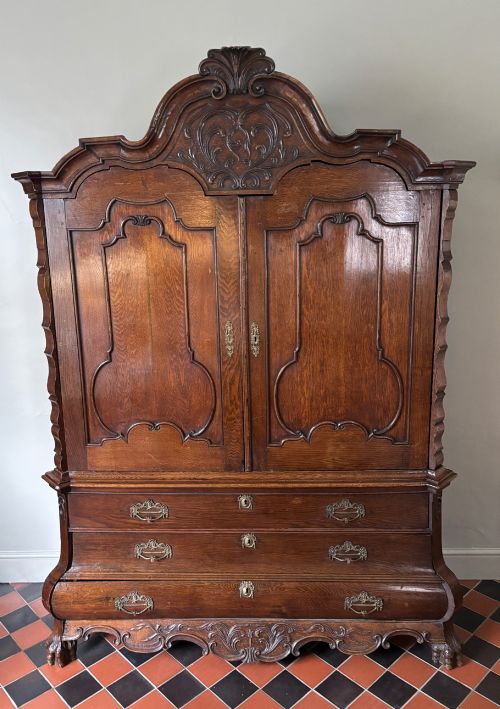
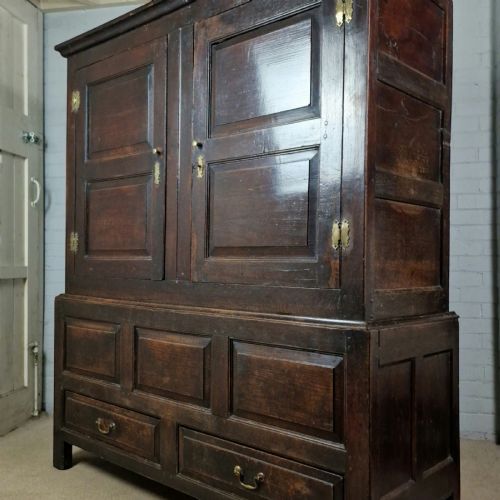
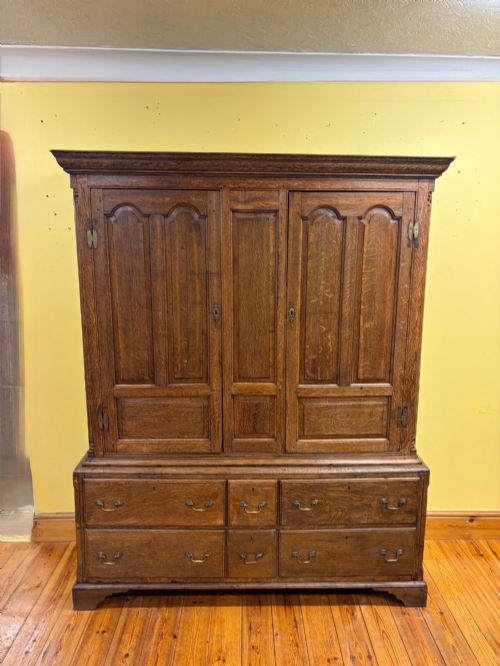
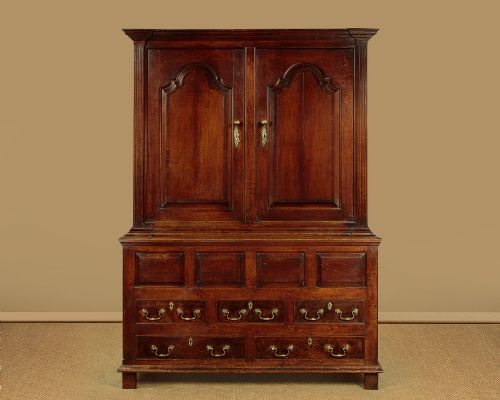
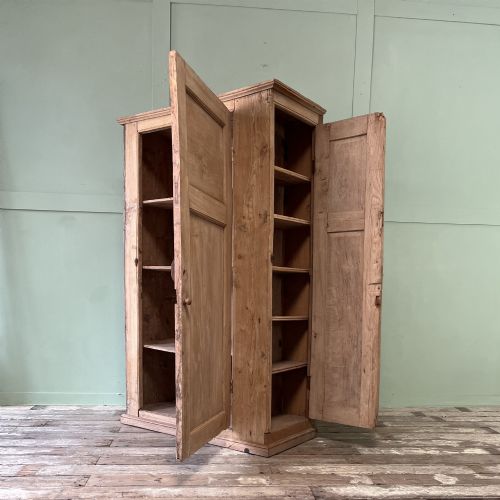
An 18th century press brings substantial historical storage into a room, offering panelled timber doors and deep internal shelves tailored for household textiles.
18th Century Press
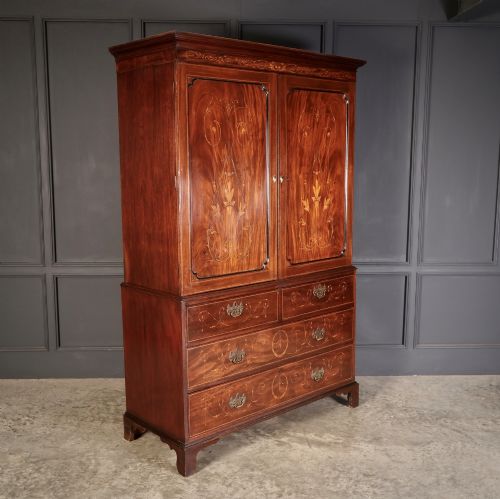
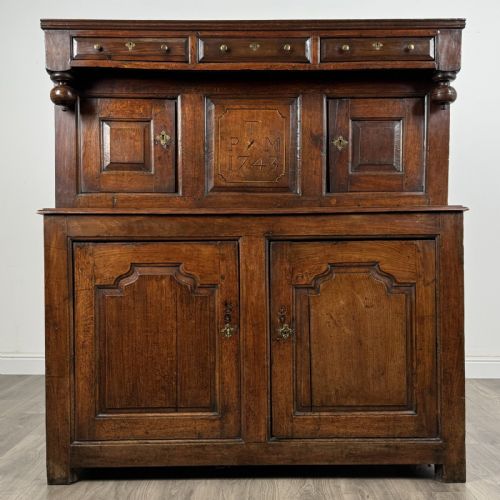
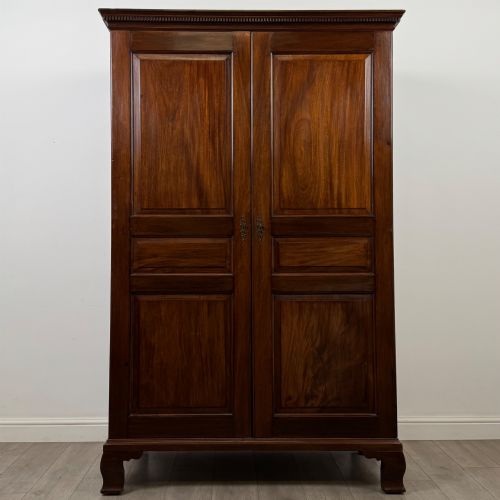
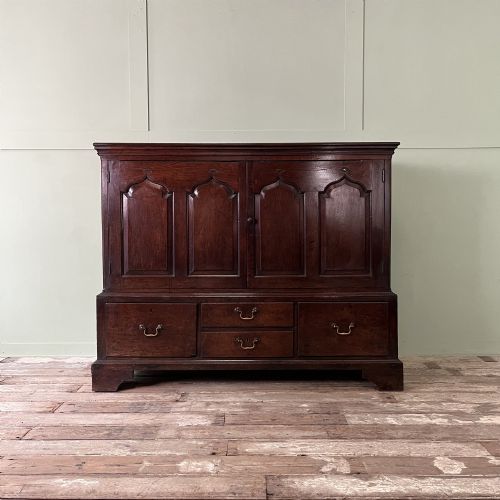
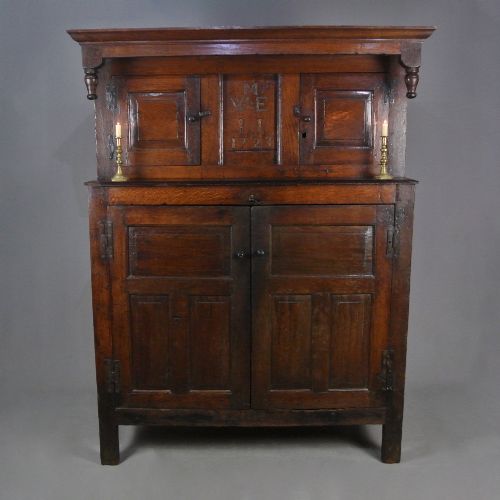
The 18th century press category encompasses tall timber storage furniture designed to hold garments, linen, and household provisions. Buyers frequently encounter regional variations, from English and Welsh oak housekeepers' cupboards to refined mahogany linen presses dating from the Georgian period.
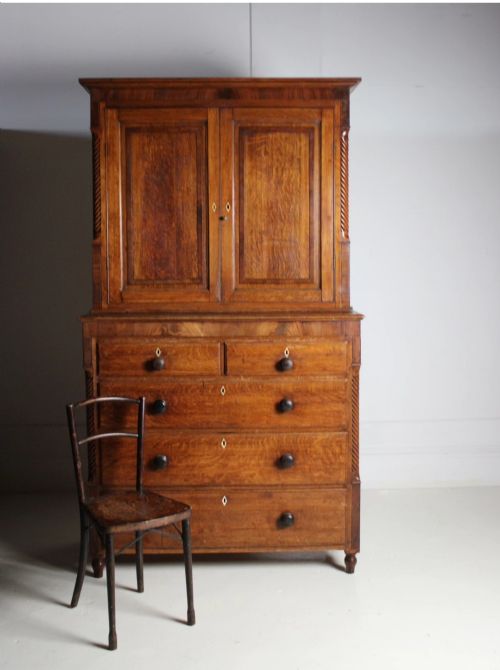
Many examples feature a two-part construction, placing enclosed cupboard doors above drawer sections. These forms evolved to meet domestic demands for storing freshly laundered textiles before the widespread use of fitted wardrobes.
How they were made
Cabinetmakers constructed these pieces primarily using solid native timbers such as oak, elm, and fruitwood, alongside imported mahogany for finer urban commissions. Panels were typically held within pegged mortise and tenon frames, allowing the timber to expand and contract naturally with seasonal humidity.
Internal elements often include sliding trays or shelves rather than open hanging space, reflecting the historical storage of folded linens. Brass hardware, hand-cut dovetails on drawer boxes, and applied mouldings complete the structural joinery.
Some regional cupboards still carry the faint aroma of dried lavender tucked away centuries ago.
What varies in quality
Quality rests upon the selection of timber and the crispness of the original joinery. Pieces retaining their untreated natural surface patina and original brass fittings stand apart from those altered by later stripping or heavy restoration.
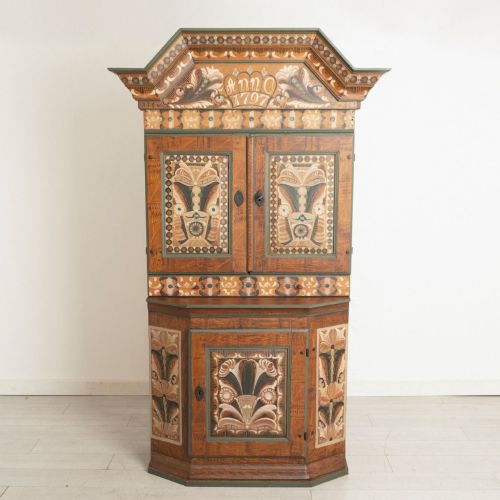
Proportion and regional character dictate desirability. Vernacular regional pieces display distinct local traditions in panel carving, while urban Georgian examples showcase balanced architectural facades and fine veneer work.
Gillows·Williams and Son
The 18th Century Press Glossary
- Linen press
- A tall cupboard specifically designed with internal sliding trays for storing folded sheets and garments.
- Housekeeper's cupboard
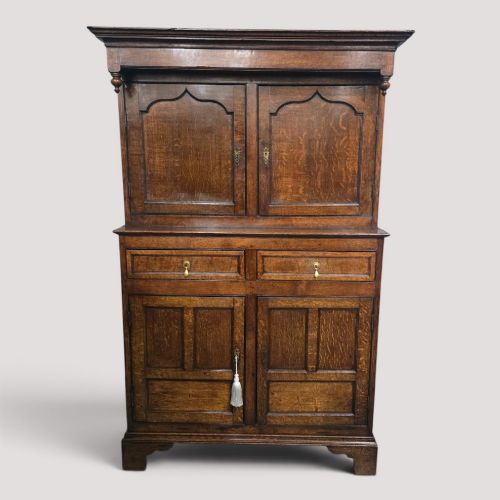
- A large utilitarian storage piece often featuring multiple upper doors and lower drawer banks for domestic provisions.
- Cwpwrdd tridarn
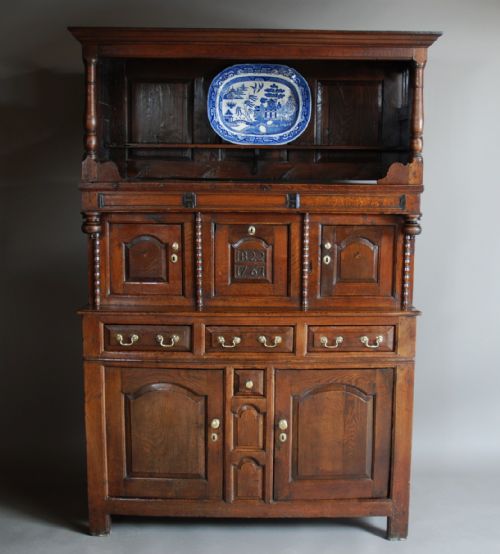
- A traditional Welsh three-tier press cupboard displaying open or enclosed upper stages above a central section.
- Dovetail
- A joint formed by interlocking wedge-shaped fingers, commonly utilised to construct sturdy drawer boxes.
- Panelling
- Framework consisting of vertical stiles and horizontal rails fitted with floating wooden panels to stabilise large cabinet doors.
18th Century Press: Frequently Asked Questions
How are linen presses used today?
These large cupboards serve effectively as primary bedroom wardrobes or linen storage units. Their deep internal proportions accommodate folded clothing, bedding, and modern storage boxes with ease.
In living areas or hallways, the lower drawer sections and upper shelving provide concealed storage for tableware, books, or household paperwork. Their architectural presence anchors a room while offering practical utility.
How do oak and mahogany presses differ?
Oak examples usually date from the earlier part of the century or reflect regional country workshops. They display robust joinery, visible grain textures, and traditional pegged construction.
Mahogany versions tend to emerge from the mid to late Georgian eras, showcasing smoother polished surfaces, finer veneers, and classical proportions. Both materials offer distinct visual weights suited to different interior schemes.
What is a housekeeper's cupboard?
A housekeeper's cupboard is a utilitarian storage form designed for busy country houses. These pieces typically combine generous upper cupboard space with multiple lower drawers for sorting linens and dry goods.
Built for heavy daily use, they prioritize functional capacity over decorative veneer work, resulting in honest vernacular proportions and sturdy timber construction.
How do you distinguish regional styles?
Regional pieces often utilise local timbers like Welsh elm, fruitwood, or native oak. Distinctive regional characteristics appear in the panel arrangements, cornice details, and regional cupboard names such as the tridarn.
Urban pieces built in London or provincial centres lean towards established architectural orders, utilising imported mahogany and refined stringing or marquetry inlay.