

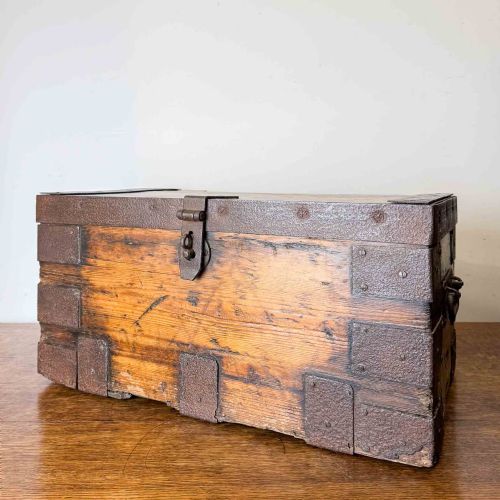

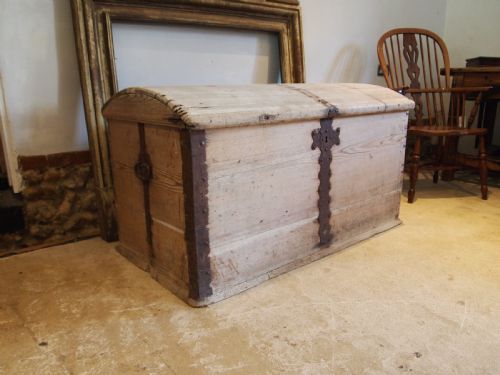


18th Century Pine Box
An 18th century pine box offers honest vernacular utility and timber patinated by centuries of handling.
18th Century Pine Box
An 18th century pine box encompasses utilitarian storage vessels, coffers, mule chests, and marriage boxes created during the Georgian and 18th century periods. These items served domestic storage needs in various regional contexts across Britain and Europe.
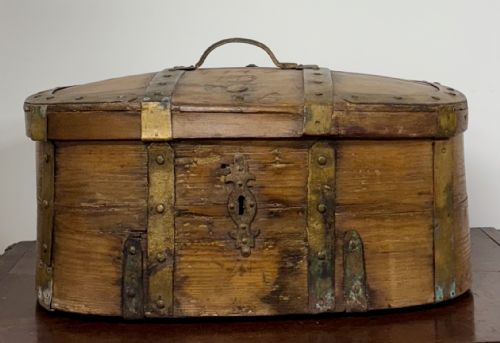
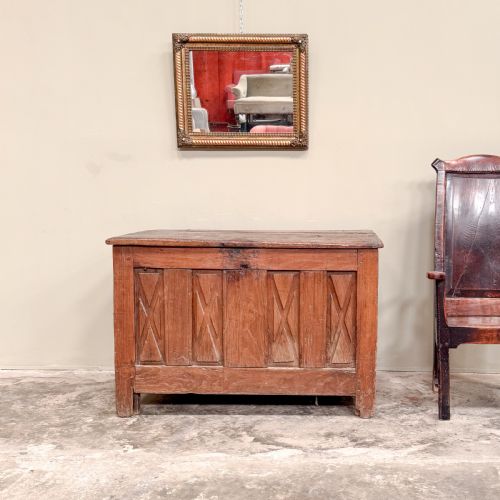
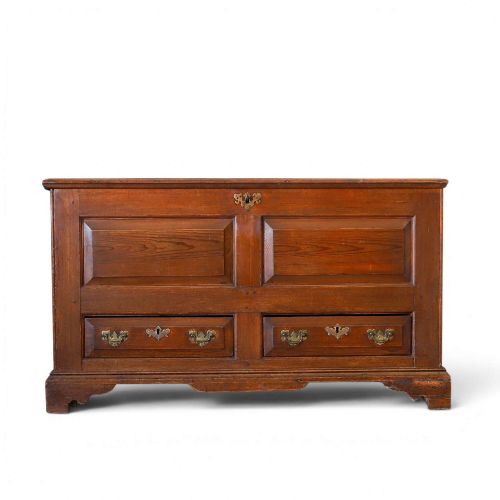
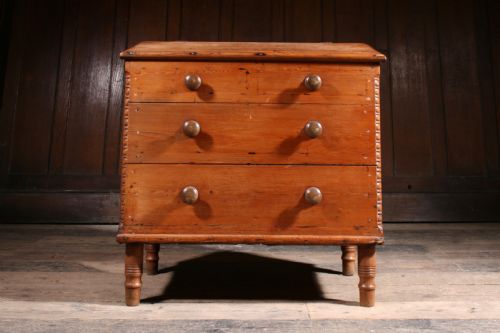
The most common examples on this page are country pieces, including Scandinavian folk art chests and Welsh vernacular boxes. They range from simple lidded trunks to mule chests fitted with lower drawers.
Makers constructed these storage pieces from softwoods such as pine, occasionally combining them with elm or oak for structural resilience. Surviving items frequently display original painted finishes, wrought iron bindings, or brass details.
How they were made
Carpenters built these boxes using solid pine planks joined with traditional methods suited to softwood construction. Iron hardware, including wrought iron straps and hinges, reinforced the corners and lids of strongboxes and trunks.
Many surfaces received layers of paint or wax rather than fine cabinet finishes. Folk art examples often feature decorative painting, such as labyrinth motifs or dark pigments applied directly to the timber.
What varies in quality
The integrity of the original surfaces dictates much of the distinction between examples, particularly where original paint or early wax finishes remain intact. Altered hardware or replaced boards diminish the purity of a piece.
Proportion and regional decorative detail set finer vernacular work apart from basic utilitarian containers. Scandinavian folk art and Welsh panelled construction display distinct local characteristics that elevate their interest.
The 18th Century Pine Box Glossary
- Mule chest
- A storage chest featuring one or more drawers beneath the main compartment. This form bridges the gap between the traditional coffer and the modern chest of drawers.
- Coffer
- A heavy wooden box used for storing valuables or textiles. Coffers usually possess hinged lids and sturdy boarded construction.
- Vernacular
- Architecture and objects built by local craftspeople using regional traditions and readily available materials. These items reflect the practical needs of their immediate community.
- Folk art
- Artistic work created within a traditional culture by self-taught or local makers. It often incorporates regional decorative motifs and unpretentious materials.
- Strongbox
- A secure container reinforced with metal bands and robust locks. These boxes protected currency, documents, and precious items.
18th Century Pine Box: Frequently Asked Questions
How were 18th century pine boxes used?
These vessels held blankets, garments, documents, and household valuables in domestic spaces. Their robust construction allowed them to function as tables or benches when not in use for storage.
Larger variants like mule chests accommodated family linen while keeping smaller items accessible in the base drawer.
How do I care for an old pine box?
Keep the timber away from direct heat sources and sudden humidity shifts to prevent the pine from splitting. Dust the surface regularly with a dry cloth and apply occasional clear wax if the finish appears dry.
Avoid using modern liquid polishes that can damage original painted or waxed surfaces.
What is the difference between a coffer and a chest?
A coffer traditionally describes a heavily constructed storage box, often reinforced with iron or framing, designed for security and travel. A chest generally refers to a simpler boarded box used for domestic storage.
In historical listings, these terms frequently overlap depending on the regional terminology used by makers.
Are painted finishes on pine boxes original?
Many surviving pieces retain their early or original paint schemes, which vary from dark pigments to decorative folk art motifs. Close inspection of the surface wear and pigment adherence helps distinguish early paint from later decoration.
Original painted surfaces significantly contribute to the character and identity of regional pieces.