


18th Century Oak Stool
An 18th century oak stool is a sturdy survivor of domestic history, prized for its honest craft and rich timber tone.
Forms and periods
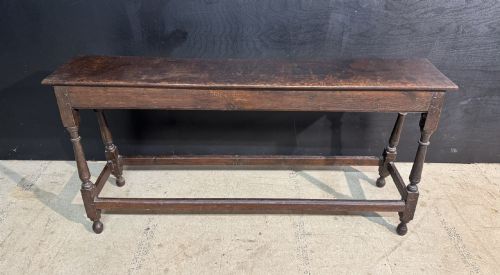
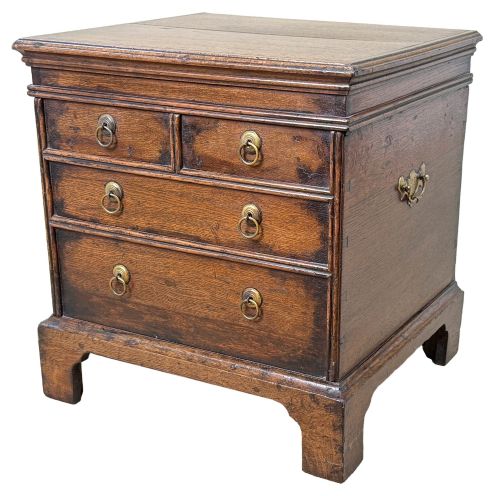
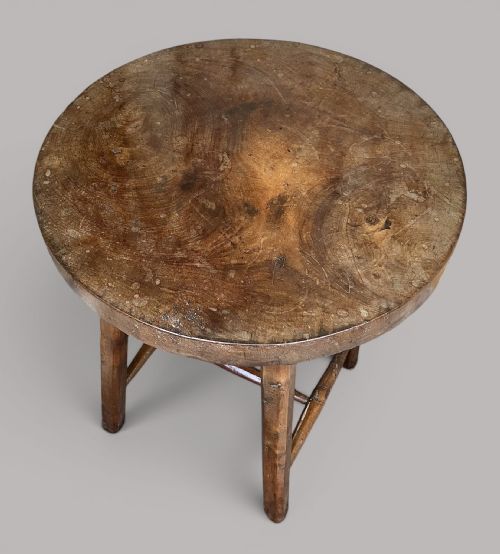
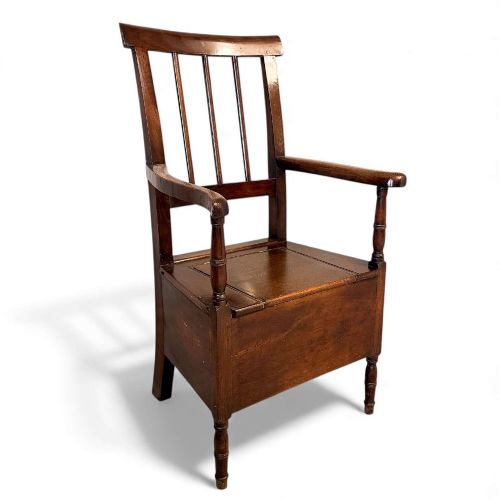
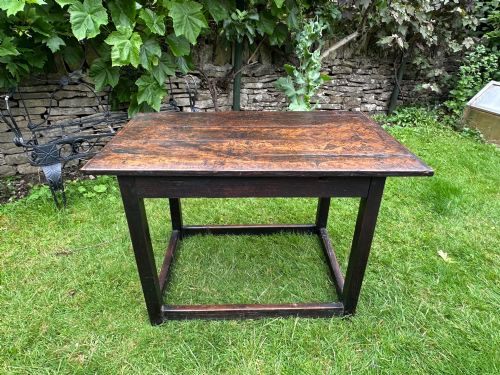
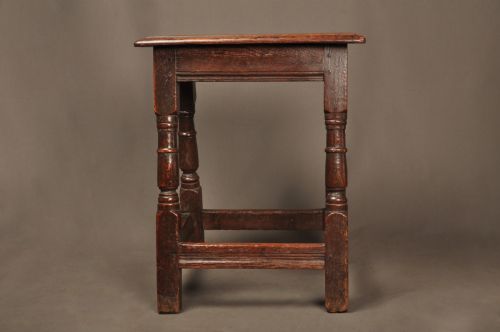
An 18th century oak stool encompasses solid seating forms produced across the Georgian and earlier periods, including joint stools, box stools, and rustic milking variants. These pieces served practical domestic roles, functioning interchangeably as seats, small tables, and storage units within period interiors.
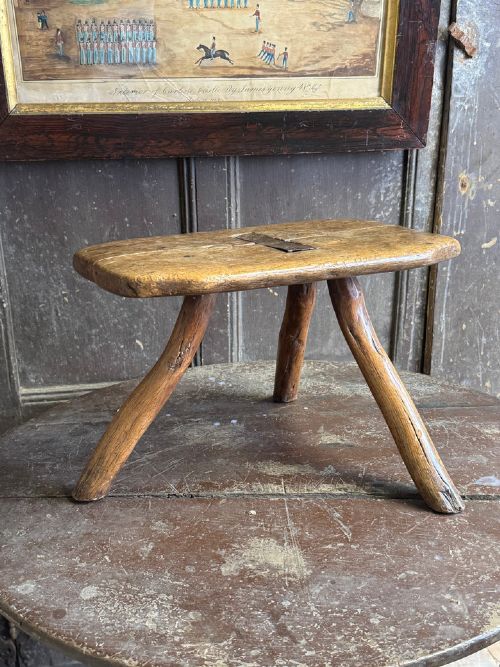
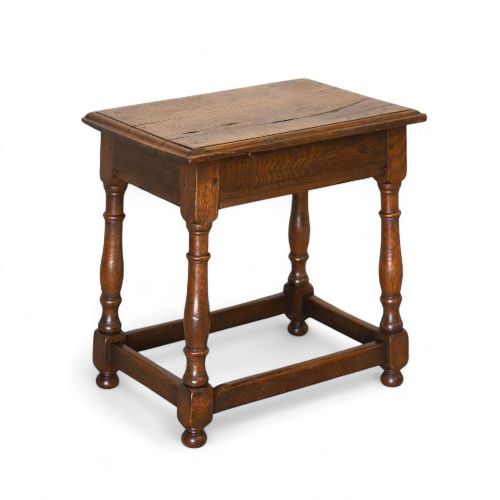
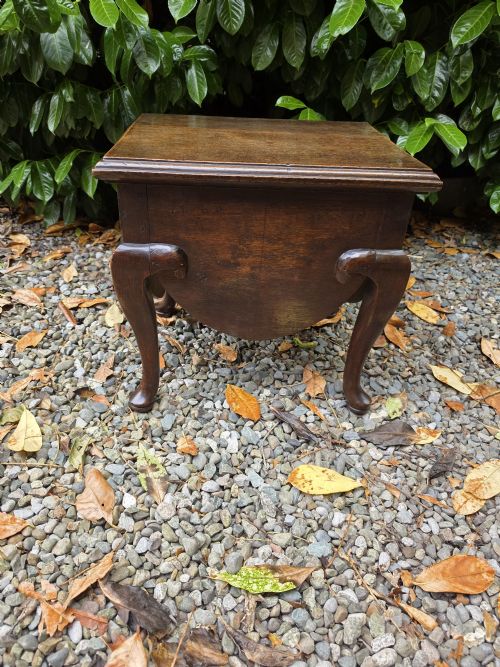
The joint stool stands out as the most common form encountered on this page, alongside vernacular box stools and splayed-leg country pieces. Examples range from structured early Georgian designs to primitive rustic seating featuring blacksmith repairs and hedgerow timber.
Materials and construction
Makers built these pieces primarily from solid oak, occasionally combining fruitwood for contrasting structural elements. Iron fastenings, brackets, and blacksmith repairs appear alongside traditional pegged joints to secure legs and tops.
Joinery methods rely on mortise and tenon frames, visible in the sturdy construction of joint and box variants. Surfaces display the tool marks of hand-planed timber, reflecting period woodworking techniques used in English, Welsh, and Scottish workshops.
Retail Price Guide 2026
Typical UK retail prices for 18th century oak stool, calculated from the Sellingantiques database of over a million retail prices indexed since 2003. This retail price guide relies exclusively on Sellingantiques data; no external sources or auction records are used, so the figures do not describe the wider market.
Judging quality
The standard of an 18th century oak stool rests on the integrity of its timber and the honesty of its construction. Pieces retaining their original pegged joints and surface patination stand apart from those altered by extensive later intervention.
Proportion and functional restraint dictate the character of better examples, whether expressed through clean architectural lines or spirited rustic splaying. The presence of authentic period elements, such as early blacksmith repairs or carved detail, adds distinct historical depth.
The 18th Century Oak Stool Glossary
- Joint stool
- A sturdy wooden seat constructed using pegged mortise and tenon joints rather than simple nailed assembly. These items took their name from the joined carpentry techniques employed by period furniture makers.
- Box stool
- A seating form incorporating an enclosed compartment beneath the top lid for storage. Such examples functioned practically for household goods while serving as everyday seats.
- Backstool
- An early form of chair featuring a vertical wooden back attached to a stool base. These pieces bridge the gap between simple seating and formal chair design.
- Coffin stool
- A low stool traditionally utilised to support a coffin during burial rites in past centuries. Their solid oak frames mirror the construction of standard joint stools.
- Milking stool
- A simple three-legged rustic seat designed for agricultural labour. These vernacular pieces typically display splayed timber legs.
Frequently Asked Questions
What is an 18th century oak stool?
An 18th century oak stool is a solid wooden seat created during the Georgian era or earlier periods for everyday domestic use.
These pieces include joint stools, box stools, and primitive rustic variants built from durable native timber.
How were these stools used historically?
Households utilised them primarily for seating around the hearth or at dining tables, alongside serving as impromptu side tables or storage units.
Some specialised variants accommodated specific tasks like milking, while others functioned during funerary rites.
How do I live with an oak stool?
These compact pieces fit easily into modern rooms as side tables, plant stands, or occasional seats.
Their neutral timber tones and durable construction suit both traditional and contemporary interiors.
How do I tell joint stools apart from other types?
Joint stools display rigid rectangular frames joined by pegged mortise and tenon carpentry, designed to bear considerable weight.
Other types, such as box stools or backstools, incorporate enclosed storage compartments or upright wooden backs.