





18th Century Night Cupboard
An 18th century night cupboard provides hidden bedside storage in solid mahogany, bringing period proportion and practical function to a bedroom.
18th Century Night Cupboard
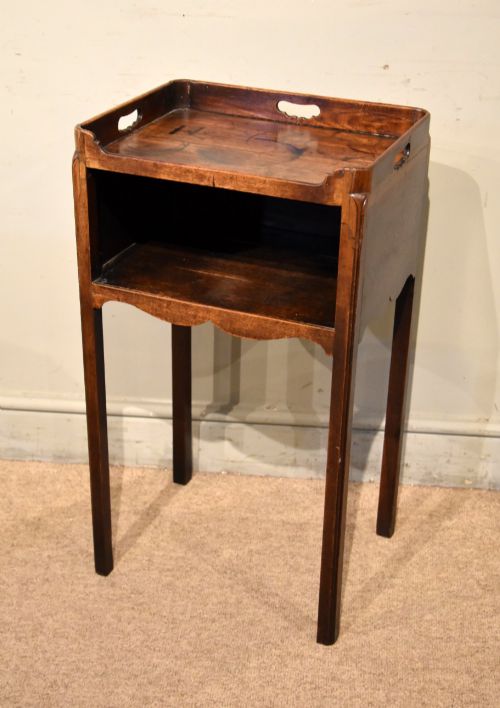
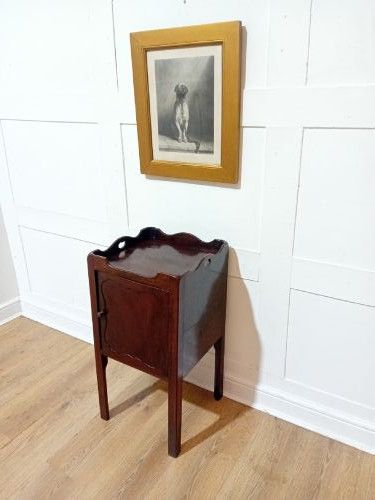
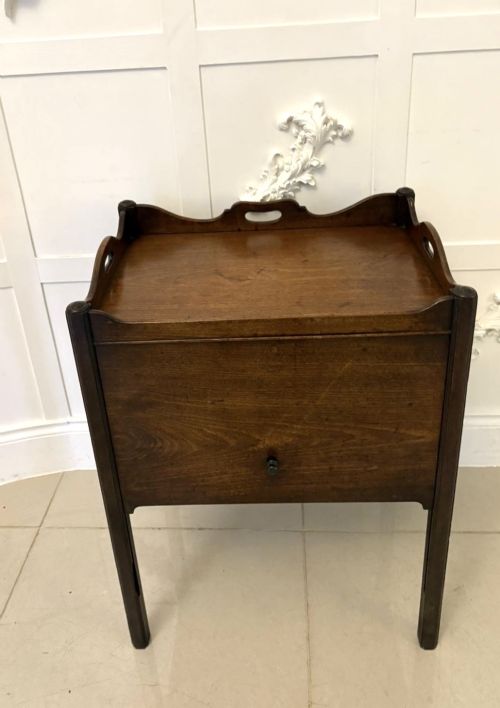
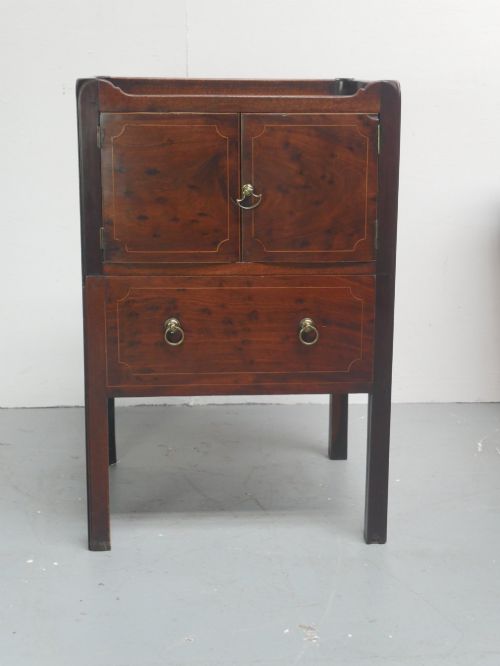
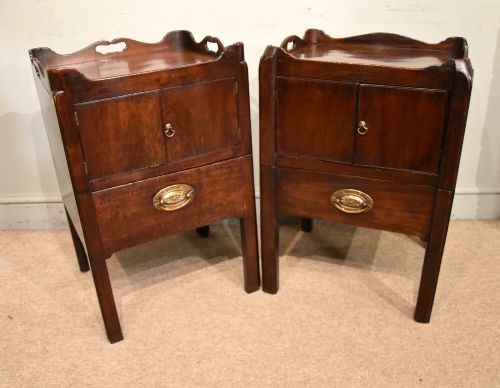
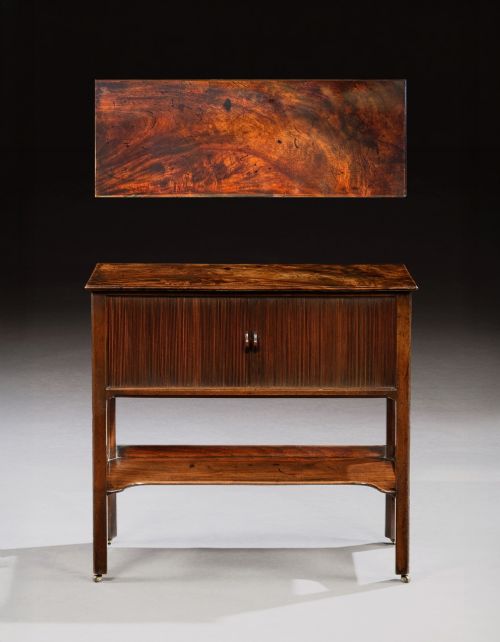
The 18th century night cupboard is a compact bedside form designed to conceal chamber pots and night-time necessities behind closed doors or drawers. Buyers seeking this piece will encounter Georgian mahogany specimens, frequently styled as commodes, tray-top cabinets, or tambour-fronted night stands. These items bridge the gap between utility and elegance, reflecting the refined interior standards of the Georgian and Neoclassical periods.
Most examples appearing in this selection date from the George III era, constructed primarily in rich mahogany with occasional walnut, elm, or fruitwood variants. Forms range from simple square bedside tables to serpentine fronts and specialised close stools disguised as small chests. Each piece demonstrates the period's focus on discreet domestic convenience without sacrificing fine cabinet-making.
Materials and construction methods
Makers relied heavily on solid and veneered mahogany, chosen for its durability and deep grain, often enhanced with subtle boxwood inlay or satinwood details. Structural integrity depended on traditional joinery, with drawer linings typically formed from secondary timbers like oak or pine.
Surface finishes involved careful hand-polishing over stained wood to achieve a warm lustre that highlights the natural figuring. Brass fittings, including pull handles and hinges, were cast and finished by hand to complement the timber tones.
18th Century Night Cupboard Retail Price Guide 2026
Typical asking prices for 18th century night cupboard among the pieces listed under this phrase on Sellingantiques today, from the lower quarter to the upper quarter. They describe what is for sale here now, not the wider market.
Materials documented across the collection include mahogany, walnut, fruitwood, elm, satinwood, boxwood inlay, and brass hardware.
Distinguishing quality in period pieces
The distinction between standard utility items and superior examples lies in the crispness of the carving, the selection of figured mahogany veneers, and the retention of original brass hardware. Finer pieces exhibit sophisticated silhouettes such as serpentine fronts or shaped tray tops rather than plain square forms.
Construction details also dictate value, notably the use of tightly dovetailed drawer boxes and the survival of working tambour shutters or original door panels. Examples bearing refined Neoclassical marquetry or regional flourishes like Italian walnut sit at the upper end of the craft.
The 18th Century Night Cupboard Glossary
- Commode
- A low cabinet or chest of drawers designed for bedroom use. In 18th century terminology, this often denoted a piece housing a chamber pot.
- Tray top
- A raised rim around the upper surface of a bedside table or commode. This feature prevented items from rolling off the edge.
- Tambour
- A flexible shutter made from narrow vertical strips of wood glued to a canvas backing. It slides smoothly in a track to close a cupboard opening.
- Close stool
- A piece of furniture enclosing a commode seat and pan. 18th century makers often disguised these as ordinary bedside chests for discretion.
- Marquetry
- Decorative veneer work arranged in pictorial or geometric patterns using various coloured woods. It frequently appears on continental pieces.
18th Century Night Cupboard: Frequently Asked Questions
How do I tell George III pieces apart?
George III pieces generally date from the latter half of the 18th century and display classic proportions, fine mahogany grains, and restrained Neoclassical or Chippendale influences. Look for refined details like string inlay and bracket feet.
Earlier George II examples tend to have heavier proportions and bolder carving, whereas pieces nearing 1800 often adopt lighter satinwood accents and curved serpentine fronts.
How were tambour doors made?
Tambour doors consist of thin vertical wooden slats attached to a flexible fabric backing, allowing the shutter to slide around a curved track. This technique required precise carpentry to ensure smooth operation.
Cabinetmakers utilised this method on night stands to conceal storage compartments without needing outward-swinging doors that required clearance space.
Can I use a night cupboard daily?
You can use these antique cupboards as everyday bedside storage for books, reading glasses, and modern lamps. Their solid timber construction makes them durable for daily domestic life.
To preserve the finish, avoid placing unprotected drinks on the antique wood surface and maintain stable room humidity to protect the 18th century joins.