


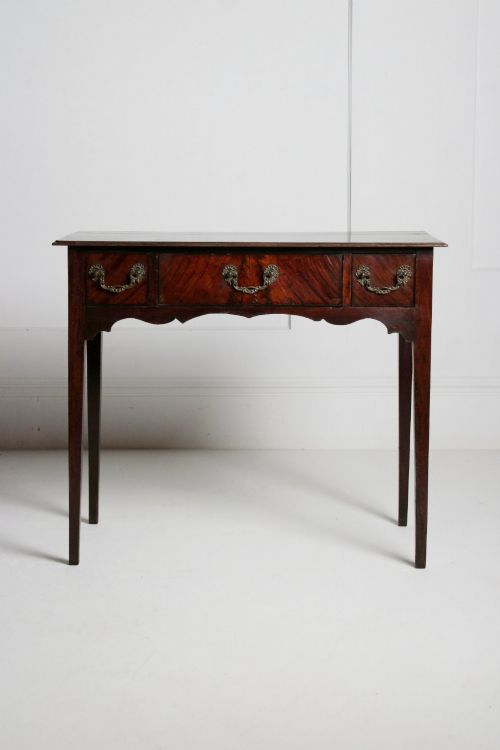

18th Century Mahogany Lowboy
An 18th century mahogany lowboy provides practical surface space and graceful proportions, making it a desirable addition to a traditional interior.
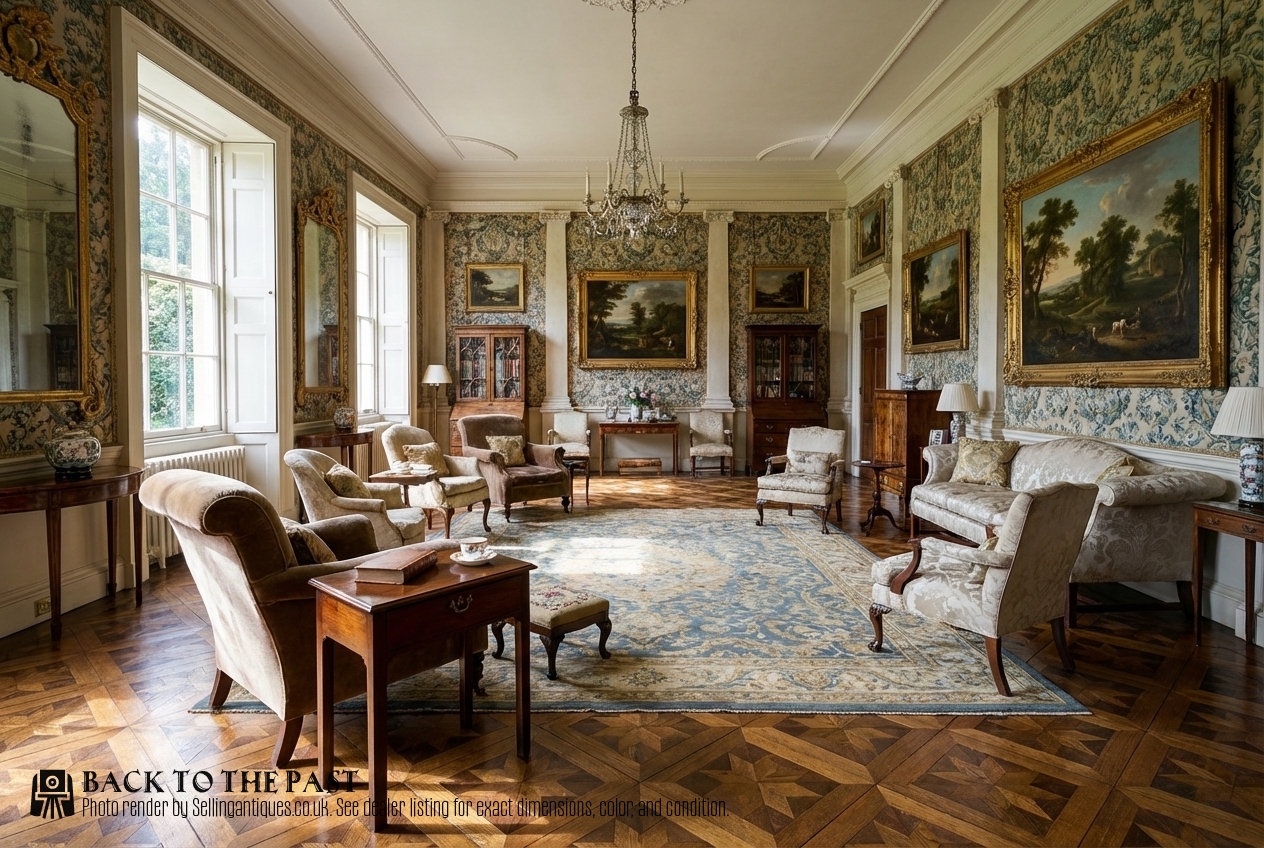
18th Century Mahogany Lowboy
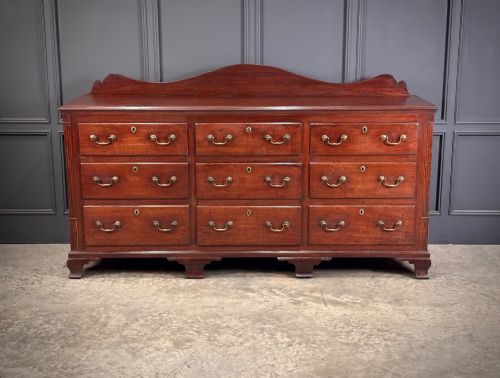
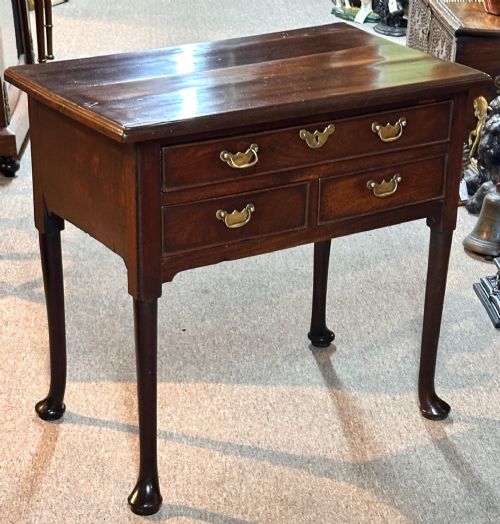
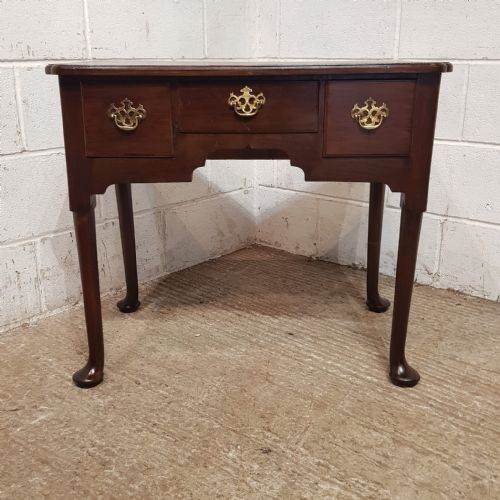
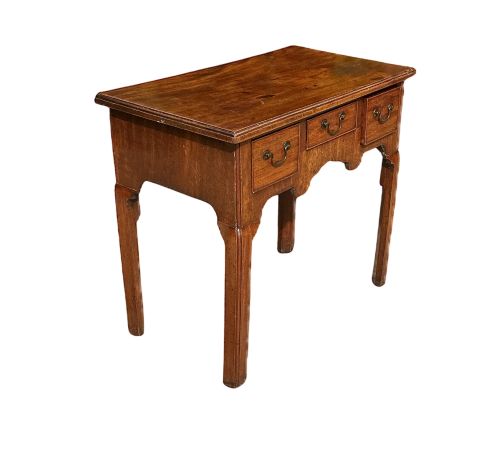
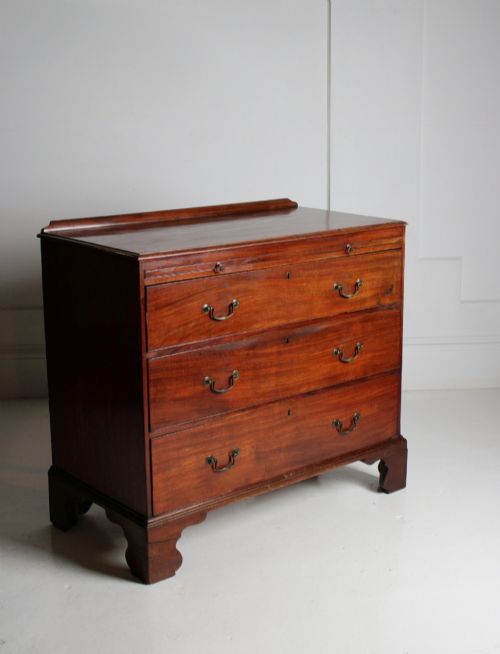
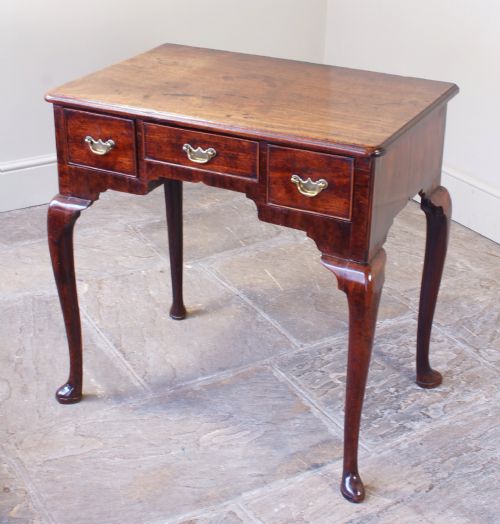
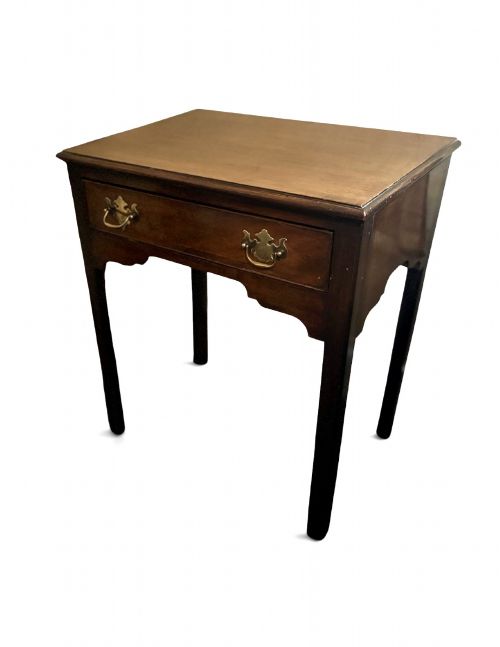
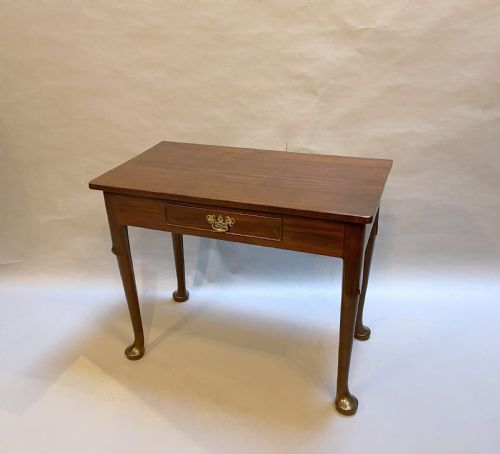
An 18th century mahogany lowboy is a small table fitted with drawers, originating as a dressing or writing surface during the Georgian period. These pieces frequently appear alongside related forms such as side tables, chests of drawers, and dresser bases.
The lowboy takes its primary form from the cabinet-making standards of the 1700s, crossing through Early Georgian, George II, and George III reigns. Buyers encounter examples dated from roughly 1750 to around 1800, often described as hall tables, writing desks, or reception tables.
Makers of the era designed these compact tables to stand against walls in bedrooms, parlours, or entrance halls. Their low stature and functional drawer configurations distinguish them from taller tallboys or larger dining tables.
How they were made
Cabinet-makers constructed these tables primarily using solid timber alongside secondary woods like oak and pine for drawer linings and internal framing. Workshops frequently utilised Cuban mahogany for its rich grain, sometimes enhancing surfaces with boxwood inlay or brass drop handles.
Joinery methods relied on traditional hand-cut dovetails for drawer construction and pegged mortise and tenon joints for the frame. Surface finishing involved polishing the timber to bring out the natural warmth and depth of the mahogany without obscuring the grain.
Listings feature periods spanning the 18th century, Georgian era, and Victorian times, constructed from mahogany, oak, pine, and brass.
What varies in quality
The grade of timber selected for the primary surfaces heavily influences the overall character and visual appeal of the piece. Dense, well-figured Cuban mahogany commands greater regard than plainer cuts of wood.
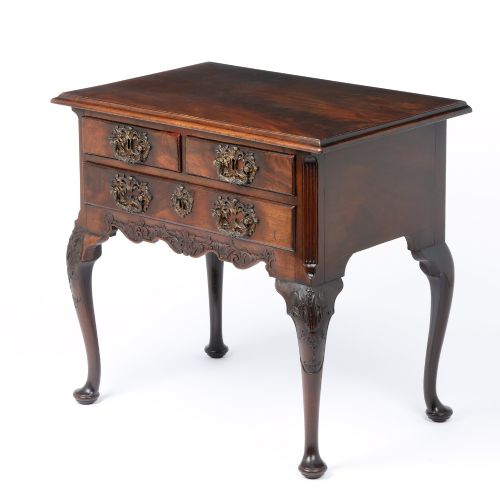
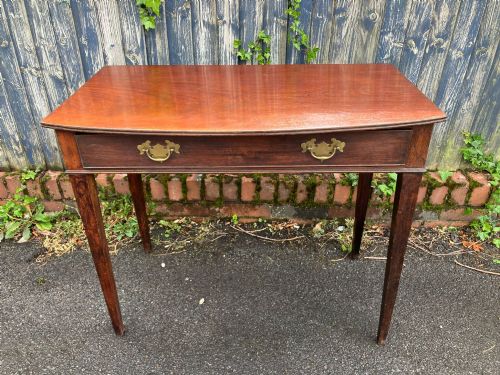
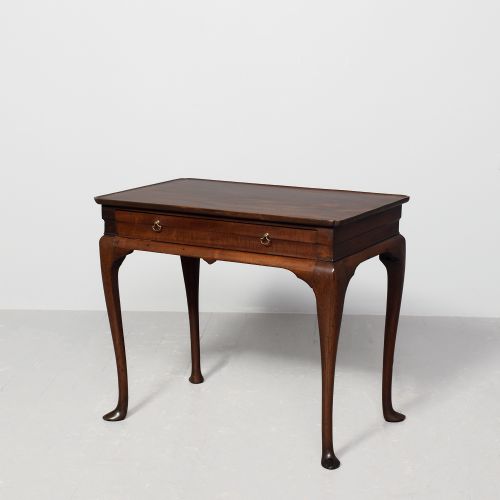
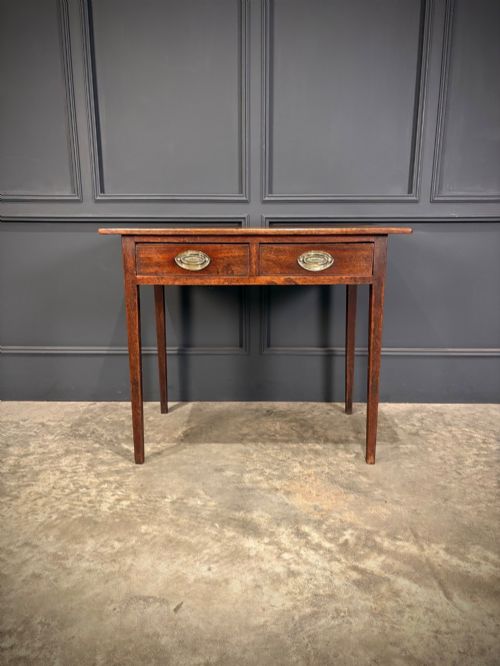
Refinement in the carving of legs, such as cabriole designs or straight tapered supports, demonstrates the original maker's skill. Crispness in the edge moulding and the retention of period brass hardware add to the integrity of the piece.
The 18th Century Mahogany Lowboy Glossary
- Lowboy
- A small pedestal table or dressing table equipped with one or more tiers of drawers beneath the top surface. It typically stands at waist height and rests on four legs.
- Georgian
- The design period spanning the reigns of the first four Georges, noted for stylistic evolution from heavy walnut forms to lighter mahogany neoclassical designs. It remains the dominant stylistic category for these tables.
- Cuban mahogany
- A dense, dark timber imported from the Caribbean, prized by 18th-century cabinet-makers for its superior grain pattern and durability. It darkens richly over centuries of polishing.
- Dresser base
- A lower cabinetry unit, often contemporary with the lowboy, designed for storage and display in domestic spaces. These pieces share similar proportions and timber choices.
- Boxwood inlay
- A decorative technique involving contrasting pale wood inserted into recesses cut into the darker mahogany surface. It creates geometric or linear borders on select table tops and drawer fronts.
18th Century Mahogany Lowboy: Frequently Asked Questions
What was an 18th century mahogany lowboy used for?
These tables served primarily as dressing tables where individuals could sit or stand while arranging hair or applying cosmetics. They also functioned as compact writing desks and convenient side tables in hallways for correspondence.
Over time, their adaptable size allowed owners to repurpose them as lamp tables or decorative stands in various rooms of the house.
How do I date a Georgian lowboy?
Dating relies on observing stylistic shifts in the legs, handles, and overall frame construction across different reigns. Early pieces from the George II era often feature cabriole legs, whilst later George III examples favour straight, tapered legs.
Internal construction details, such as hand-sawn timber boards and secondary woods like oak, help confirm an 18th-century origin rather than a later Victorian reproduction.
Where should I place a lowboy at home?
A lowboy fits well in an entrance hall as a surface for keys and post, utilising minimal floor space while offering drawer storage. They also serve effectively as dressing tables in bedrooms or as small side tables in living rooms.
Their finished backs on better examples allow them to sit away from walls, though most historically stood flush against panelling or plaster.
How do I care for antique mahogany?
Maintain the timber by keeping it away from direct sunlight and sudden temperature shifts that can dry out the wood. Regular dusting with a soft, dry cloth prevents particulate build-up on the polished surface.
Apply a traditional beeswax polish sparingly when the wood appears dry, buffing gently to preserve the natural lustre developed over centuries.